
Patient guide · Pioneer Physicians
What Does Urgent Care Treat? A Full List
What does urgent care treat? Illnesses and injuries that need care today but are not life-threatening, such as the flu, strep throat, ear and urinary infections, rashes, sprains and minor broken bones. At Pioneer Physicians Urgent Care in Bolingbrook, IL, we’re open 7 days a week, 8 AM to 8 PM, and walk-ins are welcome, no appointment needed.
- Open 7 days, 8 AM to 8 PM
- Walk-ins welcome
- X-ray and rapid tests on site
- Kids and adults
- Medicare and Medicaid plans accepted

What does urgent care treat?
Urgent care treats new illnesses and minor injuries that should be seen within hours, not minutes. The federal HealthCare.gov glossary describes it as care for a problem serious enough that a reasonable person would want care right away, yet not so severe that it calls for an emergency room.
MedlinePlus, from the National Library of Medicine, sorts these problems into two groups. One is common mild illnesses, such as colds, the flu, earaches, sore throats, migraines, low-grade fevers and limited rashes. The other is minor injuries, such as sprains, back pain, minor cuts and burns, minor broken bones and minor eye injuries. Its advice is to use urgent care when a problem is not life-threatening or likely to cause disability, but you can’t see your own provider soon enough.
Cleveland Clinic notes that services like X-rays, splinting and simple lab tests vary by location, so it helps to know what your nearest one offers before you need it. The rest of this page spells out what urgent care can treat at our Bolingbrook clinic, and what it can’t.

Illnesses we treat at our Bolingbrook clinic
We see adults and children for sudden illnesses. The visit starts with an exam, and when a test would help, the common ones are done here during the same visit.
Our symptom guides cover each problem below in more depth, with home care tips.
- Sore throat and strep throat, with a rapid strep test
- Flu and COVID-19, with rapid tests for both
- Colds and coughs, bronchitis and possible pneumonia, with a chest X-ray when the provider thinks you need one
- Ear infections, sinus infections and pink eye
- Burning or frequent urination from a possible UTI, checked with a urinalysis
- Fever, and vomiting or diarrhea without signs of serious dehydration
- Rashes and skin infections, hives and mild allergic reactions
- Cough, wheezing or asthma symptoms that aren’t getting better at home but aren’t causing distress
What we treat at a glance
- Illnesses
- Colds, flu, COVID-19, strep throat, ear, sinus and urinary infections, rashes
- Injuries
- Sprains, strains, possible broken bones and minor burns; call first about cuts
- Tests on site
- X-ray, rapid strep, flu and COVID tests, urinalysis, EKG and blood draw
- Ages
- Adults, and children from infancy through the teen years
- Planned visits
- DOT, sports, school and annual physicals, primary care and STD testing
- Not here
- Emergencies, CT, MRI and childhood vaccinations
Injuries we can check and treat
Sprains, strains, possible broken bones and minor burns can be checked here.
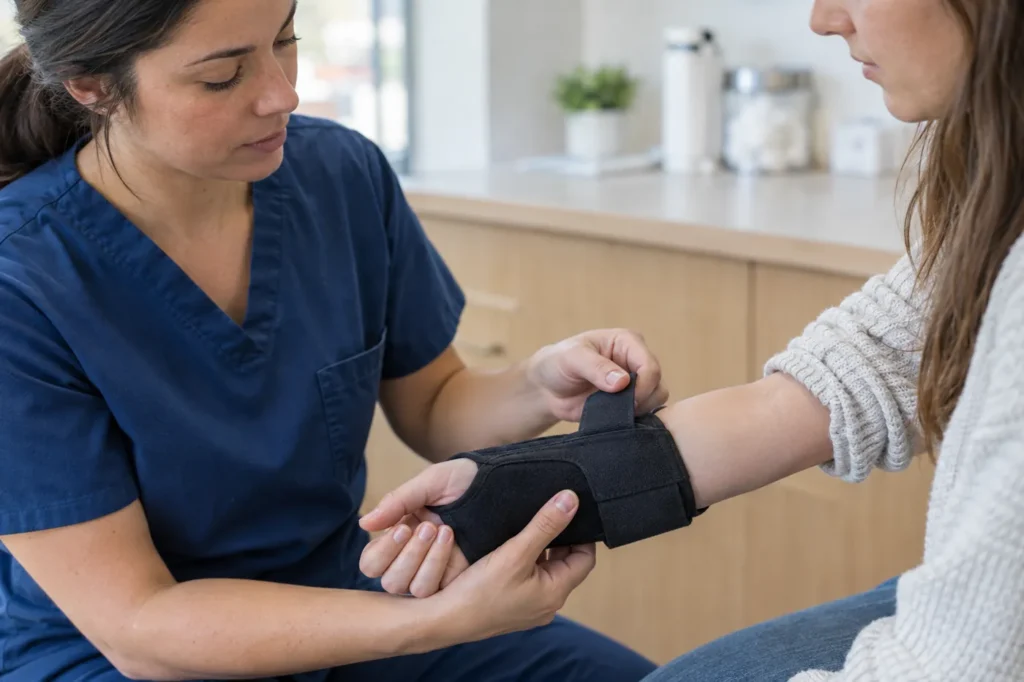
A twisted ankle or a sore wrist after a fall is the classic urgent care injury. We can take an X-ray during the visit, and we keep splints and crutches on hand. According to the American Academy of Pediatrics (AAP), most fractures can be handled at urgent care. A bone that looks bent or is poking through the skin is the exception, and it needs the ER.
Cuts need one extra step. If a cut gapes open or may need stitches or glue, call (630) 914-5373 before you come and ask whether it can be closed here that day. The AAP gives parents the same advice, because wound repair options vary by urgent care site. Bleeding that lasts longer than 10 minutes means the ER or 911 instead.
Tests and X-rays during your visit
Many urgent care visits come down to one test, and the common ones are done on site.
- X-ray for injuries and for chest symptoms, with splints and crutches on hand
- Rapid strep test
- Rapid flu and COVID tests
- Urinalysis
- EKG, a recording of the heart’s electrical activity
- Blood draws, with the sample sent to an outside lab, so those results arrive after your visit
What we don’t have on site
There’s no CT scanner or MRI here. Hospitals and imaging centers do those scans. Our page on X-ray, lab tests and EKG at urgent care explains what each test can and can’t show.
Not sure we can treat it?
Walk in any day with no appointment, reserve a time online, or call (630) 914-5373 to ask whether we can treat your problem.
Physicals and planned visits we offer
Urgent care isn’t only for sick days. We also do physicals, testing and several ongoing services here.
For the in-person visits below, you can walk in or save a spot online so the visit fits around work or school.
- DOT physicals 7 days a week, done by a certified medical examiner on the FMCSA National Registry
- Sports, school and annual physicals
- Primary care for checkups and ongoing health needs
- Confidential STD testing for common STIs, with some results the same day and others from an outside lab
- Flu shots for adults
- Allergy testing
- Women’s health visits
- Telehealth visits for problems that don’t need a hands-on exam
- Medical weight loss, plus IV hydration therapy and peptide therapy
Urgent care for babies, children and teens
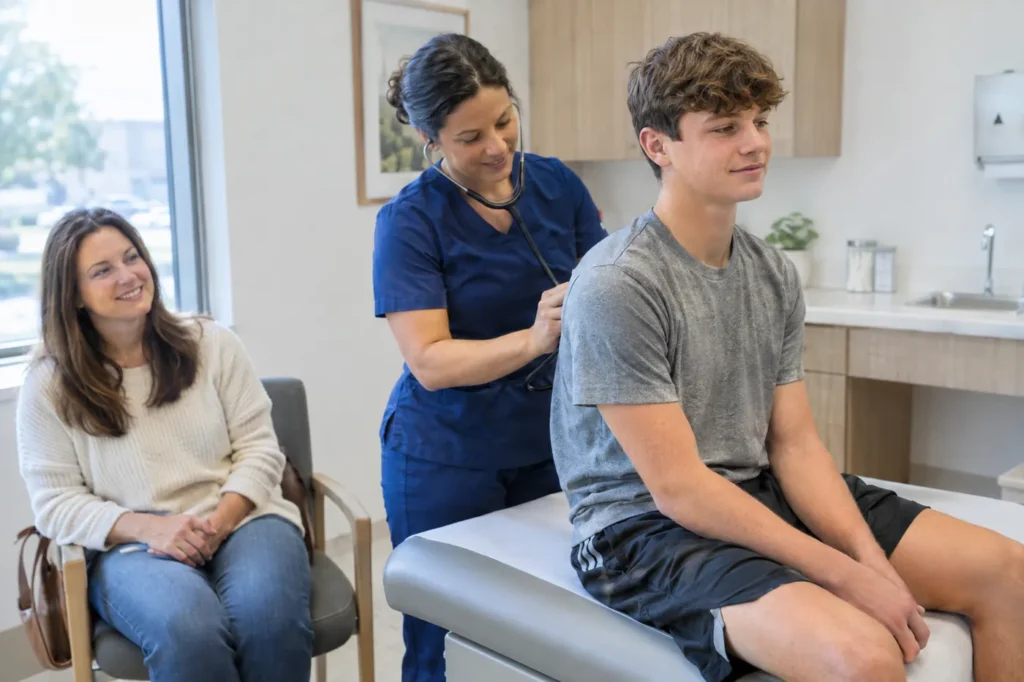
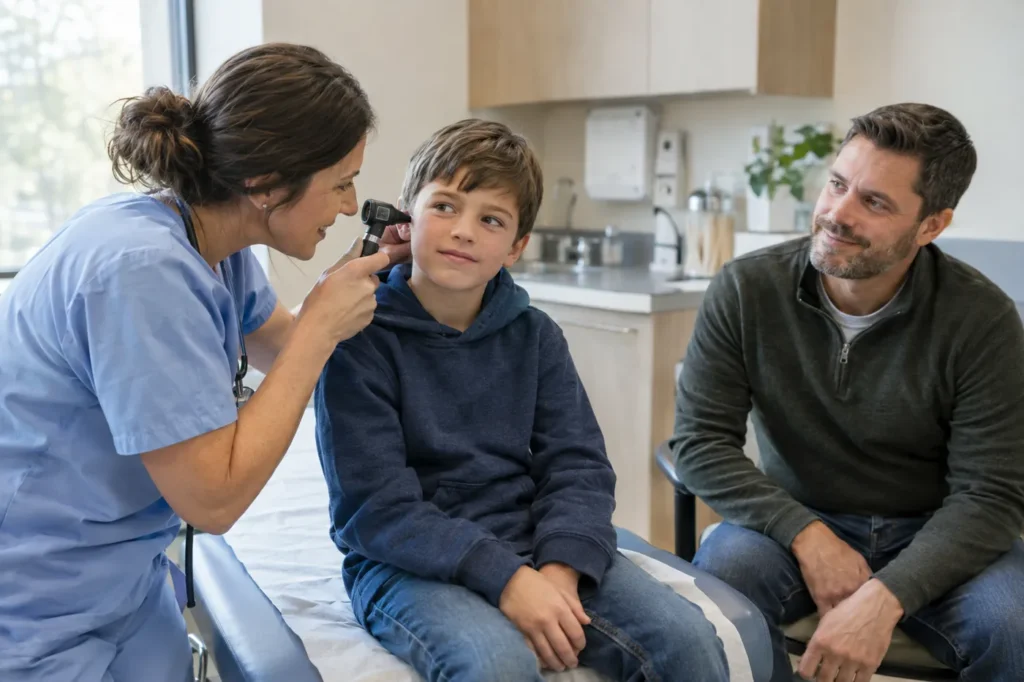
We treat children from infancy through the teen years for the illnesses and injuries on this page, with the same X-ray and rapid tests we use for adults.
The AAP suggests calling your child’s pediatrician first when you can, since many offices have nurse lines or same-day sick visits. When they can’t see your child soon, urgent care fits problems that can’t wait a few days, like ear pain, a sprained ankle, or flu symptoms in a child who is drinking and breathing comfortably.
The AAP’s parent guide to urgent care, the ER or the pediatrician boils the choice down to three checks: normal breathing, being alert and responsive, and being able to drink and keep fluids down. If any of these is missing, get same-day care, and go to the ER if it is severe. For a baby under 3 months, the AAP’s rule is firm: a temperature of 100.4°F or higher means going to the ER right away.
Childhood vaccinations are not given here. For routine shots, see your child’s regular doctor or a county health department. Near Bolingbrook, that’s the Will County Health Department or the DuPage County Health Department. Our pediatric urgent care page explains what a children’s visit here looks like.
What urgent care does not treat
When you can’t tell if it’s urgent
Ask yourself whether the problem could be life-threatening. If the answer might be yes, go to the ER or call 911. Our guide to urgent care vs the emergency room goes through the warning signs one symptom at a time.
An emergency physician quoted by Cleveland Clinic offers a simple test: if you could honestly put the word “severe” in front of your symptom, emergency care is the likely answer. Urgent care fits when symptoms are bothersome but stable, or when you can’t get a timely appointment with your own doctor.
If you still aren’t sure and it isn’t one of the warning signs above, call your own doctor or a nurse advice line if your insurer offers one, or call us at (630) 914-5373 and ask whether it’s something we can see. We close at 8 PM and aren’t open overnight, but in the evening the booking page lets you pick a time for the next day.
Needs that fit better somewhere else
Thoughts of hurting yourself or someone else need help right now. Call or text 988, the Suicide and Crisis Lifeline, or call 911.
Ongoing care for a condition like diabetes belongs with a primary care team that follows you over time, and we offer primary care at the same clinic.

Insurance and cost for an urgent care visit
We accept several major insurance plans, and self-pay is available if you don’t have coverage.
The plans we take are Aetna, Cigna, Medicare, Blue Cross Blue Shield of Illinois, UnitedHealthcare, Humana and Illinois Medicaid plans (HFS, Meridian, CountyCare, Molina and YouthCare). Call (630) 914-5373 to confirm your specific plan. If you pay for yourself, the cost is the visit plus any tests you need; call for current self-pay pricing. Our insurance page goes into how each plan works with us.
Where you go affects the bill. According to MedlinePlus, the same care can cost 2 to 3 times more in an emergency department than in your provider’s office, and your plan may charge a higher copay for the ER.
The Pioneer walk-in visit
How a visit works
- Step 1Walk in or save your spot
No appointment needed. You can also save your spot online before you leave home.
- Step 2Check in
Bring a photo ID, your insurance card and a list of the medicines you take.
- Step 3See a provider
Get examined, with X-ray and rapid tests on site when you need them.
- Step 4Leave with a plan
You go home with a care plan and clear next steps.
Why families in Bolingbrook choose Pioneer
Walk-in care that fits real life
Open 7 days a week
8 AM to 8 PM, weekends included, so a Saturday sore throat does not have to wait until Monday.
X-ray and tests on site
X-ray every day we are open, plus rapid strep, flu and COVID tests, urinalysis and EKG.
Care for kids and adults
From infants through the teen years, and adults of every age, in one clinic.
Insurance and self-pay
Aetna, BCBS of Illinois, Cigna, Humana, Medicare, Illinois Medicaid plans and UnitedHealthcare. Call to confirm your plan.
Questions and answers
Questions we hear often
Still not sure? Call (630) 914-5373 and we will help you decide.
Can urgent care treat a broken bone?
Often, yes. We take X-rays every day we’re open and keep splints and crutches on hand. A bone that is visibly bent or poking through the skin needs the ER, as does an injured arm or leg that turns numb, cold or pale. The AAP adds that a child still limping a day after twisting an ankle may need an exam to rule out a small fracture.
Can urgent care treat a UTI?
Yes. The CDC lists pain or burning when you urinate, needing to go often, and pressure in the lower belly as bladder infection symptoms, and advises seeing a healthcare professional for any of them. We run a urinalysis during the visit. Fever, chills, pain in the side of your back, or nausea can mean a kidney infection, so don’t wait to be seen.
Does urgent care treat babies and children?
We do. Babies, school-age kids and teens can be seen here for sudden illnesses, minor injuries and physicals. The exception is fever in a baby under 3 months: at 100.4°F or higher, go straight to the ER. Vaccines are the other gap, since we don’t give childhood shots. Your child’s doctor or the county health department handles those.
Can I get a physical at urgent care?
Yes. Sports, school and annual physicals are done here, and commercial drivers can get a DOT physical 7 days a week from a certified medical examiner on the FMCSA National Registry. No appointment is needed, though you can save a spot online. Bring any form your school, team or employer wants filled out.
Can urgent care treat an allergic reaction?
Mild ones, yes. Hives, an itchy rash or mild swelling can be seen here. A severe reaction called anaphylaxis is an emergency. MedlinePlus lists signs such as trouble breathing, wheezing, trouble swallowing and swelling of the face, eyes or tongue. Call 911 right away, and use an epinephrine injector if the person has one.
Is urgent care open 24 hours?
Ours isn’t. Doors open at 8 AM every day, including weekends, and close at 8 PM. Walk-ins are welcome, and no appointment is needed. Once we’ve closed, the online booking page lets you reserve a time for the next day. Emergencies can’t wait for morning, so call 911 or go to the nearest hospital emergency department at any hour.







Sources for this page
- When to use the emergency room, adult. MedlinePlus, U.S. National Library of Medicine.
- When to use the emergency room, child. MedlinePlus, U.S. National Library of Medicine.
- Urgent Care, ER or Pediatrician? A Parent Guide. American Academy of Pediatrics (HealthyChildren.org).
- Urgent Care vs. the ER: How To Choose Where To Go. Cleveland Clinic.
- Emergency Care vs. Urgent Care: What’s the Difference?. American College of Emergency Physicians.
- Urgent care (glossary). HealthCare.gov, U.S. Centers for Medicare and Medicaid Services.
- Anaphylaxis. MedlinePlus, U.S. National Library of Medicine.
- Urinary Tract Infection Basics. Centers for Disease Control and Prevention.