
Walk-in care · Bolingbrook, IL
Peptide Therapy in Bolingbrook, IL
Pioneer Physicians Urgent Care provides peptide therapy at our clinic in Bolingbrook, IL. Because peptide medicines are prescription drugs, treatment starts only after a provider has looked at your health history, current medicines and goals, and has judged a peptide to be a safe choice. We’re open 7 days a week, 8 AM to 8 PM, and walk-ins are welcome.
- Open 7 days, 8 AM to 8 PM
- Walk-ins welcome
- X-ray and rapid tests on site
- Kids and adults
- Medicare and Medicaid plans accepted

What is peptide therapy?
In medical care, peptide therapy means using a prescription medicine built from a peptide, a molecule made of a small number of linked amino acids. Your body makes peptides of its own. GLP-1 (glucagon-like peptide-1) is one example: a hormone your small intestine releases, which a well-known group of diabetes and weight loss medicines is designed to mimic.
For drug rules, size is the dividing line. Under FDA regulations, a chain of more than 40 amino acids counts as a protein, so a peptide medicine has 40 or fewer.
The phrase gets used loosely online. It can describe an FDA-approved prescription, a compounded product mixed by a pharmacy, or a vial sold with a “research use only” label. Those are very different things, and much of this page explains why.

Which peptides are FDA-approved?
Only a limited number of peptide medicines carry FDA approval, each for specific conditions, while many peptides promoted online have none.
In a July 2026 notice about generic versions, the FDA named approved peptide products that include glucagon, calcitonin salmon, teriparatide, liraglutide, semaglutide and tirzepatide. The agency said the group includes medicines used to manage obesity and to treat type 2 diabetes, osteoporosis and macular degeneration. An approval covers the uses the FDA reviewed, which appear on the drug’s label, not general wellness.
The GLP-1 medicines on that list are the ones people ask about most. Our medical weight loss page covers who they are meant for and how that visit works.
Compounded peptides are a separate category. According to the FDA, a compounded drug is not FDA-approved, so the agency does not check its safety, effectiveness or quality before it is sold.
Peptides on the FDA’s safety risk list
The FDA has reviewed several peptides that were proposed for pharmacy compounding and placed some in category 2, its group of bulk substances that may present significant safety risks. As of the page’s April 2026 update, that group includes ipamorelin acetate and two growth hormone releasing peptides, GHRP-2 and GHRP-6, for use by outsourcing facilities.
The FDA’s concerns include immunogenicity, meaning the body may react against the product, and peptide-related impurities in the product. For GHRP-6, the agency also notes a possible rise in blood sugar from lower insulin sensitivity, which matters if you have diabetes.
How peptide therapy starts at our Bolingbrook clinic
- 1Walk in or save your spot
Walk-ins are welcome every day, or book a time online.
- 2Health review
A provider goes over your history, medicines, supplements and goals.
- 3Tests if needed
Any blood work goes to an outside lab. An EKG, if ordered, happens at the visit.
- 4A decision
A peptide is prescribed only if the provider decides it is safe for you.
- 5Follow-up
Check-ins to see how you are doing. Ask whether any can be done by telehealth.
Who peptide therapy is for, and who should wait
Peptide therapy can make sense when you have a health goal or condition that an approved peptide medicine is meant to treat, and a provider agrees after reviewing your health.
Some people may need to wait or choose a different treatment. Tell the provider if you are pregnant, breastfeeding or planning a pregnancy, and about diabetes, heart, kidney or liver disease, any history of cancer, and every medicine you take. A peptide that suits one person can be unsafe for another.
If you compete in a sport that tests for drugs, check your sport’s banned list before you use any peptide.

Your first peptide therapy visit in Bolingbrook
The first visit is a private conversation with a provider plus a basic health check, and nothing is prescribed unless the provider concludes a peptide is safe and suits your goals.
Expect questions about what you hope to change, what you have tried, your health history and allergies. The provider goes through your medicines and supplements and may check vital signs such as blood pressure.
Some decisions need test results. Blood work, when the provider orders it, is collected during your visit, and the testing itself happens at an outside lab. An EKG, if ordered, is done during the visit. Our lab testing and EKG page explains how that works. Because outside lab results come back later, a decision may wait for them.
If a peptide medicine is prescribed, ask how to store it, how to use it and when to come back for a check-in. Some check-ins may suit a telehealth visit, so ask about that as well.
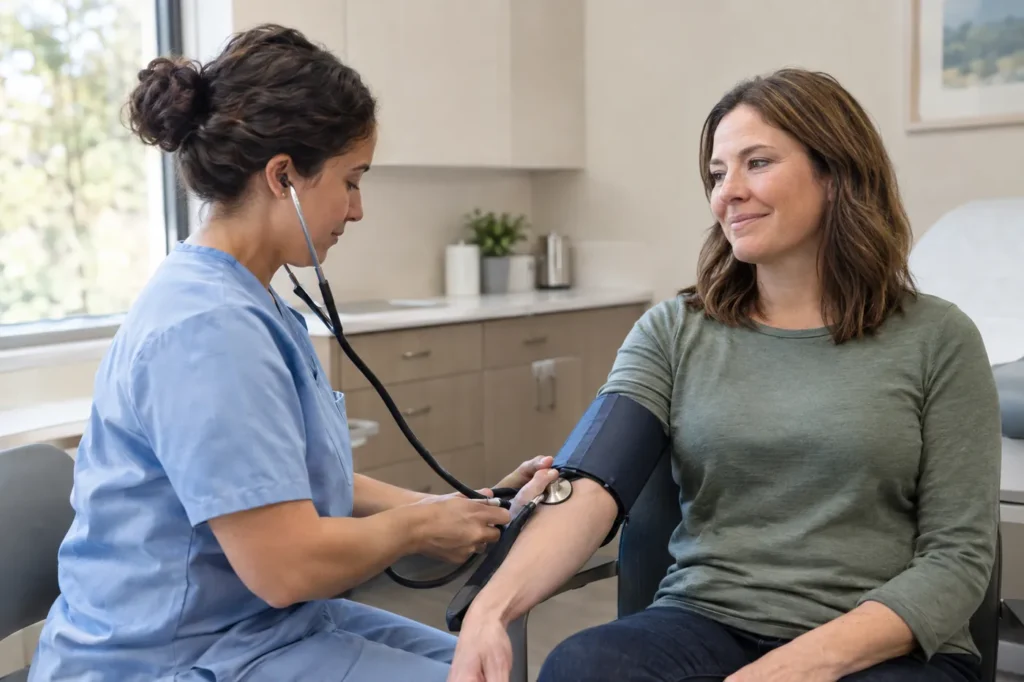
Talk to a provider before you start any peptide
Walk in any day with no appointment or book online, and bring every medicine, supplement and peptide product you use so the provider can review them.
What to bring to your visit
The more the provider can see, the better the decision. Bring:
- your photo ID, plus your insurance card if you’re insured
- the name and dose of each prescription, over-the-counter medicine, vitamin and supplement you use
- any peptide you already have, or a photo that shows the vial and its label
- recent lab results or records from another doctor
- your questions, including anything you have read about a specific peptide
If you already use a peptide
Say where you bought it, how much you use, how often and for how long, and describe any reaction you’ve had. That history helps the provider judge the risks, including how it may interact with your other medicines.
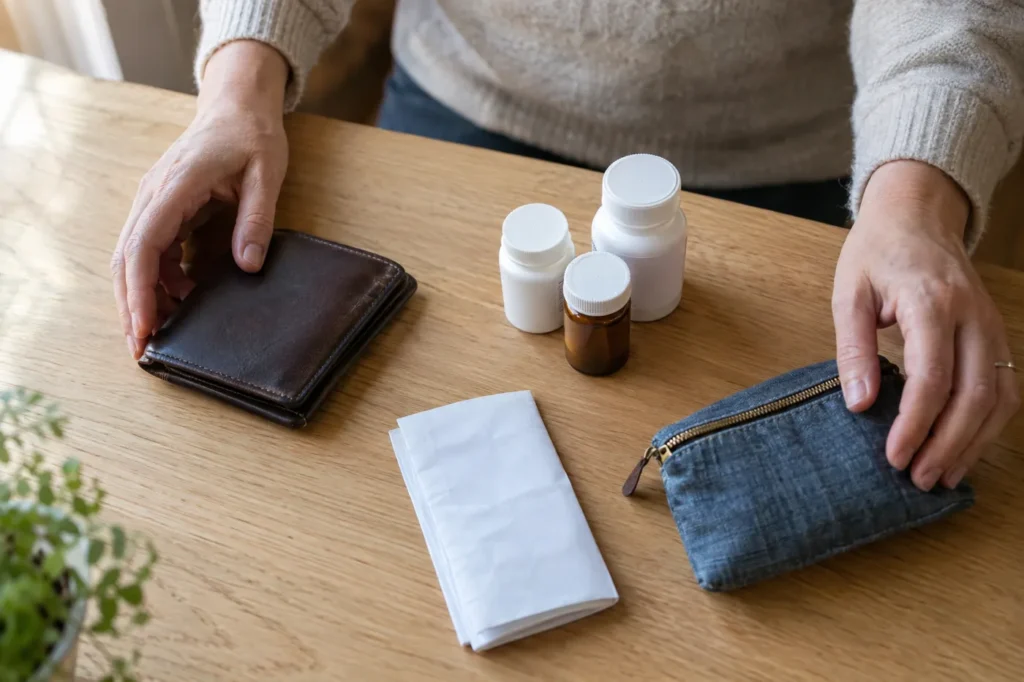
Research peptides and online sellers
A vial labeled “research use only” is not prescription peptide therapy, even when a website markets it for people.
Many online sellers print “research use only” or “not for human consumption” on products they promote for human use. In a June 2026 warning letter, the FDA told one peptide seller that those labels did not change what its own website showed: the products were meant as drugs for people. The agency called two of them unapproved new drugs.
If you fill a real prescription through a website, the FDA’s BeSafeRx campaign lists signs of a safe online pharmacy. It always requires a doctor’s prescription, gives a U.S. address and phone number, has a licensed pharmacist to answer questions and is licensed by a state board of pharmacy. Deep discounts and broken, foreign-language or expired packaging are warning signs.
What we do not do
We don’t prescribe a peptide without a medical review, and we don’t promise results.
A visit can end without a prescription. That can happen when a peptide is not safe for you, when a medicine you take conflicts with it, or when the evidence behind a product is too thin.
Peptide therapy is not emergency care, and it does not replace care for a long-term illness. Keep your regular doctor informed about any peptide you start. Serious symptoms belong in a hospital emergency department.
Paying with insurance or self-pay
Your plan decides what is covered, and the answer can differ for the visit and for the medicine. Call (630) 914-5373 to confirm your specific plan before you come in.
We accept Aetna, Cigna, Medicare, Blue Cross Blue Shield of Illinois, UnitedHealthcare, Humana and Illinois Medicaid plans (HFS, Meridian, CountyCare, Molina and YouthCare). Ask your insurer separately about coverage for any medicine that is prescribed.
You can also pay without insurance. Self-pay covers the visit and any lab work or EKG the provider decides you need. Ask what any prescribed medicine will cost, too, and call us for current self-pay pricing.

Peptide therapy near Romeoville, Woodridge and Naperville
Our clinic is at 148 S Bolingbrook Dr, and most neighboring towns are less than 20 minutes away.
Romeoville is the closest, about 10 minutes by car, with Woodridge close behind at 11. Lemont, Lisle and Darien each sit about 14 minutes away. From downtown Plainfield it’s around 15 minutes, from Downers Grove 16 and from Lockport 17. Downtown Naperville takes about 18, and the south side of Naperville takes less. Local pages for Romeoville, Woodridge and Naperville cover routes and local details.
If you live in the north or northwest suburbs, the drive to Bolingbrook is much longer. Peptide therapy can involve follow-up visits, so a clinic closer to home may suit you better.
The Pioneer walk-in visit
How a visit works
- Step 1Walk in or save your spot
No appointment needed. You can also save your spot online before you leave home.
- Step 2Check in
Bring a photo ID, your insurance card and a list of the medicines you take.
- Step 3See a provider
Get examined, with X-ray and rapid tests on site when you need them.
- Step 4Leave with a plan
You go home with a care plan and clear next steps.
Why families in Bolingbrook choose Pioneer
Walk-in care that fits real life
Open 7 days a week
8 AM to 8 PM, weekends included, so a Saturday sore throat does not have to wait until Monday.
X-ray and tests on site
X-ray every day we are open, plus rapid strep, flu and COVID tests, urinalysis and EKG.
Care for kids and adults
From infants through the teen years, and adults of every age, in one clinic.
Insurance and self-pay
Aetna, BCBS of Illinois, Cigna, Humana, Medicare, Illinois Medicaid plans and UnitedHealthcare. Call to confirm your plan.
Questions and answers
Questions we hear often
Still not sure? Call (630) 914-5373 and we will help you decide.
Is Pioneer Physicians the same as Pioneer Peptides?
No. We’re Pioneer Physicians Urgent Care, a clinic in Bolingbrook, IL, at 148 S Bolingbrook Dr. Pioneer Peptides is a different name. Peptide therapy with us is a medical visit, not a product order. It begins with a provider’s review of your health, and a peptide is prescribed only if the provider decides it is safe for you.
Can I get a peptide prescription online?
Some services prescribe online, but any legitimate prescription starts with a review of your health, and the FDA says a safe online pharmacy always requires a doctor’s prescription. We offer telehealth visits, so call (630) 914-5373 to ask whether yours can start that way. Blood work or vital signs may still mean a trip to the clinic.
Can Illinois residents get prescription peptides?
Yes. FDA-approved peptide medicines are prescribed in Illinois like other prescription drugs, by a licensed prescriber after an evaluation, and filled by a licensed pharmacy. Whether one is right for you depends on your health, what else you take and what you hope to achieve. That is what the first visit at our Bolingbrook clinic is for.
Will I talk one-on-one with a provider before starting a peptide?
Yes. Peptide therapy here starts with a private medical visit with a provider, who reviews your history, medicines and goals. Nothing is prescribed before that review. If blood work is needed, the results come back from an outside lab later, so the decision may wait for them.
Is peptide therapy for weight loss the same as GLP-1 medicine?
In many cases, yes. When people ask about peptides for weight loss, they often mean GLP-1 medicines such as semaglutide or tirzepatide, which the FDA lists among approved peptide products. Our medical weight loss page explains who may qualify and what that visit involves. Compounded versions are not FDA-approved, and neither are products sold for research use.
Is peptide therapy covered by my insurance?
Coverage for the visit and for a peptide medicine varies by plan and by product. We accept Aetna, Cigna, Medicare, Blue Cross Blue Shield of Illinois, UnitedHealthcare, Humana and Illinois Medicaid plans. Call (630) 914-5373 to confirm your specific plan, and ask your insurer about the medicine. If you’d rather not use insurance, ask us for current self-pay pricing.
Do I need an appointment for peptide therapy?
No. We’re open 8 AM to 8 PM every day and walk-ins are welcome, or you can save your spot online to pick a time. After 8 PM, the booking page shows next-day visit times. If you want to ask about a specific peptide before you come, call (630) 914-5373 first.







Sources for this page
- 21 CFR 600.3, Definitions (protein: more than 40 amino acids). Electronic Code of Federal Regulations (eCFR).
- FDA Publishes Revised Draft Product-Specific Guidances for Certain Generic Peptide Products. U.S. Food and Drug Administration.
- Certain Bulk Drug Substances for Use in Compounding that May Present Significant Safety Risks. U.S. Food and Drug Administration.
- Compounding and the FDA: Questions and Answers. U.S. Food and Drug Administration.
- Warning Letter: Wholesale Peptide, June 17, 2026. U.S. Food and Drug Administration.
- BeSafeRx: Considering an Online Pharmacy?. U.S. Food and Drug Administration.
- Anaphylaxis. MedlinePlus, National Library of Medicine.
- Cellulitis. MedlinePlus, National Library of Medicine.