
Walk-in care · Bolingbrook, IL
Medical Weight Loss Clinic in Bolingbrook, IL
Pioneer Physicians Urgent Care offers medical weight loss at 148 S Bolingbrook Dr in Bolingbrook, IL. A provider reviews your health, weight history and goals, helps you set a plan for eating and activity, and talks through whether a prescription medicine could help. We’re open 8 AM to 8 PM every day, and you can walk in or save your spot online.
- Open 7 days, 8 AM to 8 PM
- Walk-ins welcome
- X-ray and rapid tests on site
- Kids and adults
- Medicare and Medicaid plans accepted

Can an urgent care clinic help with weight loss?
Yes. Medical weight loss is one of the services at our Bolingbrook clinic, alongside urgent care. What makes it medical is that a provider reviews your health before anything else. That review covers the medicines you already take and any conditions that tend to come with extra weight.
That matters because extra weight is often tied to other health problems. The National Institute of Diabetes and Digestive and Kidney Diseases (NIDDK) says losing 5% to 10% of your starting weight may lower blood sugar, blood pressure and triglycerides. It adds that weight loss can also help with joint pain and sleep apnea.
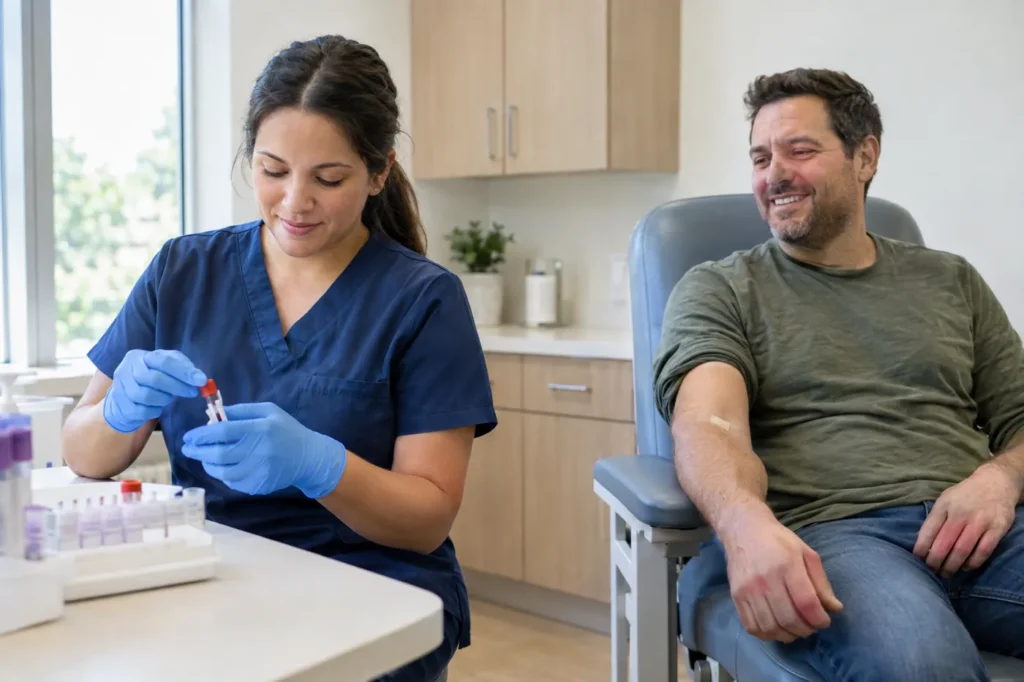
If the provider wants blood work or an EKG, both happen here. Blood is taken in our clinic and processed by an outside lab, as our lab testing page explains.

What happens at your first weight loss visit
The first visit is a conversation and a health check, and any prescription comes only after the provider has reviewed your history. Expect questions about how your weight has changed over the years, what you’ve tried, how you eat and sleep, and your family’s health.
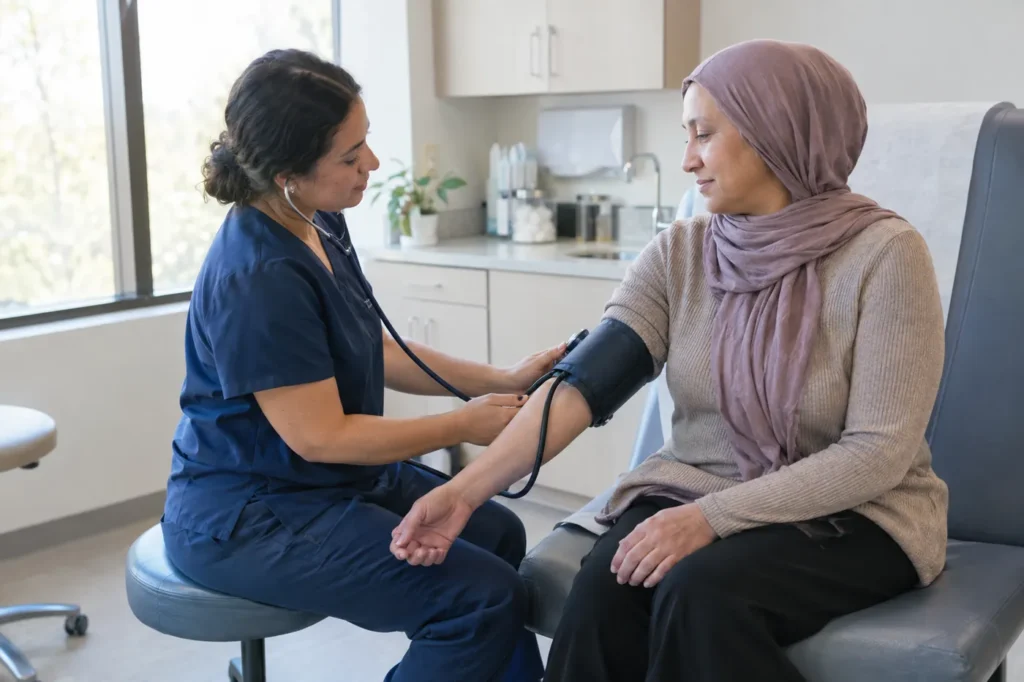
The provider will also go through your current medicines. NIDDK lists changing a medicine that may be causing weight gain as one of the options a clinician can consider. We check your weight and blood pressure, and your height is used to work out your body mass index (BMI).
From there, you and the provider agree on a plan. It starts with eating and activity, because NIDDK says weight management medicines work best alongside a lifestyle program and don’t replace one. If medicine becomes part of the plan, ask how often you’ll come back for check-ins and whether some can happen by telehealth.
How medical weight loss works at our clinic
- 1Walk in or save your spot
Open every day, 8 AM to 8 PM. Walk-ins are welcome, or book online.
- 2Health review
Your weight history, medicines, health conditions and goals.
- 3Measurements and labs
Weight, blood pressure and BMI. Blood drawn here if ordered and sent to an outside lab.
- 4Your plan
Eating and activity changes, and a talk about whether medicine fits you.
- 5Check-ins
Return visits to track progress and side effects. Ask how often you’ll come back.
Who is a candidate for weight loss medicine?
Prescription weight loss medicine is generally meant for adults with a BMI of 30 or higher, or 27 or higher with a weight-related health problem such as high blood pressure or type 2 diabetes. Those are the criteria in NIDDK’s guide to weight management medicines.
BMI compares your weight with your height. The CDC counts a BMI of 25 to under 30 as overweight and 30 or more as obesity, but it calls BMI a screening measure that should be considered with other factors, not a verdict on your health by itself.
Qualifying on paper doesn’t make medicine the right choice. NIDDK warns against taking a weight management medicine only to change how you look, and says not to take one during pregnancy, while planning a pregnancy or while breastfeeding. Tell the provider about any personal or family history of thyroid cancer, and about pancreatitis, gallbladder or kidney disease, glaucoma, seizures or an eating disorder, since each can change which medicine, if any, is safe for you.

Weight loss injections and pills, explained
The weight loss injections on NIDDK’s list are GLP-1 medicines. They copy the action of glucagon-like peptide-1, a hormone your body makes, and act on the brain areas that regulate appetite and food intake. NIDDK’s list of medicines approved for long-term weight management includes semaglutide (Wegovy) and tirzepatide (Zepbound), each injected once a week, and liraglutide (Saxenda), injected daily. Tirzepatide also mimics a second hormone, and MedlinePlus notes that semaglutide slows how quickly the stomach empties.
Pills are on the same list: orlistat, phentermine-topiramate and naltrexone-bupropion. Phentermine on its own is approved only for short-term use. MedlinePlus says most people take it for 3 to 6 weeks and that it can be habit-forming.
After a year, adults who add a prescription medicine to a lifestyle program lose on average 3% to 12% more of their starting weight than people in the same kind of program without medicine, according to NIDDK. Some lose 10% or more. If you haven’t lost at least 5% after 12 weeks on the full dose, NIDDK says the clinician will probably advise stopping that medicine.
Which medicine, if any, suits you depends on your health, your other medicines and your coverage, and the provider decides that with you at the visit.
Talk with a provider about your weight
We’re open every day, 8 AM to 8 PM. Walk in, or book a time online. A list of every medicine and supplement you take gives the provider a head start.
What the FDA says about compounded and online GLP-1 drugs
The FDA’s advice is to get a prescription from your doctor and fill it at a state-licensed pharmacy. Compounded versions of semaglutide and tirzepatide are not FDA-approved, and on its page about unapproved GLP-1 drugs the agency lists warning signs for online and telehealth sellers. Be cautious with a company that:
- doesn’t require a screening and a prescription by a licensed doctor
- claims its compounded drug is the same as an FDA-approved one
- offers prices that seem too good to be true
- has no licensed doctor to answer questions after the medicine arrives
- sells GLP-1 products labeled “for research purposes” or “not for human consumption”, which the FDA says not to buy
Dosing and storage problems
The FDA has reports of adverse events, some needing a hospital stay, linked to wrong doses measured from multi-dose vials. It advises throwing a vial away 28 days after first use even if medicine is left, using a new needle and syringe every time, and not using an injectable GLP-1 that arrives warm. As of May 31, 2026, the agency had received 990 adverse event reports for compounded semaglutide and more than 730 for compounded tirzepatide.
If you’ve already started a product bought online, bring it to your visit. For other peptide treatments, see our peptide therapy page.

What to bring to a weight loss visit
A little preparation makes the first visit more useful. Bring:
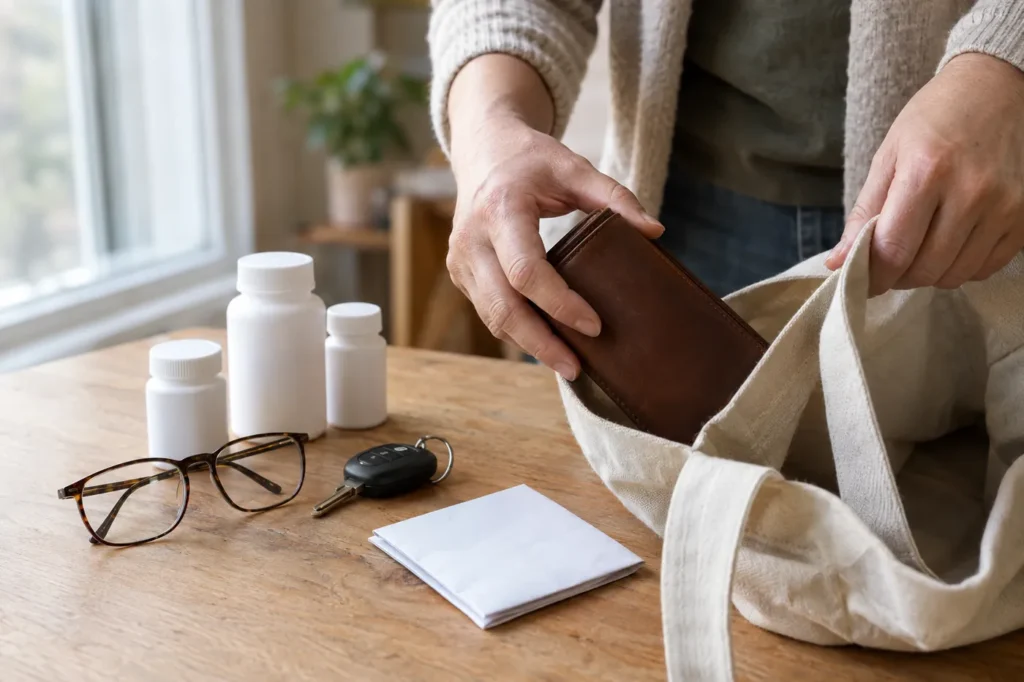
- a driver’s license or other photo ID, and any insurance card
- a written list of all your prescriptions, over-the-counter medicines, vitamins and supplements
- any weight loss medicine you’ve used before, and for anything bought online, the pen, the vial or a photo of the label
- recent lab results from another doctor, if you have them
- a rough history of your weight and the diets or programs you’ve tried
Forms you can fill out first
Our patient forms can be completed before you arrive. Bring the medicine list anyway, even if you’ve typed some of it into a form, so the provider can go through it with you.
What we do not offer
We don’t perform weight loss surgery. NIDDK says surgery may be an option for adults with a BMI of 40 or more, 35 or more with a serious obesity-related problem such as type 2 diabetes or sleep apnea, or 30 or more with type 2 diabetes that is hard to control. If that describes you, talk with your regular doctor about a referral to a surgical program.
We also won’t promise a set number of pounds. Results vary by medicine and by person, and NIDDK notes that most weight loss on medicine happens in the first 6 months.
Insurance and self-pay for medical weight loss
We accept Aetna, Cigna, Medicare, Blue Cross Blue Shield of Illinois, UnitedHealthcare, Humana and Illinois Medicaid plans (HFS, Meridian, CountyCare, Molina and YouthCare). Call (630) 914-5373 to confirm your specific plan before your visit.
Coverage for the visit and coverage for a medicine are separate questions, so check both. Self-pay is available too. Your bill covers the visit and whatever tests the provider orders; call for current self-pay pricing or read our self-pay page.
Coming from nearby towns
Weight management tends to mean follow-up visits, so the drive matters. Patients from Romeoville have the shortest trip, around 10 minutes, and Woodridge adds just one more. Allow about 14 minutes from Lemont, Darien or Lisle and 15 from downtown Plainfield. Downers Grove is a 16-minute drive and Lockport a 17-minute one. Coming from downtown Naperville takes about 18 minutes, a little less from the south end of town.
The Pioneer walk-in visit
How a visit works
- Step 1Walk in or save your spot
No appointment needed. You can also save your spot online before you leave home.
- Step 2Check in
Bring a photo ID, your insurance card and a list of the medicines you take.
- Step 3See a provider
Get examined, with X-ray and rapid tests on site when you need them.
- Step 4Leave with a plan
You go home with a care plan and clear next steps.
Why families in Bolingbrook choose Pioneer
Walk-in care that fits real life
Open 7 days a week
8 AM to 8 PM, weekends included, so a Saturday sore throat does not have to wait until Monday.
X-ray and tests on site
X-ray every day we are open, plus rapid strep, flu and COVID tests, urinalysis and EKG.
Care for kids and adults
From infants through the teen years, and adults of every age, in one clinic.
Insurance and self-pay
Aetna, BCBS of Illinois, Cigna, Humana, Medicare, Illinois Medicaid plans and UnitedHealthcare. Call to confirm your plan.
Questions and answers
Questions we hear often
Still not sure? Call (630) 914-5373 and we will help you decide.
Where can I get weight loss injections near me in Bolingbrook?
Our clinic at 148 S Bolingbrook Dr offers medical weight loss seven days a week, 8 AM to 8 PM. Whether an injection such as a GLP-1 medicine suits you is decided by a provider after reviewing your health, your medicines and your BMI. If you’re asking about a specific medicine, call (630) 914-5373 before you come in.
Do I need an appointment for a medical weight loss visit?
No. Walk-ins are welcome every day, and we’re open 8 AM to 8 PM, weekends included. To pick a time instead, save your spot online. After 8 PM, the booking page shows next-day times. Bring ID and insurance details, plus a written list of everything you take, supplements included.
Do you prescribe phentermine?
Any prescription depends on the provider’s review of your health, so we can’t promise a specific medicine before your visit. Call (630) 914-5373 to ask. For background, MedlinePlus describes phentermine as a short-term medicine, usually taken for 3 to 6 weeks alongside diet and exercise, and warns that it can be habit-forming.
How fast should I expect to lose weight?
Slow and steady tends to last. The CDC says people who lose about 1 to 2 pounds a week are more likely to keep the weight off. Even a modest loss counts: for someone who weighs 200 pounds, 5% is 10 pounds, a change the CDC says could lower the risk of heart disease, prediabetes and type 2 diabetes.
Does insurance cover weight loss medicine?
Some plans do and some don’t, according to NIDDK. Call the number on your insurance card and ask whether the specific medicine is covered and what your share of the cost would be. For the visit itself, call us to confirm your specific plan. Self-pay is available; call for current self-pay pricing.
Is compounded semaglutide the same as Wegovy?
No. The FDA says compounded drugs are not FDA-approved and are not reviewed for safety, effectiveness or quality before they’re sold. It treats a seller’s claim that a compounded product matches an approved drug as a warning sign. Compounded drugs are meant for patients whose needs can’t be met by an FDA-approved drug.
What happens if I stop taking weight loss medicine?
You’ll probably regain some weight, NIDDK says, and steady eating and activity habits may help you regain less. Federal guidelines recommend at least 150 minutes of moderate activity a week plus 2 days of muscle strengthening, and some people need more than 300 minutes to reach or hold a goal. Don’t stop a prescribed medicine without talking to the provider.






Sources for this page
- Prescription Medications to Treat Overweight & Obesity. National Institute of Diabetes and Digestive and Kidney Diseases, NIH.
- Potential Candidates for Weight-loss Surgery. National Institute of Diabetes and Digestive and Kidney Diseases, NIH.
- Steps for Losing Weight. Centers for Disease Control and Prevention.
- Adult BMI Categories. Centers for Disease Control and Prevention.
- FDA’s Concerns with Unapproved GLP-1 Drugs Used for Weight Loss. U.S. Food and Drug Administration.
- Semaglutide Injection. MedlinePlus, National Library of Medicine.
- Phentermine. MedlinePlus, National Library of Medicine.