
Walk-in care · Bolingbrook, IL
Allergy Testing in Bolingbrook, IL
Pioneer Physicians Urgent Care offers allergy testing at 148 S Bolingbrook Dr in Bolingbrook, IL, for people whose sneezing, itching or hives keep coming back. We are open 7 days a week, 8 AM to 8 PM, and you can walk in with a mild allergic reaction, no appointment needed. Call (630) 914-5373 before a testing visit to learn how to prepare.
- Open 7 days, 8 AM to 8 PM
- Walk-ins welcome
- X-ray and rapid tests on site
- Kids and adults
- Medicare and Medicaid plans accepted

Where can I get allergy testing in Bolingbrook?
Our urgent care clinic in Bolingbrook offers allergy testing, and it suits a repeating pattern more than one rough afternoon: a nose that runs every April, eyes that itch after a visit to a friend with a cat, or hives that return with no obvious cause. Knowing the trigger gives you something specific to avoid.
Call ahead rather than walking in for testing. Some everyday medicines can change the results, and preparation depends on which test fits your history. A reaction happening right now is a different kind of visit, covered in the walk-in section below.
Signs that allergy testing could help
Testing helps most when symptoms follow a pattern and you want to know the cause. MedlinePlus lists symptoms and situations like these as reasons to test:
- Sneezing, a runny or stuffy nose, or itchy, watery eyes that return around the same time each year
- Hay fever or asthma symptoms that stay troublesome even with medicine
- Hives that keep reappearing
- A red, sore or swollen rash where something touched the skin
- A past reaction to a food, an insect sting or penicillin, after that reaction has been treated
Allergies or a cold?
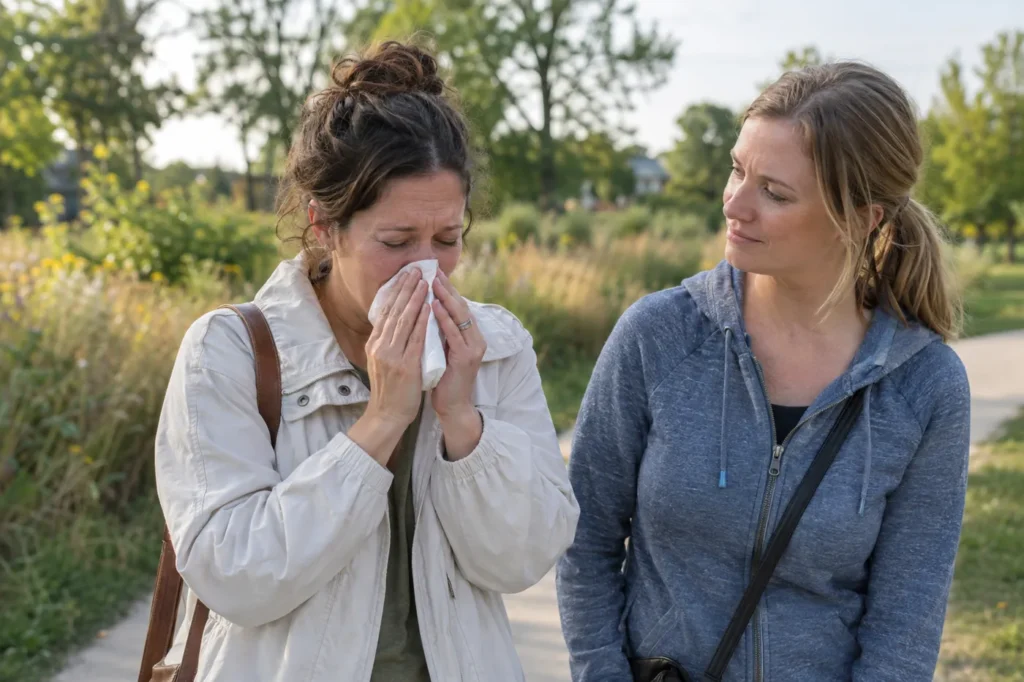
Timing is often the best clue. According to Cleveland Clinic, a cold usually clears within about a week, while allergies hang on for as long as the trigger stays in the air. Colds are more likely to bring fever or body aches, and itchy, red, watery eyes lean toward allergy. If you have a fever with the congestion, infection is the likelier cause, and we can check for strep, flu and COVID with rapid tests at the same visit.
Allergy seasons in the Chicago suburbs
Late summer and fall belong to ragweed. Cleveland Clinic names the Midwest and the East as the worst regions for ragweed allergy, with heavy pollen from late July into early November. Levels run highest from about 10 AM to 3 PM on warm, dry days.
Trees and grasses release pollen earlier, through spring and summer. Dust mites and pet dander work all year and often feel worse in winter, when windows stay shut. People with a ragweed allergy may also get an itchy or tingly mouth after eating certain foods, such as bananas, watermelon, zucchini and cucumber, a cross-reaction called oral allergy syndrome.
Skin prick test or allergy blood test?
| Topic | Skin prick test | Allergy blood test |
|---|---|---|
| How it is done | Drops of allergen on the forearm or back, then a light prick | A small blood sample from a vein in the arm |
| What it feels like | Mild discomfort; positive spots itch and swell like a bug bite | A quick sting, sometimes a small bruise |
| When results come | Usually within 15 to 20 minutes | After an outside lab processes the sample |
| Antihistamines | Can change results; ask before your visit | Tell your provider everything you take |
| Often chosen for | Pollen, dust mites, pets, mold and foods | Skin conditions, medicines you cannot pause, young children |
| Main limit | Can be positive for something that causes no symptoms | IgE level does not predict how severe a reaction would be |
Skin tests and blood tests, explained
Most allergy tests fall into two groups, skin tests and blood tests, and some people need both. Your symptoms, skin and medicines decide which fits, so call to ask which type is used for your situation.
Skin prick testing
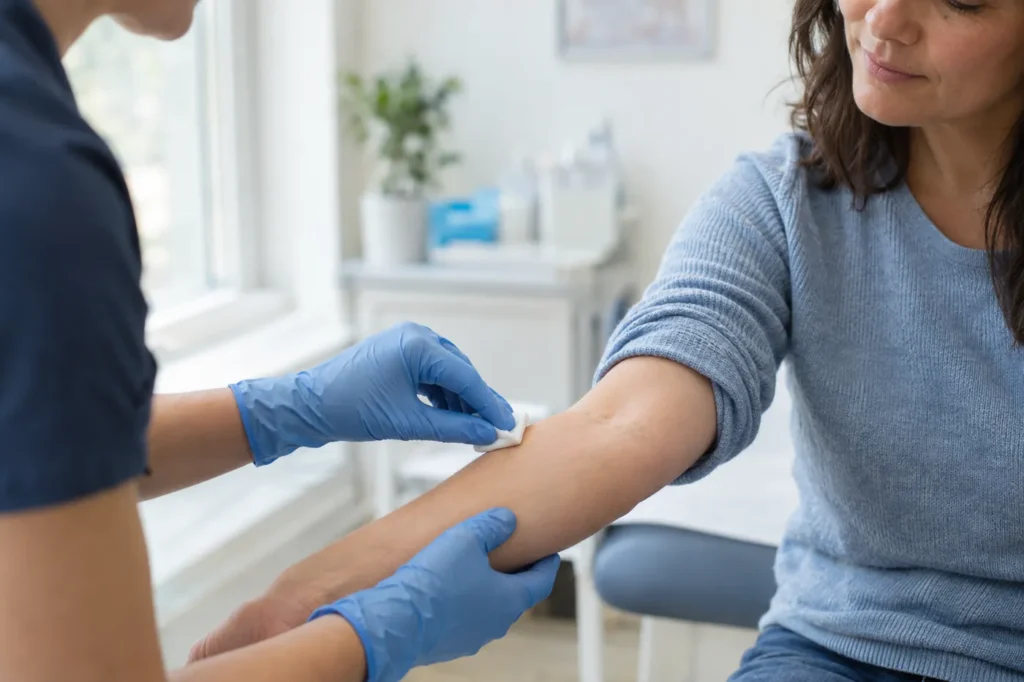
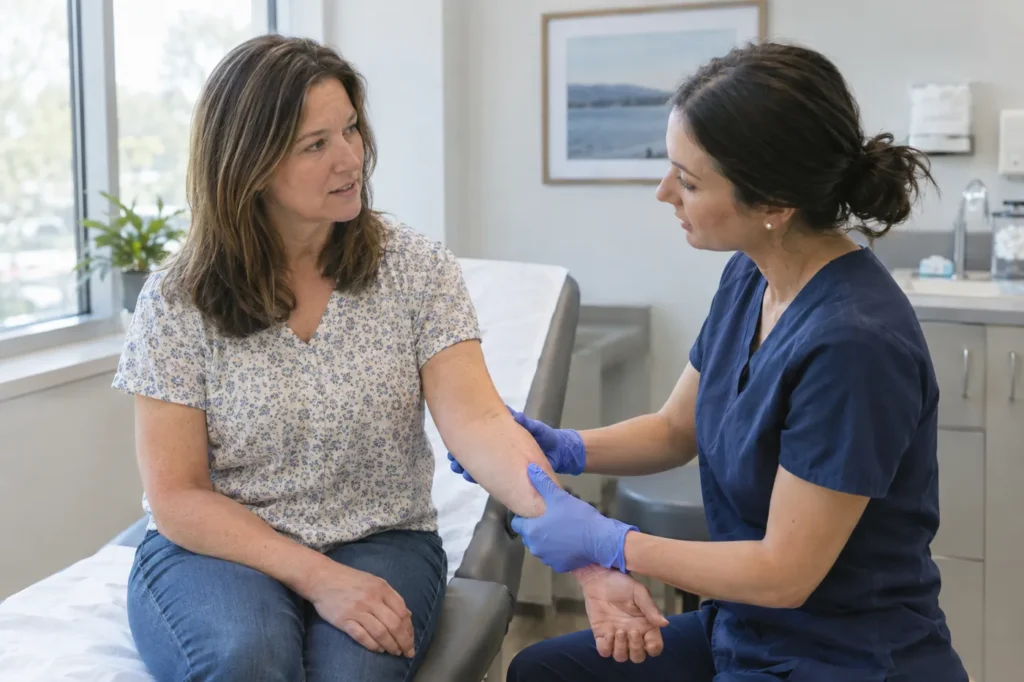
Drops of possible allergens go on your forearm or back, then each spot gets a light prick. A positive spot swells, reddens and itches like a bug bite. The MedlinePlus guide to skin testing says results usually show within 15 to 20 minutes, and one session can check several foods and airborne triggers.
Intradermal and patch tests
An intradermal test injects a tiny amount of allergen into the skin, usually on the upper arm. It is used most often for bee venom or penicillin, or when a prick test was negative but an allergy still seems likely, and never for foods. A patch test tapes possible triggers to the skin for 48 hours, with a check at 72 to 96 hours, to find the cause of a contact rash.
Allergy blood testing
An allergy blood test checks for IgE, an antibody your immune system makes in response to an allergen. It can be the better choice with certain skin conditions, a medicine that would throw off a skin test, a high risk of a strong reaction, or a young child who would find skin testing too uncomfortable. Any blood drawn at our clinic is sent to an outside lab, as with our other lab tests, so results arrive after your visit.
What happens at an allergy testing visit
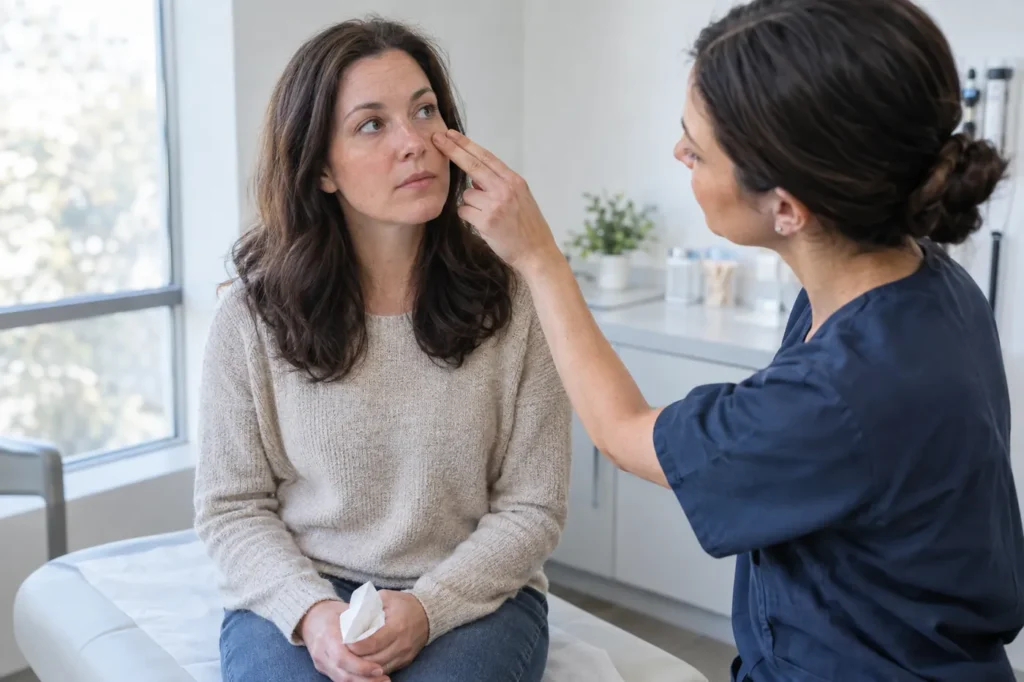
The visit starts with questions, since your history counts as much as any result. Expect to talk about when symptoms began, whether they change with the season, your home and work, pets, diet and what you have tried. The provider may also examine you before deciding which test, if any, fits.
A positive result shows your body is sensitized to a substance. It often explains your symptoms, but not always, because a test can light up for things that never bother you in daily life, and food results mislead most often. That is why results are read against your symptoms. The plan that follows may include ways to cut exposure, treatment for symptoms, or a visit with an allergist.

Find out what keeps setting off your allergies
Call (630) 914-5373 to ask about allergy testing in Bolingbrook, or walk in if a mild reaction flares up today.
How to prepare and what to bring
Keep taking your medicines until we say otherwise, and bring a full list. Prescription and over-the-counter antihistamines can change skin test results, so you may be asked to stop them for a set time first. MedlinePlus notes that nasal steroid sprays and asthma inhalers can usually continue. If pausing an antihistamine would leave you miserable, tell us, because another testing approach may work.
- Your insurance card and a photo ID
- A list of all your medicines, vitamins and supplements, including ones sold without a prescription
- Photos of past hives, rashes or swelling
- A short symptom log with dates, places, and what you ate, touched or were stung by
- The label from any food, soap or lotion you suspect
- Results from any earlier allergy tests
Walk-in care for a mild allergic reaction
You can walk in for a mild allergic reaction any day of the week, with no appointment needed. Mild reactions stay limited: a few hives, often on the neck and face, itching, a rash, congestion, or red, watery eyes. The provider will ask about new foods, medicines, soaps and stings, examine you, and go over the warning signs to watch for.
Finding the cause matters even after a small reaction, because MedlinePlus explains that later exposures can bring more serious ones. Our allergic reactions page covers home care, and children of every age, infants through teens, are seen at our pediatric urgent care.

When an allergist is the better next step
Some allergy questions belong with an allergist, a doctor who specializes in allergies and the immune system. Food is the clearest case: the MedlinePlus food allergy article advises that anyone who has had a reaction to a food should see one. A supervised food challenge can help answer an unclear result, but it can trigger a severe reaction, so only a trained provider should run it. Never test a food on yourself at home.
Allergy shots, also called immunotherapy, are a longer-term treatment. Each injection holds slightly more allergen than the last, and over time the immune system learns to tolerate it. Not sure if you need an allergist? Ask at your visit. If allergens set off wheezing or chest tightness, see our asthma treatment page.

Insurance and self-pay for allergy testing
We accept Aetna, Cigna, Medicare, Blue Cross Blue Shield of Illinois, UnitedHealthcare, Humana and the Illinois Medicaid plans HFS, Meridian, CountyCare, Molina and YouthCare. Coverage for allergy tests differs by plan, so call to confirm your specific plan ahead of a testing visit.
Some plans want a referral first. HealthCare.gov notes that many HMOs require a written referral from your primary care doctor before certain services and may not pay without one. If you are uninsured, self-pay is an option, and the bill covers the visit plus whatever tests you need. Call the front desk for current self-pay pricing.
Getting here from nearby towns
The drive is short from most of the towns around us. Romeoville is roughly 10 minutes away and Woodridge 11, while Darien, Lemont and Lisle take about 14 minutes each. Lockport is about 17 minutes out, Downers Grove 16 and downtown Plainfield 15. Downtown Naperville is around 18 minutes away, and the south side of Naperville is closer.
Romeoville families can read about allergy testing near Romeoville. Our town pages for Naperville and Plainfield cover the route from each place. After we close at 8 PM, you can still book a next-day visit online.
The Pioneer walk-in visit
How a visit works
- Step 1Walk in or save your spot
No appointment needed. You can also save your spot online before you leave home.
- Step 2Check in
Bring a photo ID, your insurance card and a list of the medicines you take.
- Step 3See a provider
Get examined, with X-ray and rapid tests on site when you need them.
- Step 4Leave with a plan
You go home with a care plan and clear next steps.
Why families in Bolingbrook choose Pioneer
Walk-in care that fits real life
Open 7 days a week
8 AM to 8 PM, weekends included, so a Saturday sore throat does not have to wait until Monday.
X-ray and tests on site
X-ray every day we are open, plus rapid strep, flu and COVID tests, urinalysis and EKG.
Care for kids and adults
From infants through the teen years, and adults of every age, in one clinic.
Insurance and self-pay
Aetna, BCBS of Illinois, Cigna, Humana, Medicare, Illinois Medicaid plans and UnitedHealthcare. Call to confirm your plan.
Questions and answers
Questions we hear often
Still not sure? Call (630) 914-5373 and we will help you decide.
Can an immediate care clinic treat an allergic reaction?
Yes, if the reaction is mild. Hives, itching, a rash or itchy, watery eyes can be seen at our Bolingbrook clinic with no appointment, any day of the week. We are open 8 AM to 8 PM, not 24 hours. Trouble breathing, face or tongue swelling, or fainting needs 911, not immediate care.
Should I stop taking antihistamines before an allergy test?
Not on your own. Over-the-counter and prescription antihistamines can change skin test results, so you may be asked to pause them first. An allergy blood test usually needs no special preparation. Either way, tell us everything you take, and call (630) 914-5373 to learn what applies to your test.
How long do allergy test results take?
That varies by test. According to MedlinePlus, a skin prick test is usually read within 15 to 20 minutes. If a blood test is used, the sample is sent to an outside lab and results follow the visit. Ask us by phone which test fits your symptoms and when to expect answers.
Can children get allergy testing?
We see children of every age for urgent care. For allergy testing, call first so we can go over your child’s age, symptoms and current medicines. Young kids sometimes get a blood test instead of a skin test, since skin testing can be hard on them. After any reaction to a food, plan to see an allergist.
Can allergy testing tell me if I have a food allergy?
It can point the way, but it cannot settle the question alone. Food results often come back positive in people who eat that food without trouble. When the answer is unclear, an allergist may run a supervised food challenge. After a whole-body reaction to a food, even hives, MedlinePlus says to learn how to use epinephrine.
Do I need a referral for allergy testing?
It depends on your insurance. Many HMO plans want a referral from your regular doctor before certain services, and they may refuse to pay without one. Check with your insurer, then phone us at (630) 914-5373 to confirm your specific plan. If you plan to pay yourself, ask the front desk what to bring.
Can allergies cause a cough or wheezing?
Yes. Cleveland Clinic lists coughing, wheezing and trouble breathing among hay fever symptoms, and hay fever can make asthma symptoms worse. Mild wheezing that eases with your usual inhaler can be checked at our clinic. Wheezing with face or tongue swelling, or breathing that keeps getting harder, needs a 911 call.





Sources for this page
- Allergy testing, skin. MedlinePlus, U.S. National Library of Medicine.
- Allergy Blood Test. MedlinePlus, U.S. National Library of Medicine.
- Allergic reactions. MedlinePlus, U.S. National Library of Medicine.
- Anaphylaxis. MedlinePlus, U.S. National Library of Medicine.
- Food allergy. MedlinePlus, U.S. National Library of Medicine.
- Allergic Rhinitis (Hay Fever). Cleveland Clinic.
- Ragweed Allergy. Cleveland Clinic.
- Referral (glossary). HealthCare.gov, Centers for Medicare & Medicaid Services.