
Near Romeoville · Pioneer Physicians
Peptide Therapy Near Romeoville, IL
Peptide therapy for Romeoville residents is offered at our Bolingbrook, IL clinic on South Bolingbrook Drive, about a 10-minute drive north on Route 53. We are open every day of the week from 8 AM until 8 PM. Before a first visit, call (630) 914-5373 to learn which peptide treatments we provide and what to bring.
- Open 7 days, 8 AM to 8 PM
- Walk-ins welcome
- X-ray and rapid tests on site
- Kids and adults
- Medicare and Medicaid plans accepted

Where to get peptide therapy near Romeoville
Our Bolingbrook clinic is where we provide peptide therapy, since it is our only location and we have no office in Romeoville. The Census Bureau puts this Will County village at about 41,000 residents as of July 2025, and Bolingbrook is its next-door neighbor to the north.
Peptide therapy is a planned treatment rather than a sick visit, so call first. Ask which peptides we prescribe, whether recent lab work would help, and what self-pay costs. Our main peptide therapy page explains the service in more depth, and the Romeoville service area page lists our other care.
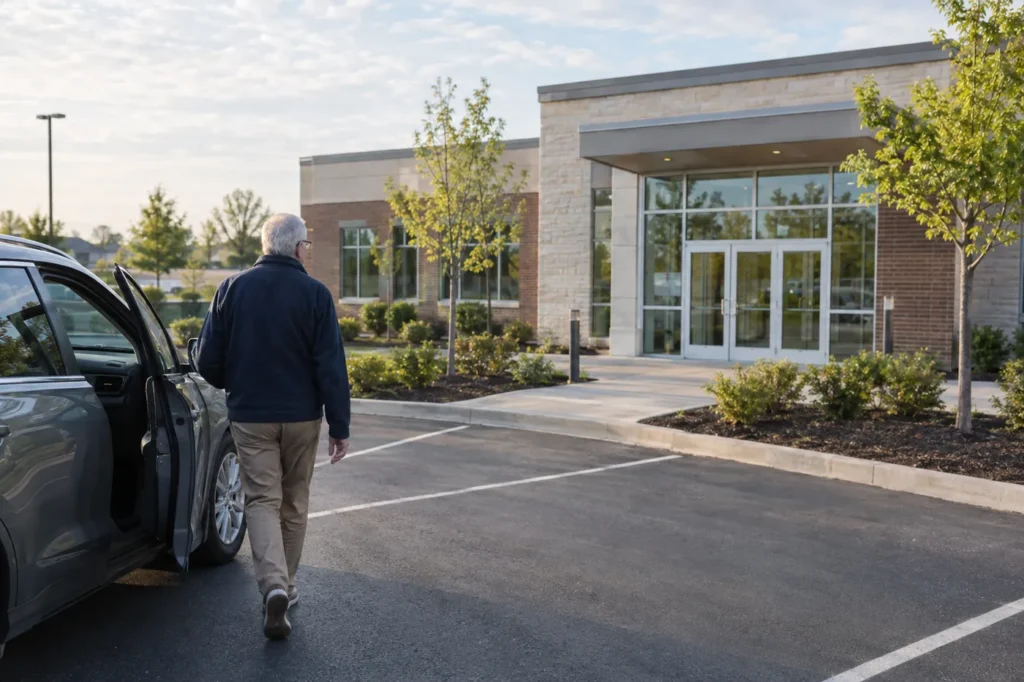
How long is the drive from Romeoville?
Plan on about 9 to 16 minutes, depending on your starting point, based on OpenStreetMap routing. Most of the trip is on Independence Boulevard, which carries Route 53 along the old Route 66 path and then becomes South Bolingbrook Drive, the street our clinic is on.
Typical starting points:
- Central Romeoville, off Belmont Drive: Belmont Drive to Independence Boulevard, then north on Route 53. About 4.3 miles and 9 minutes.
- Romeoville High School on Independence Boulevard: north on Route 53 the whole way. About 5.2 miles and 11 to 12 minutes.
- Village Hall on Romeo Road: Grand Boulevard to Weber Road, north on I-55, then exit at Route 53. About 5.9 miles and 11 minutes.
- Lewis University: University Parkway to Independence Boulevard, then north. About 7.2 miles and 15 minutes.
Checking a peptide before you use it
- 1Ask about FDA status
Find out whether the peptide is FDA-approved for your use, or only under review.
- 2Get an exam first
Have a licensed clinician review your health history and current medicines.
- 3Use a licensed pharmacy
Fill the prescription at a state-licensed pharmacy, not an unverified website.
- 4Check sport rules
If you compete, compare it with the NCAA or WADA banned lists before the first dose.
What peptides are and why FDA approval matters
A peptide is a short chain of amino acids, and only some peptide medicines are FDA-approved. According to the National Human Genome Research Institute, most peptides hold 2 to 50 linked amino acids. A chain of 51 or more is a polypeptide, and proteins are built from polypeptides. Your body makes many peptides on its own, and some have been developed into prescription medicines.
GLP-1 medicines, short for glucagon-like peptide-1 receptor agonists, are the best-known example. FDA-approved versions exist, but FDA warns that unapproved versions sold for weight loss never go through its review for safety, effectiveness and quality. If weight loss is your main goal, our medical weight loss page covers those medicines.
Many peptides promoted online for muscle growth or faster recovery have no FDA approval for any use, so no FDA review has found them safe and effective for any condition.

Ask about peptide therapy before you drive over
Call (630) 914-5373 to ask which peptides we offer, then head north on Route 53 from Romeoville to 148 S Bolingbrook Dr.
What FDA has said about BPC-157 and similar peptides
FDA says it has little human safety data on several popular peptides, and their status for pharmacy compounding was still under review in 2026. When these substances were nominated for compounding, FDA reviewed each one and posted its concerns on a page about risky bulk drug substances.
For BPC-157, FDA wrote that compounded versions may trigger immune reactions, may contain peptide-related impurities, and have little or no safety information for the proposed routes of use. For TB-500 it raised the same immune and impurity concerns and found no human exposure data. For CJC-1295 it reported serious side effects, including a raised heart rate, and for Melanotan II it cited published case reports of melanoma.
In July 2026, an FDA advisory committee met to discuss whether pharmacies may compound BPC-157, KPV, TB-500 and MOTS-c. Advisory committees give advice FDA does not have to follow, so the rules could still change, and compounding permission would not make any of them an FDA-approved drug. Ask about the FDA status of any peptide suggested to you.
A warning for Lewis University athletes
If you compete in a drug-tested sport, many peptides are banned, including BPC-157 and TB-500. Lewis University’s main campus is in Romeoville, and its Flyers play in NCAA Division II. The NCAA banned substances list for 2026-27 has a class for peptide hormones, growth factors, related substances and mimetics, and it names BPC-157, TB-500 and human growth hormone as examples. Anything chemically or pharmacologically related to a banned class is banned too.
Olympic-style testing bans BPC-157 as well. USADA explains that it falls in the S0 class, non-approved substances, on the World Anti-Doping Agency’s prohibited list. Talk with your athletic trainer before you start any peptide, and tell us at the visit that you compete.

Peptides bought online versus a prescription
A vial ordered from a website is not the same as a medicine prescribed after an exam and filled at a state-licensed pharmacy, which is the route FDA advises. The red flags in its warning about unapproved GLP-1 drugs are worth checking for any injectable bought online:
- No screening and prescription by a licensed doctor before the medicine ships
- Deep discounts, or a price that looks too low to be real
- Medicine that looks different than before, or arrives damaged or without instructions
- Spelling errors on the label or a pharmacy address that does not check out
- No licensed doctor available to answer questions afterward
Handling multi-dose vials
FDA recommends throwing a multi-dose vial away 28 days after the first use, even if medicine is left, and using a new sterile needle and syringe for every dose. Side effects or quality problems with any medicine can be reported to FDA’s MedWatch program.
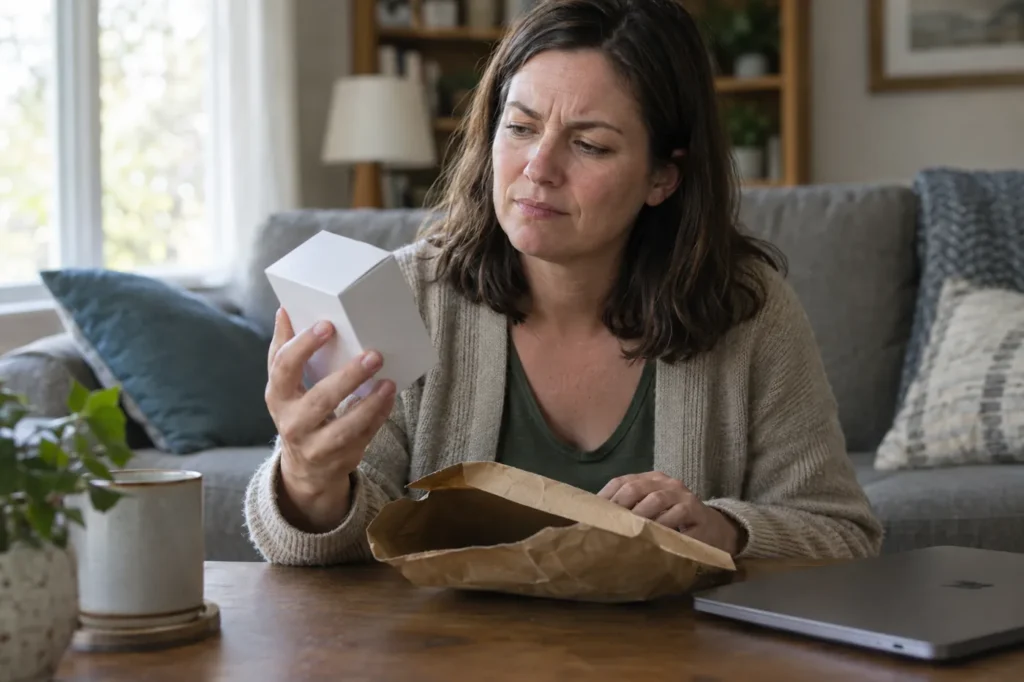
What to bring to a peptide therapy visit
Bring a full list of everything you take, including anything bought online, so it can be checked before anything new is added.
- Photo ID and your insurance card
- Prescription medicines, vitamins and supplements, with doses
- The vial, box or label of any peptide you already use
- Copies of any recent blood work done at another office
Questions worth asking
Ask whether the peptide is FDA-approved for your use, which side effects to watch for, how progress will be checked and what the total cost will be. If a clinician orders blood work, it is drawn at our clinic and then goes to an outside lab, which means a wait for results. Our page on lab tests and EKG explains what is done on site.
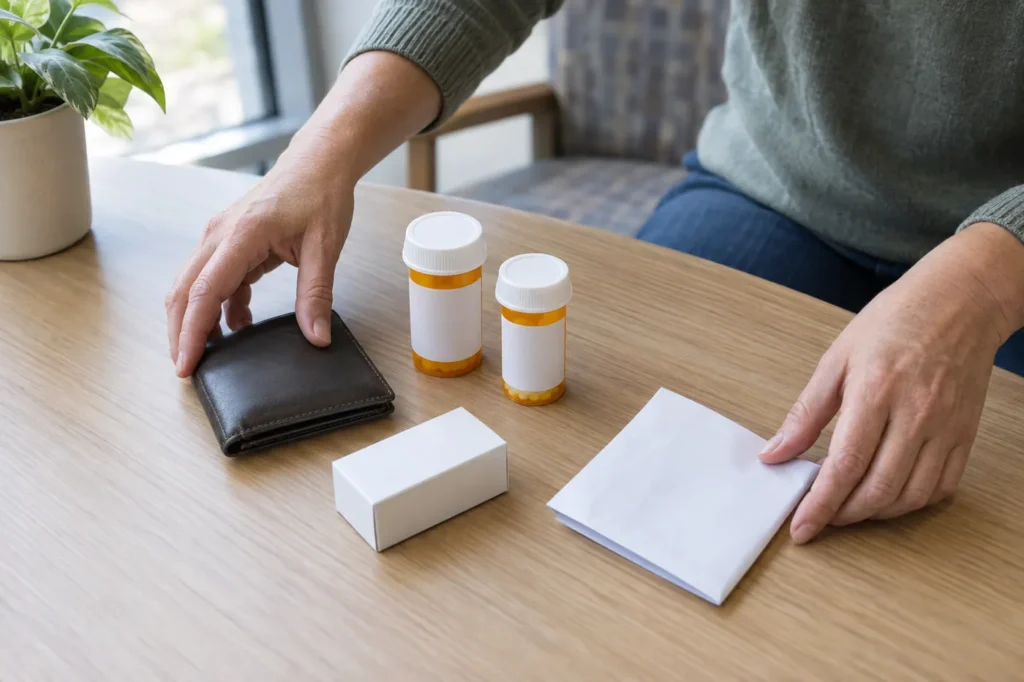
The Pioneer walk-in visit
How a visit works
- Step 1Walk in or save your spot
No appointment needed. You can also save your spot online before you leave home.
- Step 2Check in
Bring a photo ID, your insurance card and a list of the medicines you take.
- Step 3See a provider
Get examined, with X-ray and rapid tests on site when you need them.
- Step 4Leave with a plan
You go home with a care plan and clear next steps.
Why families in Bolingbrook choose Pioneer
Walk-in care that fits real life
Open 7 days a week
8 AM to 8 PM, weekends included, so a Saturday sore throat does not have to wait until Monday.
X-ray and tests on site
X-ray every day we are open, plus rapid strep, flu and COVID tests, urinalysis and EKG.
Care for kids and adults
From infants through the teen years, and adults of every age, in one clinic.
Insurance and self-pay
Aetna, BCBS of Illinois, Cigna, Humana, Medicare, Illinois Medicaid plans and UnitedHealthcare. Call to confirm your plan.
Questions and answers
Questions we hear often
Still not sure? Call (630) 914-5373 and we will help you decide.
Is there a peptide clinic in Romeoville?
We do not have one there. Our only clinic is in Bolingbrook, IL, on South Bolingbrook Drive, about 4.3 miles and 9 minutes north of central Romeoville by Route 53, and it is open every day. Call (630) 914-5373 to ask about peptide therapy before you come in.
How do I find a peptide doctor near me?
Look for a licensed clinician who examines you, reviews all of your medicines and sends prescriptions to a state-licensed pharmacy. FDA warns against sellers that skip screening, advertise suspiciously deep discounts or have no doctor to answer questions later. A careful prescriber will also tell you when a peptide has no FDA approval.
Do I need a prescription for peptide therapy?
Yes, for peptide medicines. They are prescription drugs, so a licensed clinician prescribes them after reviewing your health, and FDA advises filling prescriptions at a state-licensed pharmacy. A website that ships peptides without screening or a prescription is one of the red flags FDA lists. Call to ask how a first visit works here.
Is BPC-157 FDA-approved?
No. According to USADA, no health authority, FDA included, has approved BPC-157 for clinical use in people, and FDA says it has little safety information on it. An FDA advisory committee discussed compounding it in July 2026, but that committee only gives advice. BPC-157 is also named on the NCAA banned list.
Can I walk in for peptide therapy?
Yes. We’re open 8 AM to 8 PM every day, walk-ins are welcome, and you can also pick a time online. Peptide therapy is not a sick visit, though, so call (630) 914-5373 first to ask how the first appointment works and what to bring. After 8 PM, online booking offers next-day times.
Will my health plan cover peptide therapy?
Coverage depends on your plan and the reason for the prescription. Plans we accept include Medicare, Humana, Aetna, Blue Cross Blue Shield of Illinois, Cigna and UnitedHealthcare, plus Illinois Medicaid plans from YouthCare, Molina, Meridian, CountyCare and HFS. Please call to confirm your specific plan. Or, if you prefer, self-pay is an option; call for current self-pay pricing.
Is GLP-1 weight loss medicine a peptide?
Yes. The letters mean glucagon-like peptide-1, a hormone the small intestine makes, and these medicines act on the same receptor it uses. FDA-approved versions exist, and FDA has warned about unapproved copies sold for weight loss. If losing weight is your main goal, start with our medical weight loss page, which covers these medicines.





Sources for this page
- Peptide (Talking Glossary of Genomic and Genetic Terms). National Human Genome Research Institute, NIH.
- Certain Bulk Drug Substances for Use in Compounding that May Present Significant Safety Risks. U.S. Food and Drug Administration.
- July 23-24, 2026: Meeting of the Pharmacy Compounding Advisory Committee. U.S. Food and Drug Administration.
- FDA’s Concerns with Unapproved GLP-1 Drugs Used for Weight Loss. U.S. Food and Drug Administration.
- Banned Substances. NCAA.
- BPC-157: Experimental Peptide Creates Risk for Athletes. U.S. Anti-Doping Agency.
- Anaphylaxis. MedlinePlus, U.S. National Library of Medicine.
- Cellulitis. MedlinePlus, U.S. National Library of Medicine.