
Patient guide · Pioneer Physicians
What Is the Difference Between Urgent Care and a Walk-In Clinic?
The urgent care vs walk-in clinic question comes down to one idea: “walk-in” means no appointment, and “urgent care” describes how much a clinic can treat. Pharmacy walk-in clinics usually handle a short list of minor illnesses, while urgent care also sees minor injuries and often has X-ray and lab tests. Pioneer Physicians in Bolingbrook, IL is both, open 7 days, 8 AM to 8 PM.
- Open 7 days, 8 AM to 8 PM
- Walk-ins welcome
- X-ray and rapid tests on site
- Kids and adults
- Medicare and Medicaid plans accepted

Is a walk-in clinic the same as urgent care?
Sometimes. An urgent care center is one kind of walk-in clinic, but many walk-in clinics are not urgent care centers. The two labels answer different questions. “Walk-in” tells you how you get in the door. “Urgent care” tells you what kind of problem the clinic is set up to handle.
What does walk-in mean?
Walk-in means you can show up during open hours and be seen without booking ahead. It describes access, not the level of care. A walk-in clinic might be one exam room in a drugstore or a full urgent care with X-ray down the hall.
Here’s how that works at our clinic. We’re open every day from 8 AM to 8 PM, and walk-ins are welcome, no appointment needed. If you’d rather hold a place first, save your spot online from home. We aren’t open 24 hours. In the evening after we close, online booking lists times for the next day.

A typical retail walk-in clinic vs our urgent care
| Topic | Typical retail walk-in clinic | Pioneer Physicians Urgent Care |
|---|---|---|
| Where it is | Inside a pharmacy, grocery store or big box store | Our own clinic at 148 S Bolingbrook Dr, Bolingbrook |
| Appointment | Walk in | Walk in, or save your spot online |
| Hours | Set by each store | 7 days, 8 AM to 8 PM; walk-ins welcome |
| Problems seen | A short list of minor illnesses, such as sore throat, colds, flu symptoms, cough and sinus infections | Illnesses plus minor injuries, such as sprains and possible broken bones |
| Testing | Often limited | X-ray every day we are open; rapid strep, flu and COVID; urinalysis; EKG; blood drawn and sent to a lab |
| Children | Often has age limits; the AAP advises against it for children under 2 | Infancy through the teen years |
| Not available | Varies by clinic | CT, MRI and childhood vaccinations |
How retail walk-in clinics work
A retail clinic is a walk-in clinic set up inside a pharmacy, grocery store or big box store. The American Academy of Pediatrics says these clinics usually offer a narrow range of services and follow strict treatment protocols. They are typically staffed by nurse practitioners or physician assistants, and they often have age limits, limits on what they diagnose and limited testing.
The American Academy of Family Physicians says retail clinic care should center on a defined set of minor, short-term illnesses, such as sore throat, the common cold, flu symptoms, cough and sinus infections. It adds that ongoing care for chronic conditions should come from a primary care physician, and that retail clinics should refer patients back to that doctor for continuing care.
That setup can work well for a simple sore throat. If you think you need an X-ray, call first and ask.

What an urgent care center adds
Urgent care handles problems that need attention today but aren’t emergencies, and that includes minor injuries as well as illness. Cleveland Clinic describes urgent care centers as filling the gap between your primary care provider’s office and the emergency room, and notes that many offer walk-in visits with evening or weekend hours.
MedlinePlus, from the National Library of Medicine, lists what an urgent care clinic can take care of: mild illnesses such as colds, flu, earaches, sore throats, low-grade fevers and limited rashes, plus minor injuries such as sprains, back pain, minor burns and minor broken bones.
Services still differ from one urgent care to the next. Cleveland Clinic points out that some centers offer X-rays, splinting and simple lab tests, and suggests finding out before you need care what the one closest to you can do. Urgent care is not an ER, either. The American College of Emergency Physicians calls urgent care no substitute for emergency care, because these centers lack the equipment and trained staff an emergency department has.
Not sure which kind of clinic you need?
Walk in any day and we can see an illness or a minor injury in one visit, or save your spot online before you leave home.
Is Pioneer Physicians in Bolingbrook a walk-in clinic or an urgent care?
Both. We are an urgent care that welcomes walk-ins, any day of the week, so you don’t have to pick a label before you come in. We see adults and children of every age, infancy through the teen years.
The difference shows up in what we can check during one visit. X-ray runs every day we’re open, and splints and crutches are on hand, so a wrist or ankle that might be broken can be imaged and supported before you head home. We run rapid strep, flu and COVID tests, urinalysis and EKG here, and we draw blood on site and send it to an outside lab. Read more about X-ray at our clinic.
There are limits. We do not have CT or MRI, and we are not an emergency room. For directions and the full list of what we treat, see our page on walk-in immediate care in Bolingbrook.
Urgent care vs walk-in clinic for common problems
Choose the place that can handle the worst likely version of your problem.
- Sore throat, cold, cough or sinus pressure in an adult: a retail clinic or urgent care can usually help. At our clinic, a rapid strep or flu test can be run during the visit.
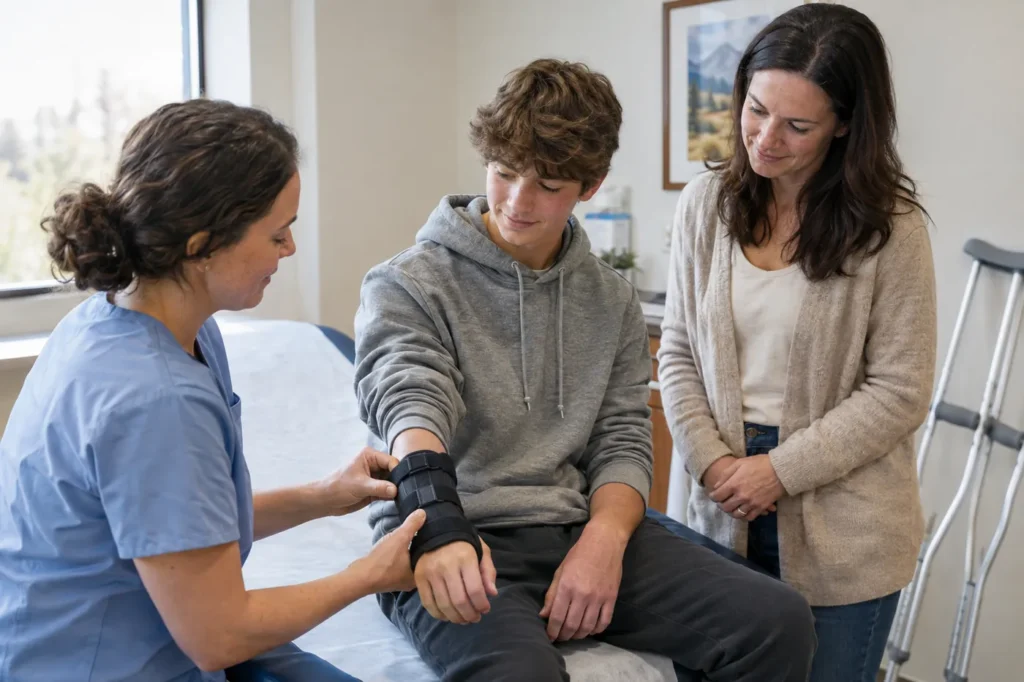
- A twisted ankle, a sore wrist after a fall or a possible broken bone: go where X-ray is available. We have it every day we’re open.
- A sick baby or toddler: call your pediatrician first if you can. The AAP does not recommend retail clinics for children under 2, because illness can change quickly at that age. We see children of all ages at our pediatric urgent care.
- Ongoing care for a long-term condition: that belongs with a primary care provider. Our clinic also offers primary care.
- A seasonal flu shot: the AAP says retail clinics can be convenient for seasonal vaccines. We give flu shots too. Call us to ask about ages.
- Chest pain, severe trouble breathing or signs of a stroke: skip both and call 911.
Childhood vaccines
We do not give childhood vaccinations. For routine shots, see your child’s regular doctor or the county health department. The Will County Health Department runs an immunization clinic for county residents, with a branch in Bolingbrook. DuPage County families can get childhood shots from the county health department in Wheaton, Westmont or Lombard if the child qualifies for the Vaccines for Children program.
Cost and insurance at walk-in clinics and urgent care
What you pay depends on your plan and the type of clinic. The AAP notes that urgent care may carry a higher copay than your regular doctor’s office but is far less expensive than an ER. By MedlinePlus’s estimate, the same care in an emergency department can run 2 to 3 times what it costs in your provider’s office.
Read the sign on the building, too. The AAP warns that some freestanding emergency departments look like urgent care centers but bill as emergency care, which can cost much more.
We accept Aetna, Cigna, Medicare, Blue Cross Blue Shield of Illinois, UnitedHealthcare, Humana and Illinois Medicaid plans (HFS, Meridian, CountyCare, Molina and YouthCare). Call (630) 914-5373 to confirm your specific plan. If you’re uninsured, you can pay on your own. The bill is the visit plus any tests you end up needing. Call for current self-pay pricing.
Plan ahead before someone gets sick
The best time to sort out walk-in clinic vs urgent care is before you need either one. MedlinePlus suggests saving a few numbers in your phone now: your regular provider, the closest emergency department, a nurse advice line, an urgent care clinic and a walk-in clinic. Your insurer’s website can show which ones are in your network.

The Pioneer walk-in visit
How a visit works
- Step 1Walk in or save your spot
No appointment needed. You can also save your spot online before you leave home.
- Step 2Check in
Bring a photo ID, your insurance card and a list of the medicines you take.
- Step 3See a provider
Get examined, with X-ray and rapid tests on site when you need them.
- Step 4Leave with a plan
You go home with a care plan and clear next steps.
Why families in Bolingbrook choose Pioneer
Walk-in care that fits real life
Open 7 days a week
8 AM to 8 PM, weekends included, so a Saturday sore throat does not have to wait until Monday.
X-ray and tests on site
X-ray every day we are open, plus rapid strep, flu and COVID tests, urinalysis and EKG.
Care for kids and adults
From infants through the teen years, and adults of every age, in one clinic.
Insurance and self-pay
Aetna, BCBS of Illinois, Cigna, Humana, Medicare, Illinois Medicaid plans and UnitedHealthcare. Call to confirm your plan.
Questions and answers
Questions we hear often
Still not sure? Call (630) 914-5373 and we will help you decide.
Is a walk-in clinic the same as urgent care?
Not always. Walk-in only means no appointment is needed. Urgent care is set up for illnesses and minor injuries that need care today but are not emergencies, often with X-ray and lab tests. Pharmacy walk-in clinics usually treat a shorter list. An urgent care that takes walk-ins, like ours in Bolingbrook, is both.
What does walk-in mean at a clinic?
It means you can come in during open hours without booking ahead. It says nothing about what the clinic can treat or test. At Pioneer Physicians, walk-ins are welcome 7 days a week, and you can also save your spot online.
Is Pioneer Physicians a walk-in clinic?
Yes. Pioneer Physicians Urgent Care at 148 S Bolingbrook Dr is a walk-in urgent care, and no appointment is needed. Hours are 8 AM to 8 PM every day of the week, weekends included. You can also book online, and after 8 PM the booking page shows next-day times.
Can a walk-in clinic do X-rays?
Some can and some can’t. Retail clinics often have limited testing, and services vary between urgent care centers, so call ahead if you think you need one. Our X-ray is on site every day we’re open, and splints and crutches are available too. We do not have CT or MRI.
Should I take my baby to a walk-in clinic?
Call your pediatrician first if you can. The AAP does not recommend retail clinics for children under 2, because illness can change quickly at that age. Our clinic treats kids from infancy through the teen years. If a baby stops breathing, turns blue or is suddenly hard to wake up, call 911.
Is urgent care more expensive than a walk-in clinic?
It depends on your plan, so check the copay your insurer lists for each setting. The AAP says urgent care may cost more than your regular doctor’s office but far less than an ER. If you pay for yourself here, the cost is the visit plus any tests. Call (630) 914-5373 for current self-pay pricing.
Can a walk-in clinic be my regular doctor?
A retail walk-in clinic usually isn’t meant to be. The AAFP says retail clinics should focus on short-term minor illnesses and send patients back to a primary care physician for ongoing care. We offer primary care as well as urgent care, so you can see us for a sick visit today and an annual physical later.







Sources for this page
- Urgent Care for Children and Teens: AAP Policy Explained. American Academy of Pediatrics, HealthyChildren.org.
- Retail Clinics (policy). American Academy of Family Physicians.
- Urgent Care vs. the ER: How To Choose Where To Go. Cleveland Clinic.
- When to use the emergency room: adult. MedlinePlus, U.S. National Library of Medicine.
- When to use the emergency room: child. MedlinePlus, U.S. National Library of Medicine.
- Urgent care (glossary). HealthCare.gov, Centers for Medicare and Medicaid Services.
- Emergency Care vs. Urgent Care. American College of Emergency Physicians.
- Immunizations. Will County Health Department.