Patient guide · Pioneer Physicians
Urgent Care vs Primary Care in Bolingbrook, IL
Urgent care vs primary care comes down to timing: urgent care treats a sudden illness or minor injury today, while primary care follows your health over the years. An urgent care visit does not give you a primary doctor, but one clinic can offer both. Pioneer Physicians in Bolingbrook, IL does, and we’re open 7 days a week, 8 AM to 8 PM, with walk-ins welcome.
- Open 7 days, 8 AM to 8 PM
- Walk-ins welcome
- X-ray and rapid tests on site
- Kids and adults
- Medicare and Medicaid plans accepted

The difference between urgent care and primary care
Urgent care handles a problem that can’t wait for a regular appointment, while primary care is the ongoing relationship that looks after your health over time. In the HealthCare.gov glossary, urgent care covers an illness, injury or condition that a reasonable person would want treated right away but that doesn’t call for emergency room care.
A primary care provider, or PCP, is your main health care provider in non-emergency situations, according to MedlinePlus. It describes the PCP’s job this way:
- Give preventive care and advice on healthy habits
- Find and treat common medical conditions
- Judge how urgent a new problem is and point you to the right place for care
- Refer you to a specialist when you need one
Who can be a PCP
A PCP is most often a doctor, but it can be a physician assistant or a nurse practitioner. Family doctors, internists and pediatricians are common choices. What makes it primary care is continuity: the same clinic sees your records, your medicines and your test results year after year, so a slow change is easier to spot.
When to choose urgent care
Choose urgent care when a problem is not life threatening, you’re worried about it, and you can’t see your own provider soon enough. That is the test MedlinePlus gives. It names colds, flu, earaches and sore throats, along with sprains and minor broken bones, as problems an urgent care clinic can handle.
Good reasons to walk into our clinic include:
- Sore throat, cough, fever or flu symptoms, with rapid strep, flu and COVID tests when needed
- Ear pain, sinus pressure or pink eye
- Burning when you urinate, checked with a urinalysis
- A twisted ankle, a hurt wrist or a fall that may need an X-ray, a splint or crutches
- A rash or a mild allergic reaction with no trouble breathing
- A sick or injured child, from infancy through the teen years
When your doctor’s office is closed
Urgent care is also the practical answer when your regular office is closed or booked for days. Our clinic takes walk-ins on Saturdays and Sundays as well as weekdays, and X-ray is available every day we are open. For a longer list, see what urgent care treats.
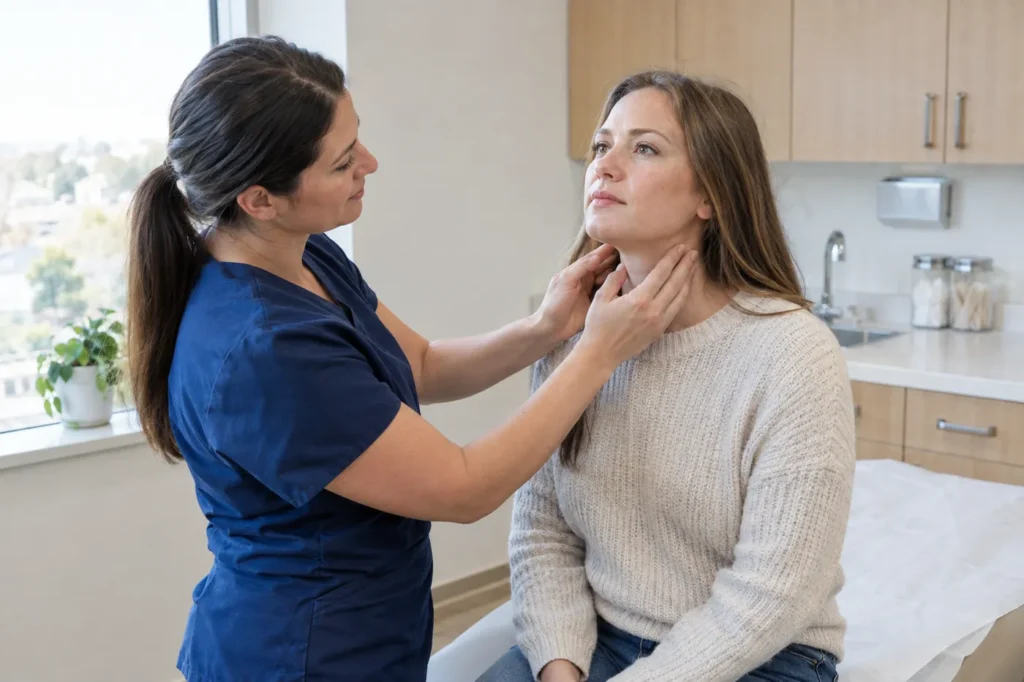
Urgent care vs primary care at a glance
| Topic | Urgent care | Primary care |
|---|---|---|
| Best for | A sudden illness or minor injury that needs care today | Checkups, screenings and long-term health |
| Timing | Same day, walk in or save your spot | Planned visits and follow-ups over years |
| Focus | Today’s problem | Your whole history, visit after visit |
| Typical reasons | Sore throat, flu, UTI, sprain, possible broken bone | Yearly physical, screenings, follow-up visits |
| Tests at our clinic | X-ray, rapid strep, flu and COVID tests, urinalysis, EKG | Blood drawn here and sent to an outside lab, plus on-site tests as needed |
| Children | Pediatric urgent care, infancy through the teen years | Your child’s regular doctor, including routine vaccines |
When primary care is the better fit
Primary care is the better fit for anything that plays out over time: yearly checkups, screenings, long-term conditions and questions about your overall health. None of these are emergencies, but they are easy to put off without a regular place to go.
Prevention is a big part of it. HealthCare.gov explains that all Marketplace plans and many other plans must cover a set list of preventive services, such as blood pressure screening, with no copayment or coinsurance when an in-network provider does them. Coverage can vary, so a no-cost visit isn’t guaranteed.
That ongoing relationship is the whole idea. The American Academy of Family Physicians describes primary care as a sustained partnership with patients, led by a personal physician who takes ongoing responsibility for your care and coordinates it with specialists and hospitals.
Does urgent care give you a primary doctor?
No. An urgent care visit treats the problem in front of you, but it does not assign you a primary care doctor or make you a primary care patient.
When someone assigns or asks you to choose a PCP, it is usually your health plan. Medicare explains that in most Medicare Advantage HMO plans you need to choose a primary care doctor, and in most cases you need a referral to see a specialist.
Illinois Medicaid works in a similar way. The Illinois Department of Healthcare and Family Services says most people in its medical programs must pick a health plan and a PCP within that plan. You have 60 days from the date on your enrollment letter to choose, and if you don’t, the state picks for you. If you aren’t sure you have to pick one, Illinois Client Enrollment Services can tell you at 1-877-912-8880.

Sick today, or ready for a regular doctor?
Walk in any day for urgent care, or call (630) 914-5373 to ask about becoming a primary care patient at our Bolingbrook clinic.
Can urgent care be your primary care doctor?
A string of urgent care visits is not the same as primary care, but a clinic that offers both can be your primary care home. A walk-in visit centers on today’s problem. It isn’t set up to track the screenings you’re due for, follow a long-term condition or notice a change across several years.
At Pioneer Physicians we offer primary care in Bolingbrook as well as urgent care. The clinic that treats your strep throat on a Saturday can also do your yearly physical and your follow-up visits.
To set this up, call (630) 914-5373 and ask about becoming a primary care patient. If your plan requires you to name a PCP, check with your plan first and call us to confirm your specific plan.
Primary care and urgent care for children
For most children, the primary care provider is a pediatrician or a family doctor, and that office handles checkups and routine vaccines. MedlinePlus notes that pediatricians care for newborns, infants, children and teens.
Our pediatric urgent care sees children from infancy through the teen years for sudden illness and injury. That includes evenings and weekends, when your pediatrician’s office may be closed. We do not give childhood vaccinations. For routine shots, go to your child’s regular doctor, or to the Will County or DuPage County Health Department.
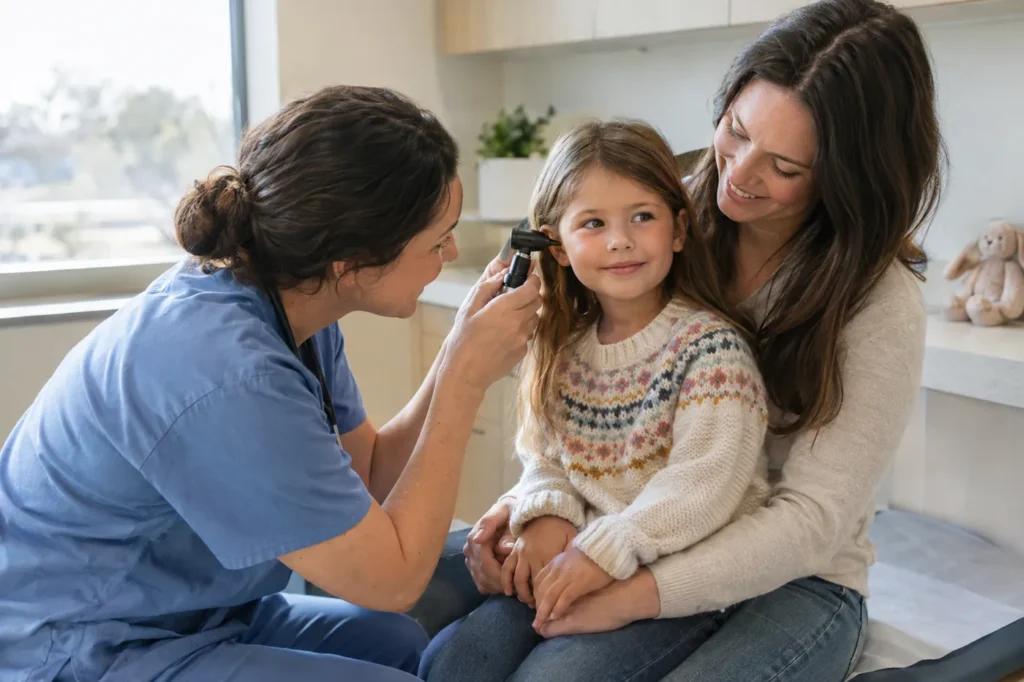
Cost and insurance for each kind of visit
What you pay depends on your plan, not on a single rule. Every individual and job-based health plan has a Summary of Benefits and Coverage you can ask for. Its standard form lists a primary care visit and urgent care on separate lines, so you can compare what you’d pay for each before you go.
The ER is where costs climb fastest. According to MedlinePlus, emergency department treatment can run 2 to 3 times the cost of the same care in your provider’s office, and some plans charge a higher copayment there.
Our accepted plans are Medicare, Aetna, Cigna, Humana, UnitedHealthcare, Blue Cross Blue Shield of Illinois and Illinois Medicaid plans (HFS, Meridian, CountyCare, Molina and YouthCare). Please call to confirm your specific plan, and see our insurance page for more. If you pay for yourself, the bill covers the visit plus any tests you need. Call us for current self-pay pricing.

Urgent care vs primary care at our Bolingbrook clinic
At our Bolingbrook clinic, urgent care and primary care happen under one roof, so the choice is mostly about timing. We keep the same hours all week, 8 AM to 8 PM, walk-ins are welcome, and you can save your spot online if you like to plan ahead. Book in the evening and you’ll see times for the next day. We are not open 24 hours.
Tests we can do on site include X-ray (with splints and crutches when needed), rapid strep, flu and COVID tests, urinalysis and EKG. Blood work is drawn in our office and processed by an outside lab. We don’t have CT or MRI. Some visits can also happen by telehealth.
Distance matters for primary care, since you’ll come back for checkups. By car, Romeoville is about 10 minutes from us, Woodridge 11, downtown Plainfield 15 and downtown Naperville 18.
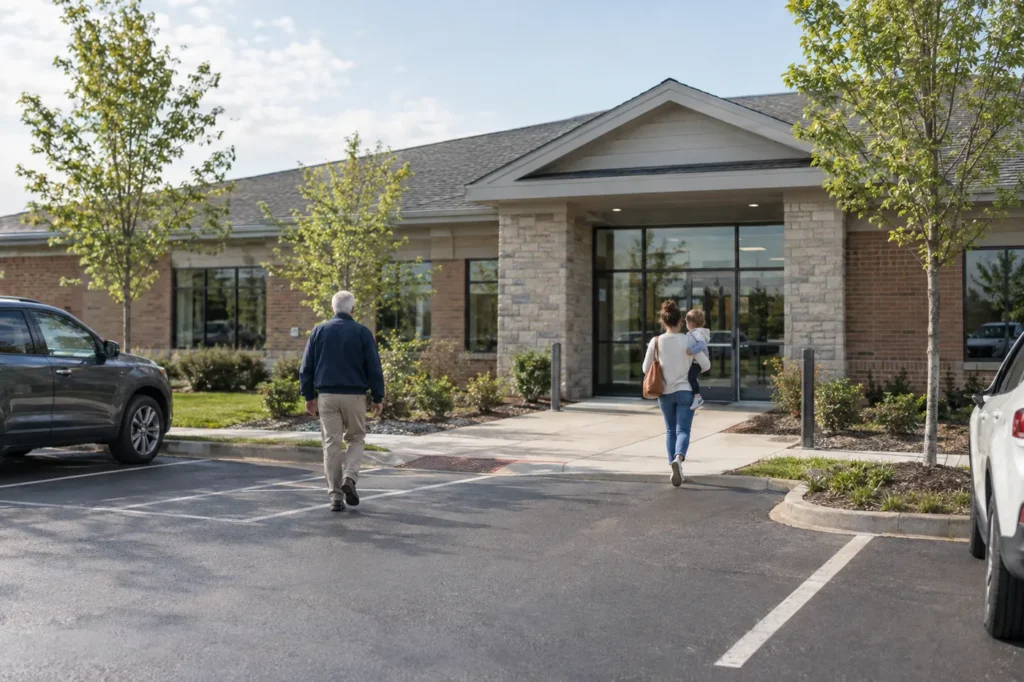
The Pioneer walk-in visit
How a visit works
- Step 1Walk in or save your spot
No appointment needed. You can also save your spot online before you leave home.
- Step 2Check in
Bring a photo ID, your insurance card and a list of the medicines you take.
- Step 3See a provider
Get examined, with X-ray and rapid tests on site when you need them.
- Step 4Leave with a plan
You go home with a care plan and clear next steps.
Why families in Bolingbrook choose Pioneer
Walk-in care that fits real life
Open 7 days a week
8 AM to 8 PM, weekends included, so a Saturday sore throat does not have to wait until Monday.
X-ray and tests on site
X-ray every day we are open, plus rapid strep, flu and COVID tests, urinalysis and EKG.
Care for kids and adults
From infants through the teen years, and adults of every age, in one clinic.
Insurance and self-pay
Aetna, BCBS of Illinois, Cigna, Humana, Medicare, Illinois Medicaid plans and UnitedHealthcare. Call to confirm your plan.
Questions and answers
Questions we hear often
Still not sure? Call (630) 914-5373 and we will help you decide.
Does urgent care give you a primary doctor?
No. An urgent care visit treats today’s problem, but it doesn’t assign you a doctor or make that clinic your primary care office. A PCP is usually chosen through your health plan, as in most Medicare Advantage HMOs and for most Illinois Medicaid members. We offer primary care too, so you can call (630) 914-5373 and ask about becoming a patient here.
Can I use urgent care as my primary care?
You can use urgent care whenever something comes up, but on its own it doesn’t replace primary care, which tracks screenings and long-term conditions over time. A clinic that offers both is the exception. We do, so the same Bolingbrook clinic can treat a sudden illness and do your yearly physical. If your plan requires a named PCP, check with your plan and call us to confirm.
Is urgent care considered primary care?
No. HealthCare.gov describes urgent care as care for something that needs attention right away but isn’t severe enough for the ER, while MedlinePlus calls your PCP your main provider for non-emergency care. Insurance treats them separately too: the standard Summary of Benefits and Coverage form has one line for urgent care and another for a primary care visit.
Should I go to urgent care if I already have a primary care doctor?
Yes, when the problem isn’t an emergency and your doctor can’t see you soon enough, which is how MedlinePlus frames it. Urgent care fills the gap on evenings and weekends. Afterward, tell your regular doctor about the visit and bring any paperwork you received to your next appointment so your record stays complete.
Do I need an appointment?
Not for urgent care. We’re open every day from 8 AM to 8 PM, walk-ins are welcome, and you can reserve a spot online first if you prefer. For primary care, call (630) 914-5373 to ask how a first primary care visit works here and to confirm your insurance plan. If it’s already evening, the online booking page lets you choose a time for the next day.
Is urgent care more expensive than primary care?
It depends on your plan, so compare the urgent care and primary care visit lines in your Summary of Benefits and Coverage. Preventive services such as blood pressure screening are often covered with no copay from an in-network provider, per HealthCare.gov. The ER is a different story: MedlinePlus puts it at 2 to 3 times the cost of the same care in an office.
Can I get a physical at urgent care?
At our clinic, yes. We do sports, school and annual physicals, and a certified medical examiner listed on the FMCSA National Registry does DOT physicals 7 days a week. Bring any form your school, league or employer gave you. Because we don’t give childhood vaccinations, any shots a school requires need to come from your child’s doctor or the county health department.







Sources for this page
- Choosing a primary care provider. MedlinePlus, U.S. National Library of Medicine.
- When to use the emergency room: adult. MedlinePlus, U.S. National Library of Medicine.
- Urgent care (glossary). HealthCare.gov, Centers for Medicare and Medicaid Services.
- Preventive care benefits for adults. HealthCare.gov, Centers for Medicare and Medicaid Services.
- Summary of Benefits and Coverage. HealthCare.gov, Centers for Medicare and Medicaid Services.
- Health Maintenance Organizations (HMOs). Medicare.gov, Centers for Medicare and Medicaid Services.
- Medical Providers and Health Plans. Illinois Department of Healthcare and Family Services.
- Primary Care (policy definitions). American Academy of Family Physicians.