
Symptom guide · Pioneer Physicians
Cut and Laceration Care in Bolingbrook
A cut that gapes open, is deeper than a quarter inch, is on the face, or came from a bite or a dirty object should be checked the same day. Pioneer Physicians Urgent Care in Bolingbrook, IL, is open every day from 8 AM to 8 PM, and walk-ins are welcome for cut and laceration care. For bleeding that will not stop with pressure, call 911.
- Open 7 days, 8 AM to 8 PM
- Walk-ins welcome
- X-ray and rapid tests on site
- Kids and adults
- Medicare and Medicaid plans accepted
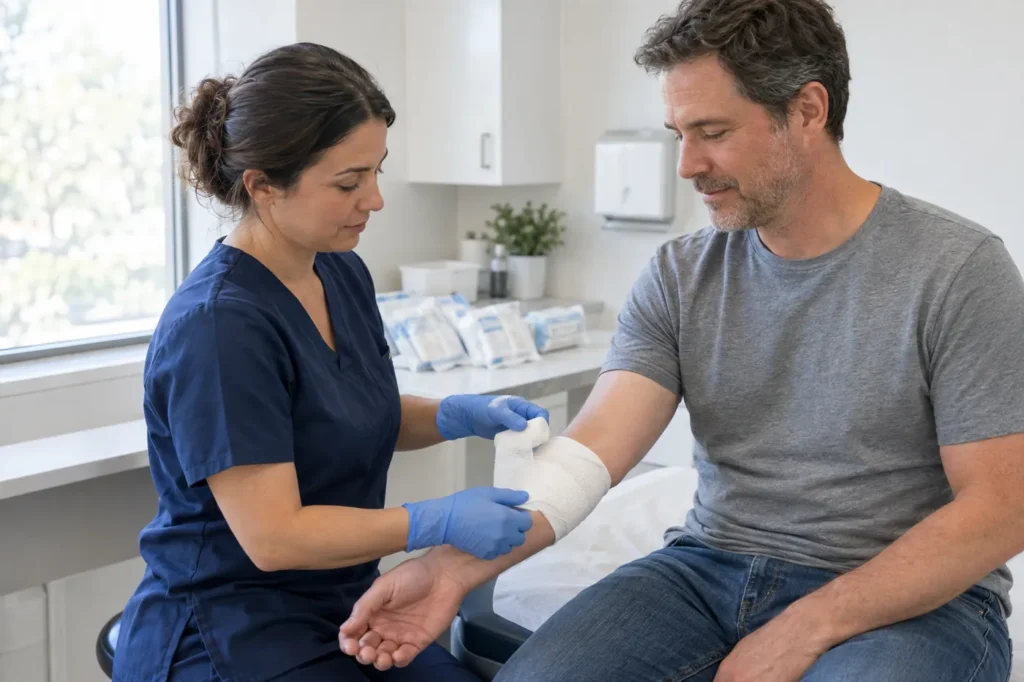
Can I walk in for a cut today?
Yes. Walk-ins are welcome every day, and we’re open 8 AM to 8 PM. You can also save your spot online before you leave home. A provider checks how deep the cut goes and whether anything is stuck inside, then tells you what it needs.
If you think the cut needs stitches or skin glue, or you want a tetanus shot, call (630) 914-5373 first and ask whether that can be done here today. For bleeding that will not stop, skip the call and dial 911.
Does my cut need stitches?
A cut may need to be closed by a medical professional if the edges pull apart, it goes all the way through the skin, or you can see yellow fat or dark red muscle inside. The American Academy of Pediatrics says an open cut longer than half an inch probably needs stitches, and suggests measuring with a ruler if you are not sure (HealthyChildren.org).
MedlinePlus adds a cut more than a quarter inch deep, a cut on the face, and a cut that reaches the bone. The AAP also notes that skin glue and adhesive strips do not hold well over a joint, where movement keeps pulling the skin.
Closing a cut does not always mean stitches. Small, straight cuts can often be closed with skin glue or adhesive strips, and scalp cuts are sometimes closed with staples.
What we can help with today
- Bleeding
- Stopped with 10 minutes of firm pressure
- Size and depth
- Gaping, open more than half an inch, or deeper than a quarter inch
- Feeling and movement
- Normal feeling and movement past the cut
- Where it is
- Face, foot or over a joint
- What caused it
- A bite, a nail, a fishhook, or a rusty or dirty object
- Other signs
- Redness, warmth, swelling, pus or a red streak
How soon does a cut need to be closed?
Sooner is better, but many clean cuts can still be closed hours later. The AAP says most cuts can be safely closed for up to 24 hours after the injury, unless the wound is dirty or high risk, like an animal bite. A review in American Family Physician says clean cuts may be closed up to 18 hours after the injury, and head wounds up to 24 hours. It also notes that a bite’s infection risk rises the longer repair waits.
First aid for a cut at home
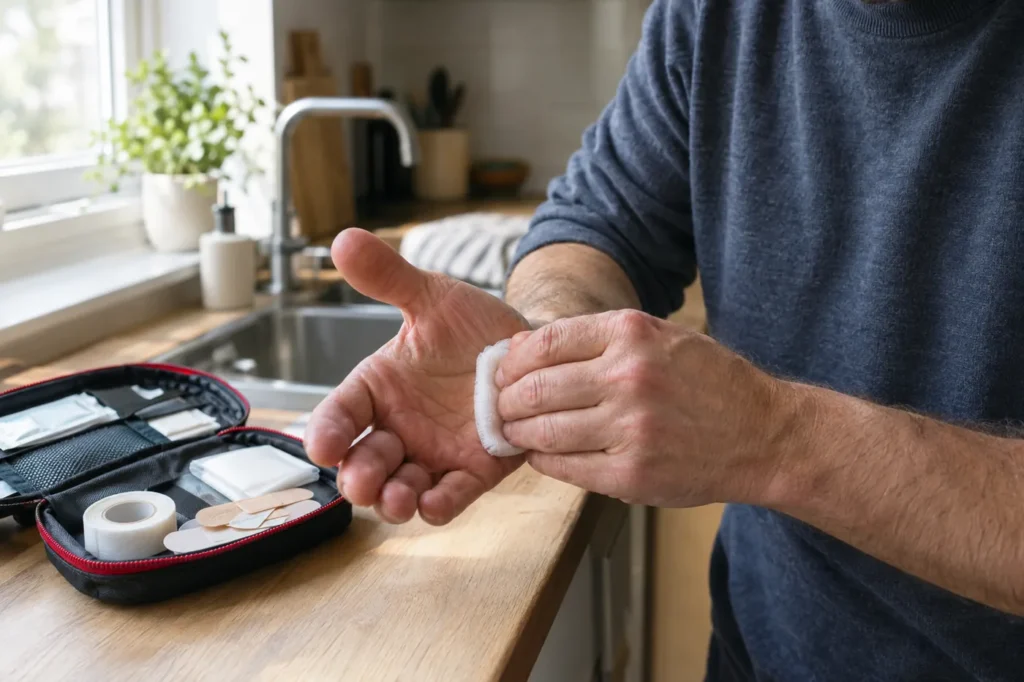
Most minor cuts can be treated at home with firm pressure, soap and water, and a clean bandage, according to MedlinePlus.
- Wash your hands, or put on gloves if you have them.
- Press a clean gauze pad or cloth firmly on the cut for 5 to 10 minutes. Do not lift it to peek, which the AAP calls the most common reason bleeding keeps going.
- If blood soaks through, add another pad on top.
- Once bleeding stops, wash the cut gently with mild soap and water.
- Rinse a puncture under running water for 5 minutes. Look for pieces inside, but do not dig for them.
- Apply antibacterial ointment and a clean bandage that will not stick.
What not to do
Do not pull out an object stuck deep in the wound. Pad around it and get care. Do not try to clean a large, deep cut, especially once the bleeding is under control, because MedlinePlus warns it can make the bleeding heavier. After the skin heals, keep the scar out of the sun: the AAP says sunlight can darken healing skin for up to 6 months.
Get a cut checked today
Walk in any day or save your spot online, and bring the date of your last tetanus shot if you know it.
Puncture wounds, bites and dirty cuts
These wounds get infected more often than clean cuts, so have them checked the same day even when they look small. MedlinePlus lists bites, punctures, crush injuries, dirty wounds and wounds on the feet among the most likely to become infected. Stepping on a nail, a cut from a fishhook or rusty object, and debris left in the wound are all reasons to see a provider.
In the AAFP review, 47% to 58% of cat bites became infected, compared with 8% to 14% of dog bites. Wash any bite with soap and water right away. Bats, skunks, raccoons and foxes are the animals most often found with rabies in the US. After a bite or scratch from one, get medical care urgently, because the CDC says rabies is nearly always fatal once symptoms appear.

Do I need a tetanus shot after a cut?
It depends on the wound and your last dose. CDC guidance says someone who finished the tetanus series needs a booster for a clean, minor cut if the last dose was 10 or more years ago. For a dirty or major wound, such as a puncture, a bite or a cut with soil in it, the cutoff is 5 years (CDC). If you never finished the series or do not know your history, the CDC advises a dose for any wound.
Tetanus bacteria enter through broken skin, and the first sign is often jaw spasms, known as lockjaw. If you need a shot, call (630) 914-5373 to ask whether it can be given at your visit, and check your records for the date of your last one.
Signs a cut is getting infected
A cut that gets redder, warmer, more swollen or more painful over the next few days may be infected and should be seen the same day. MedlinePlus lists these signs:
- Warmth and redness around the cut
- Pain or throbbing that gets worse
- A red streak spreading from the wound
- Yellow or brown fluid, or pus-like drainage
- Fever or swollen lymph nodes
When something may still be inside
The AAFP advises checking for a leftover piece of whatever caused the injury whenever a wound becomes infected. You can walk in with an infected cut, and the provider will check it and talk through treatment. For infections that did not start with a cut, see rash and skin infection care.
Cuts in babies, kids and teens
Our pediatric urgent care sees children from infancy through the teen years, and the same size, depth and 911 rules apply. The AAP says facial cuts in children usually heal well with little scarring unless the wound is infected, jagged or gaping, and a prompt check gives the best result.
Young children get tetanus protection from routine DTaP shots. Childhood vaccines are not given here, so your child’s regular doctor or the Will County or DuPage County Health Department provides them.
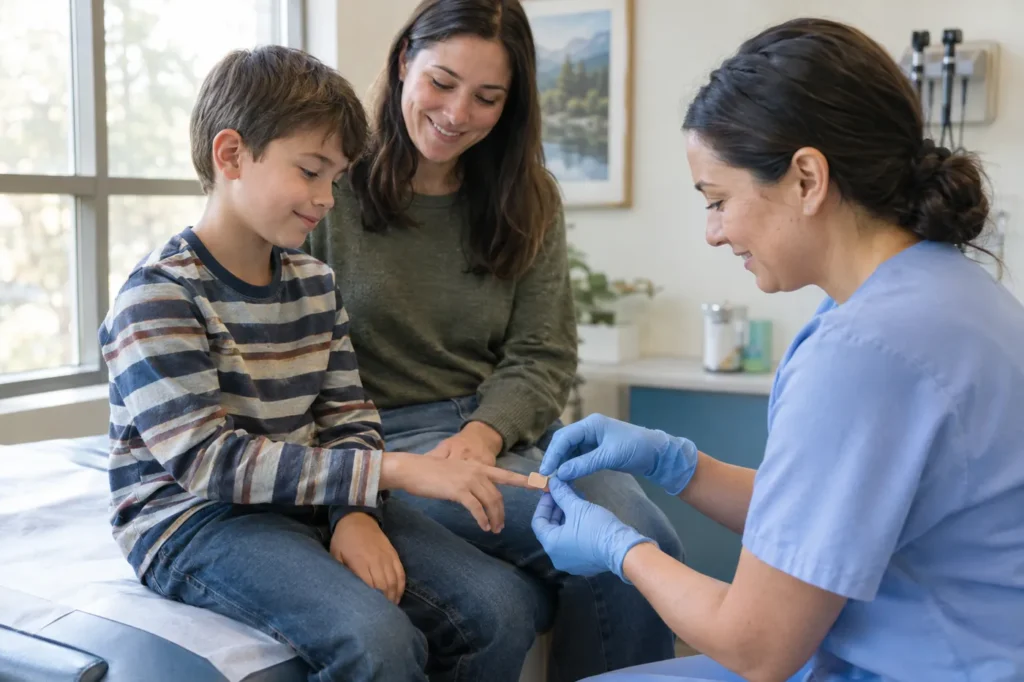
Cut and laceration care at our Bolingbrook clinic
A provider asks how and when the cut happened and when you last had a tetanus shot, then checks the bleeding, the depth, and whether you can feel and move normally past the cut.
X-ray for glass, metal or a broken bone
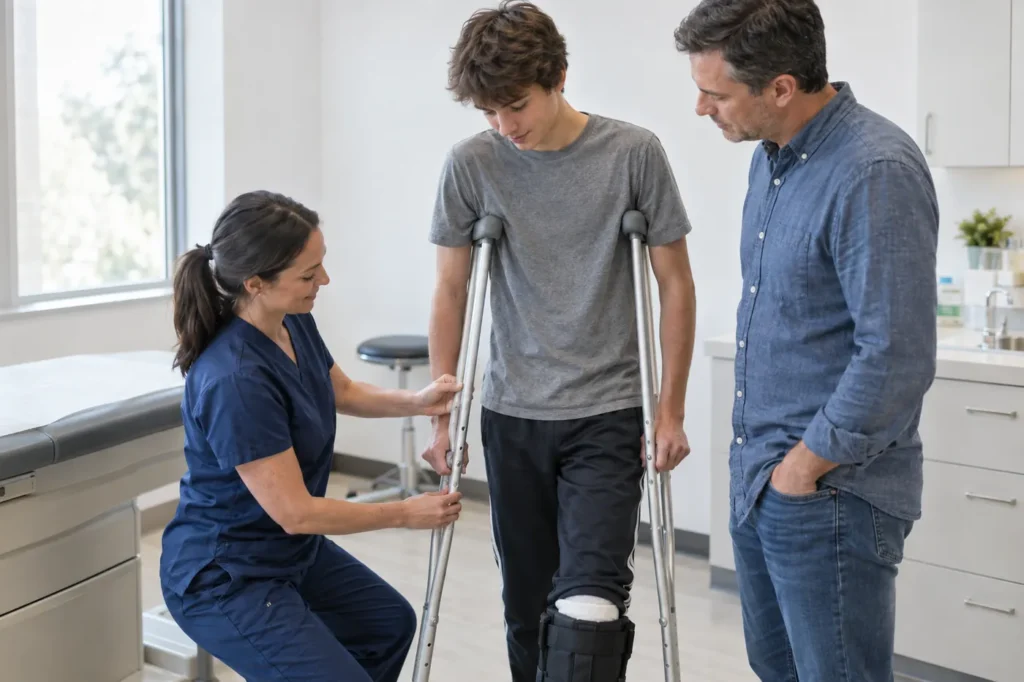
An X-ray helps when glass, metal or gravel may be in the wound, or when a fall may have broken a bone under the cut. We have X-ray on site every day we are open. The AAFP notes that all glass shows on X-ray, though pieces under about 2 millimeters can be missed. We do not have CT or MRI. If a bone is broken, splints and crutches are here too, and our sprain and strain page explains sprain versus fracture.
What to bring
Bring a photo ID, your insurance card, your last tetanus shot date if you know it, and a list of your medicines, especially any blood thinner. For a child, bring the vaccine record.
The Pioneer walk-in visit
How a visit works
- Step 1Walk in or save your spot
No appointment needed. You can also save your spot online before you leave home.
- Step 2Check in
Bring a photo ID, your insurance card and a list of the medicines you take.
- Step 3See a provider
Get examined, with X-ray and rapid tests on site when you need them.
- Step 4Leave with a plan
You go home with a care plan and clear next steps.
Why families in Bolingbrook choose Pioneer
Walk-in care that fits real life
Open 7 days a week
8 AM to 8 PM, weekends included, so a Saturday sore throat does not have to wait until Monday.
X-ray and tests on site
X-ray every day we are open, plus rapid strep, flu and COVID tests, urinalysis and EKG.
Care for kids and adults
From infants through the teen years, and adults of every age, in one clinic.
Insurance and self-pay
Aetna, BCBS of Illinois, Cigna, Humana, Medicare, Illinois Medicaid plans and UnitedHealthcare. Call to confirm your plan.
Questions and answers
Questions we hear often
Still not sure? Call (630) 914-5373 and we will help you decide.
Where can I get immediate care for cuts near Bolingbrook?
Pioneer Physicians Urgent Care at 148 S Bolingbrook Dr offers walk-in urgent care for cuts. We’re open every day from 8 AM to 8 PM, and no appointment is needed. The drive is about 10 minutes from Romeoville, 11 from Woodridge and 18 from downtown Naperville. For heavy bleeding that will not stop, call 911 instead of driving.
Can you stitch a cut at your clinic?
Please call (630) 914-5373 before you come to ask whether your cut can be closed here today. Closing a cut can mean stitches, skin glue, adhesive strips or staples. The right method depends on where the cut is and how deep it goes. If we are closed and a cut is gaping, dirty or bleeding again, go to a hospital emergency department.
How long can I wait before getting a cut stitched?
Many clean cuts can be closed up to 18 to 24 hours after the injury, based on AAFP and AAP guidance. Bites and dirty wounds carry more infection risk as time passes, so they should be seen sooner. When in doubt, get the cut checked the same day.
Do you give tetanus shots?
Call (630) 914-5373 to ask. Whether you need one depends on the wound and your last dose. The CDC says a booster is due after 10 years for a clean, minor cut and after 5 years for a dirty or deep wound, such as a puncture or bite. We do not give childhood vaccinations.
What should I do if I take a blood thinner and cut myself?
Press firmly on the cut and do not lift the cloth to check it. MedlinePlus says people who take blood-thinning medicine or have a bleeding disorder can bleed a lot and need medical attention right away. If the bleeding is heavy or has not stopped after 10 minutes of pressure, call 911.
Do you take insurance for cut care?
Yes. Plans we accept include Aetna, Cigna, Medicare, Blue Cross Blue Shield of Illinois, Illinois Medicaid plans (HFS, Meridian, CountyCare, Molina, YouthCare), UnitedHealthcare and Humana. Call to confirm your specific plan. Without insurance, self-pay is available: you pay for the visit plus any X-ray or tests, so call for current self-pay pricing.



Sources for this page
- Cuts and puncture wounds. MedlinePlus, National Library of Medicine.
- Bleeding. MedlinePlus, National Library of Medicine.
- Treating Cuts and Scrapes in Kids: First Aid and Scar Prevention Tips. American Academy of Pediatrics, HealthyChildren.org.
- Laceration Repair: A Practical Approach. American Family Physician (American Academy of Family Physicians).
- Management of Foreign Bodies in the Skin. American Family Physician (American Academy of Family Physicians).
- Clinical Guidance for Wound Management to Prevent Tetanus. Centers for Disease Control and Prevention (CDC).
- About Tetanus. Centers for Disease Control and Prevention (CDC).
- About Rabies. Centers for Disease Control and Prevention (CDC).