
Symptom guide · Pioneer Physicians
Nausea, Vomiting and Diarrhea Care in Bolingbrook, IL
Yes, you can walk in for vomiting and diarrhea care in Bolingbrook, IL, at Pioneer Physicians Urgent Care. We’re open daily from 8 AM to 8 PM for adults and children. Most stomach bugs pass in a few days, so our main job is to check for dehydration and for signs of something more serious.
- Open 7 days, 8 AM to 8 PM
- Walk-ins welcome
- X-ray and rapid tests on site
- Kids and adults
- Medicare and Medicaid plans accepted
What causes nausea, vomiting and diarrhea?
A virus is the usual cause, and CDC calls norovirus the leading cause of vomiting and diarrhea in the United States. The illness, viral gastroenteritis, is often called the stomach flu. MedlinePlus adds that rotavirus is the leading cause of stomach flu in children.
Norovirus symptoms usually start 12 to 48 hours after exposure, and most people feel better in 1 to 3 days, according to CDC. It spreads through tiny bits of vomit and stool on hands, food and surfaces.
Other causes include food poisoning, some medicines, motion sickness, migraines, pregnancy and COVID-19. Less often, vomiting is an early sign of something that needs emergency care, such as appendicitis, a blocked bowel or a swallowed poison.

How to treat a stomach bug at home
For most adults, the treatment is fluids, rest and time. Small sips work better than big gulps: MedlinePlus suggests 2 to 4 ounces every 30 to 60 minutes, because forcing down a lot at once can bring on more vomiting.
- NIDDK says most adults can replace lost fluids with water, sports drinks or broth. CDC adds that drinks without caffeine or alcohol help with mild dehydration.
- Oral rehydration solutions from the drugstore are the better choice for older adults, people with a weakened immune system and anyone with severe diarrhea.
- You do not need a special diet. NIDDK says you can go back to your usual foods once your appetite returns.
- Adults can sometimes use an over-the-counter diarrhea medicine, but not with bloody diarrhea or a fever. Do not give these medicines to a child unless a doctor says to.
- Keep taking your prescription medicines unless your provider tells you to stop.
What we can help with today
- Keeping fluids down
- Nothing stays down for 12 hours, or vomiting past 24 hours
- Urine
- Peeing less, dark yellow urine, or none for 8 hours
- Alertness
- Tired and thirsty, but awake and making sense
- Belly pain
- Cramps that are not easing after a day or two
- Stool
- Diarrhea past 2 days (adults) or 1 day (children), or 6 or more loose stools a day
- Fever
- A high fever with vomiting or diarrhea
Signs of dehydration to watch for
Dehydration is the most common complication of a stomach virus, NIDDK says, and anyone with signs of it should see a doctor right away.
Mild to moderate dehydration
Thirst, a dry or sticky mouth, peeing less than usual, darker yellow urine, dry and cool skin, headache and muscle cramps. Keep sipping fluids and come in today so a provider can check how dry you are.
Severe dehydration
Little or no urine, very dark or amber urine, dizziness, irritability or confusion, a racing heart, fast breathing, sunken eyes and listlessness. Severe dehydration is a life-threatening emergency. Call 911 or go to the nearest ER.
Older adults and people with diabetes dehydrate more easily, so keep a close eye on how much they are drinking.

Can’t keep fluids down? Come in today
Walk in any day or save your spot online. We will check you for dehydration and plan your fluids for the next day or two.
When vomiting or diarrhea needs care today
Get seen today if you cannot keep fluids down or the illness is not following the usual short course. Come in if you or your child has any of these:
- Vomiting for longer than 24 hours, or 3 or more times in one day
- Not keeping any fluids down for 12 hours or more
- No urine for 8 hours or more
- Diarrhea for more than 2 days in an adult, or more than a day in a child
- Six or more loose stools in a day
- A high fever, a headache or a stiff neck
- Belly pain that has not eased in a day or two, or keeps getting stronger
- Any stomach bug symptoms in a baby, or in someone who is pregnant, older, or has a weakened immune system or another health condition

Vomiting and diarrhea in babies and children
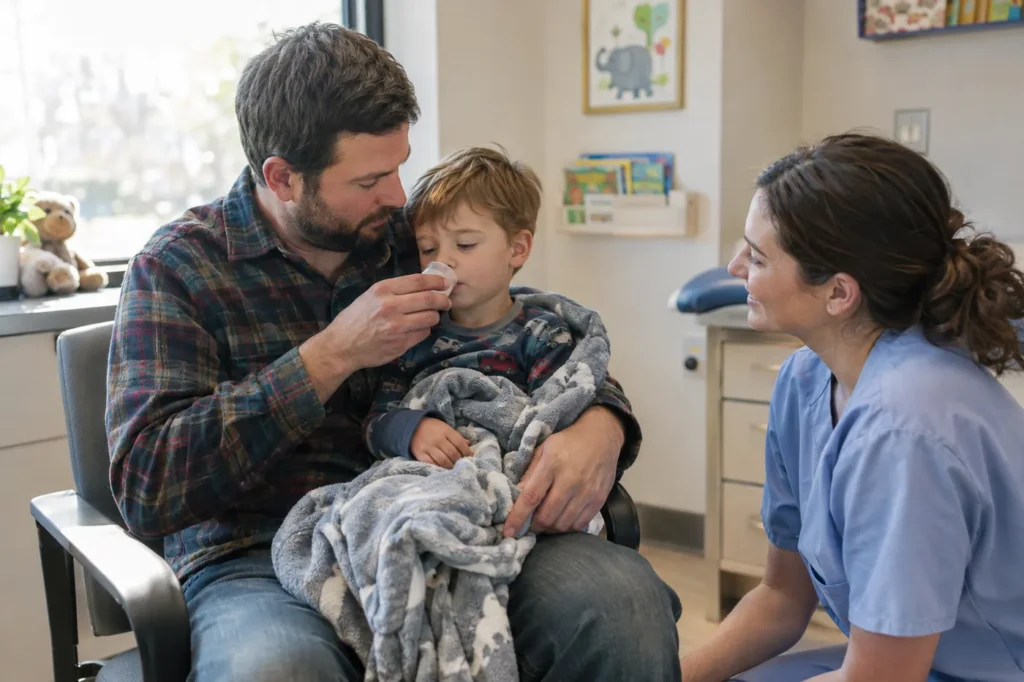
Children dry out faster than adults because their small bodies hold on to water less well, the American Academy of Pediatrics explains. NIDDK warns that a newborn or infant with diarrhea can become severely dehydrated within a day or two.
Offer small amounts of fluid every few minutes, at least 1 ounce an hour, using a spoon or syringe if needed. Babies should keep getting breast milk or formula as usual, NIDDK says. For ages 6 months to 1 year, the AAP adds a store-bought oral rehydration solution if milk will not stay down, and no plain water. Children 1 and older can have an oral rehydration solution, or diluted apple juice or a sports drink mixed half and half with water, since full-strength sports drinks carry enough sugar to make diarrhea worse.
Get your child checked right away for no wet diaper in 3 hours, no tears when crying, low energy or unusual fussiness, diarrhea lasting more than a day, or frequent vomiting. Babies born early and children with other health conditions need a doctor as soon as symptoms start. Any fever in an infant needs a doctor; our fever page explains what to do by age.
We see children of every age, babies included, at our pediatric urgent care. We do not give childhood vaccinations, including the rotavirus vaccine. Ask your child’s doctor or the Will County or DuPage County health department about it.
Vomiting and diarrhea care at our Bolingbrook clinic
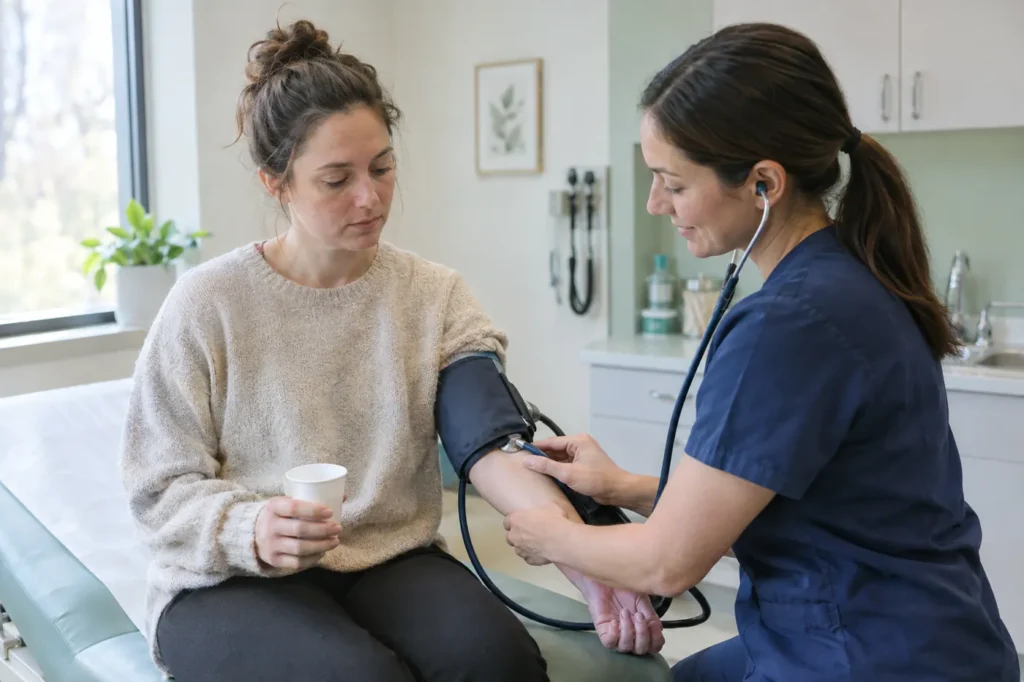
A provider looks for dehydration and for any cause that needs more than rest and fluids. Expect questions about when it started, how often you are sick, when you last urinated, your medicines, recent travel, and whether others who ate the same food are ill. The exam checks for signs of dehydration, such as low blood pressure or a fast heart rate.
Most stomach bugs are diagnosed from the history and exam alone, and MedlinePlus notes that a stool test to identify the virus usually is not needed. When more information would help, we can do these here:
- Urinalysis, a urine test MedlinePlus lists for dehydration
- Rapid COVID and flu tests, when a fever, cough or body aches come with the stomach symptoms
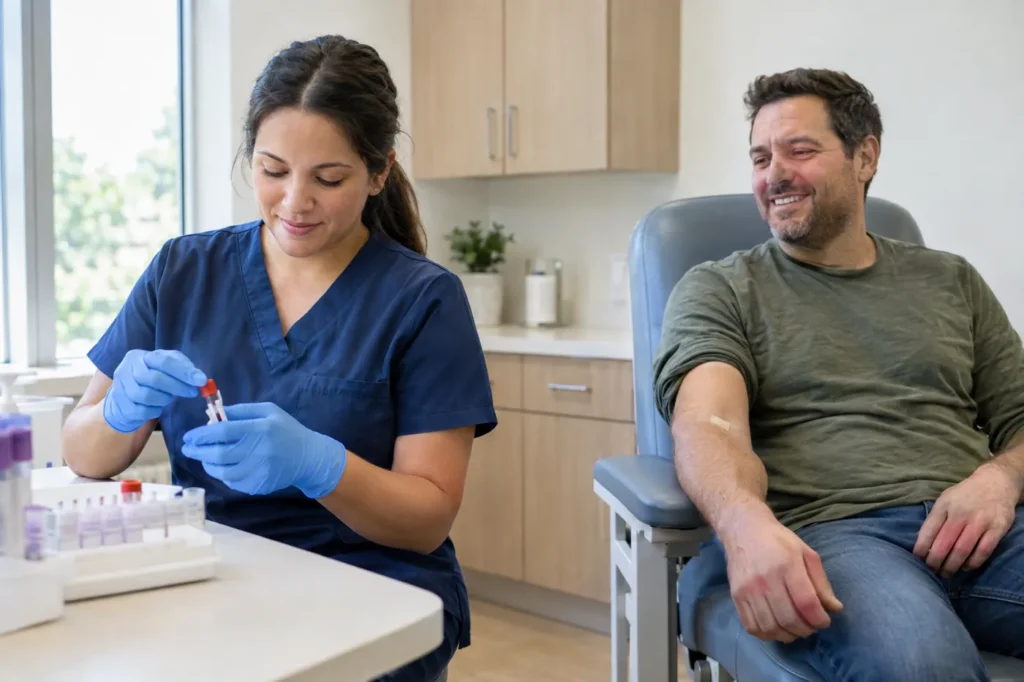
- A blood draw on site, sent to an outside lab, when the provider wants to check kidney function or electrolytes
What you leave with
Before you leave, the provider goes over what to drink, when to try food again, and which signs mean you should come back or head to the ER. If vomiting is severe, the provider may prescribe medicine to help control it. Our lab testing page explains each test.
Can I get IV fluids for dehydration?
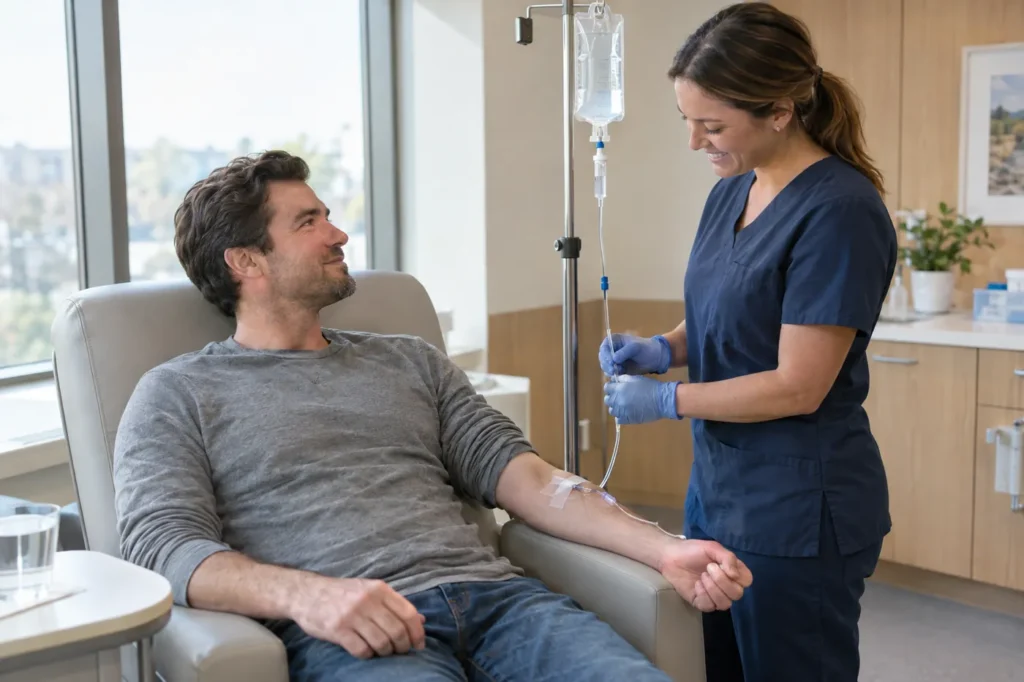
We offer IV hydration therapy here. Whether it fits dehydration from a stomach bug depends on your exam, so call (630) 914-5373 before you come if you are hoping for IV fluids, and always call first for a child. MedlinePlus says IV fluids may be needed when you cannot keep fluids down. Severe dehydration belongs in a hospital ER.
How to keep a stomach bug from spreading at home
Careful handwashing and food handling are the best prevention, MedlinePlus says. Wash with soap and water after using the bathroom or changing diapers and before handling food, NIDDK advises. CDC says to stay home for 2 days after symptoms stop, and NIDDK adds that you should not prepare food for others during that time. Norovirus can still spread for 2 weeks or more after you feel better.
Clean surfaces that touched vomit or stool with 5 to 25 tablespoons of household bleach in a gallon of water. Wear rubber gloves for soiled laundry, wash it on the longest cycle and machine dry it.

The Pioneer walk-in visit
How a visit works
- Step 1Walk in or save your spot
No appointment needed. You can also save your spot online before you leave home.
- Step 2Check in
Bring a photo ID, your insurance card and a list of the medicines you take.
- Step 3See a provider
Get examined, with X-ray and rapid tests on site when you need them.
- Step 4Leave with a plan
You go home with a care plan and clear next steps.
Why families in Bolingbrook choose Pioneer
Walk-in care that fits real life
Open 7 days a week
8 AM to 8 PM, weekends included, so a Saturday sore throat does not have to wait until Monday.
X-ray and tests on site
X-ray every day we are open, plus rapid strep, flu and COVID tests, urinalysis and EKG.
Care for kids and adults
From infants through the teen years, and adults of every age, in one clinic.
Insurance and self-pay
Aetna, BCBS of Illinois, Cigna, Humana, Medicare, Illinois Medicaid plans and UnitedHealthcare. Call to confirm your plan.
Questions and answers
Questions we hear often
Still not sure? Call (630) 914-5373 and we will help you decide.
Can I go to immediate care for a stomach virus?
Yes. Around Bolingbrook, immediate care and urgent care mean the same kind of walk-in visit. For a stomach virus, we check for dehydration and give you a plan for fluids and food. We’re open 8 AM to 8 PM every day and walk-ins are welcome, or you can book online for a next-day time after 8 PM.
How long does a stomach bug last?
Norovirus, the most common cause, usually clears in 1 to 3 days, CDC says, while NIDDK reports that rotavirus can last 3 to 8 days. Adults should see a provider if diarrhea lasts more than 2 days, and children if it lasts more than a day. Come in sooner for any sign of dehydration.
Is the stomach flu the same as the flu?
No. Stomach flu is a nickname for viral gastroenteritis, an infection of the intestines, and NIDDK notes that influenza viruses do not cause it. If a fever, cough or body aches come with your stomach symptoms, we can run rapid flu and COVID tests to sort out the cause.
Do I need antibiotics for diarrhea?
Usually not. Antibiotics do not work on viruses, and NIDDK notes that doctors do not prescribe them for a viral stomach bug. Bloody diarrhea or a fever can point to bacteria or parasites, which need a doctor’s care rather than over-the-counter diarrhea medicine. The provider decides after the exam whether any prescription makes sense for you.
When can my child go back to school or daycare?
CDC advises staying home for 2 days (48 hours) after norovirus symptoms stop, because the virus spreads so easily. Your child’s school or daycare may have its own rules, so check with them too. Keep up handwashing at home, since norovirus can still spread for 2 weeks or more after your child feels better.
Do you treat constipation too?
Yes, we see adults and children for constipation and belly discomfort. MedlinePlus says to get medical help right away or call 911 if someone cannot pass stool and is also vomiting, has sudden, sharp belly pain, or has a belly that is hard to the touch. Those signs need an emergency room.
Does insurance cover a visit for vomiting or diarrhea?
We accept Aetna, Cigna, Medicare, Blue Cross Blue Shield of Illinois, UnitedHealthcare, Humana and Illinois Medicaid plans (HFS, Meridian, CountyCare, Molina and YouthCare). Call to confirm your specific plan. Without insurance, you pay for the visit plus any tests the provider orders; call (630) 914-5373 for current self-pay pricing.




Sources for this page
- Viral gastroenteritis (stomach flu). MedlinePlus, National Library of Medicine.
- Dehydration. MedlinePlus, National Library of Medicine.
- Nausea and vomiting, adults. MedlinePlus, National Library of Medicine.
- Abdominal pain. MedlinePlus, National Library of Medicine.
- Symptoms and Causes of Viral Gastroenteritis (“Stomach Flu”). National Institute of Diabetes and Digestive and Kidney Diseases (NIDDK).
- Treatment of Viral Gastroenteritis (“Stomach Flu”). National Institute of Diabetes and Digestive and Kidney Diseases (NIDDK).
- About Norovirus. Centers for Disease Control and Prevention.
- Drinks to Prevent Dehydration in a Vomiting Child. American Academy of Pediatrics, HealthyChildren.org.