
Symptom guide · Pioneer Physicians
Sore Throat Treatment in Bolingbrook, IL
Most sore throats come from a virus and get better within a week, but only a test can show whether it is strep. For sore throat treatment in Bolingbrook, IL, Pioneer Physicians Urgent Care is open every day from 8 AM to 8 PM, and walk-ins are welcome. If your symptoms point to strep, a rapid test is done during your visit.
- Open 7 days, 8 AM to 8 PM
- Walk-ins welcome
- X-ray and rapid tests on site
- Kids and adults
- Medicare and Medicaid plans accepted
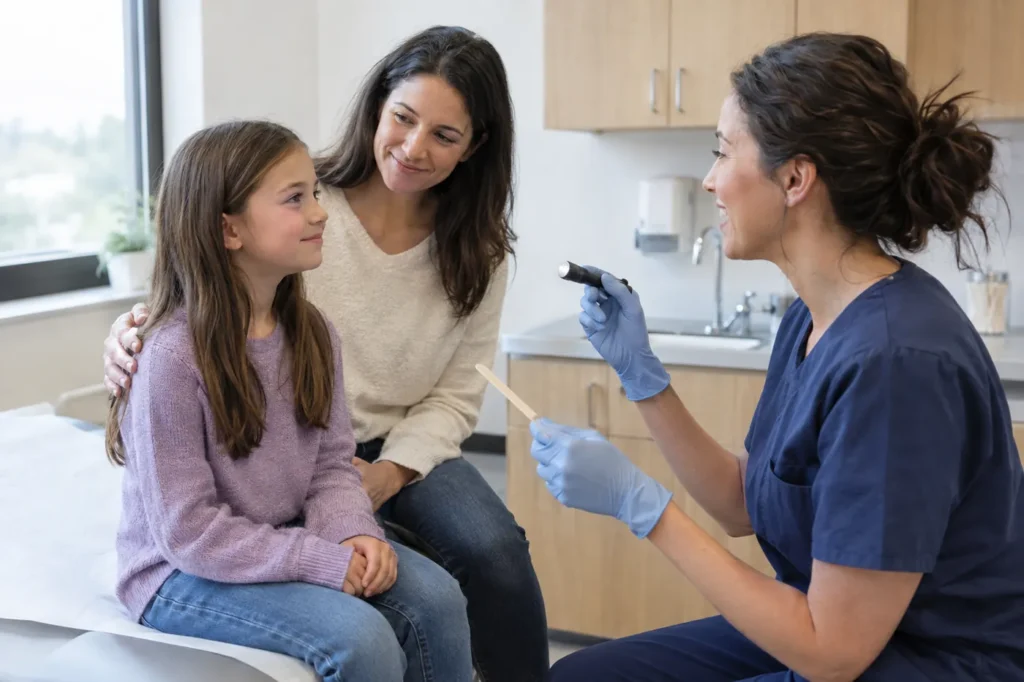
Is it strep or a virus?
You usually can’t tell by looking, so a swab test is the way to check. MedlinePlus says a provider cannot diagnose strep throat by symptoms or an exam alone, and antibiotics do not help the more common sore throats caused by viruses.
Age changes the odds. Strep turns up in roughly 3 of every 10 children with a sore throat but only about 1 of every 10 adults, according to the CDC. It is most common between ages 5 and 15 and rare in children younger than 3.
Some clues help. When the sore throat comes with a cough, a runny nose, hoarseness or pink eye, the CDC says a virus is the more likely cause. Strep more often starts suddenly, with a severe sore throat, fever and painful swallowing, and without the cold symptoms. Our strep throat testing page explains the rapid test in more detail.
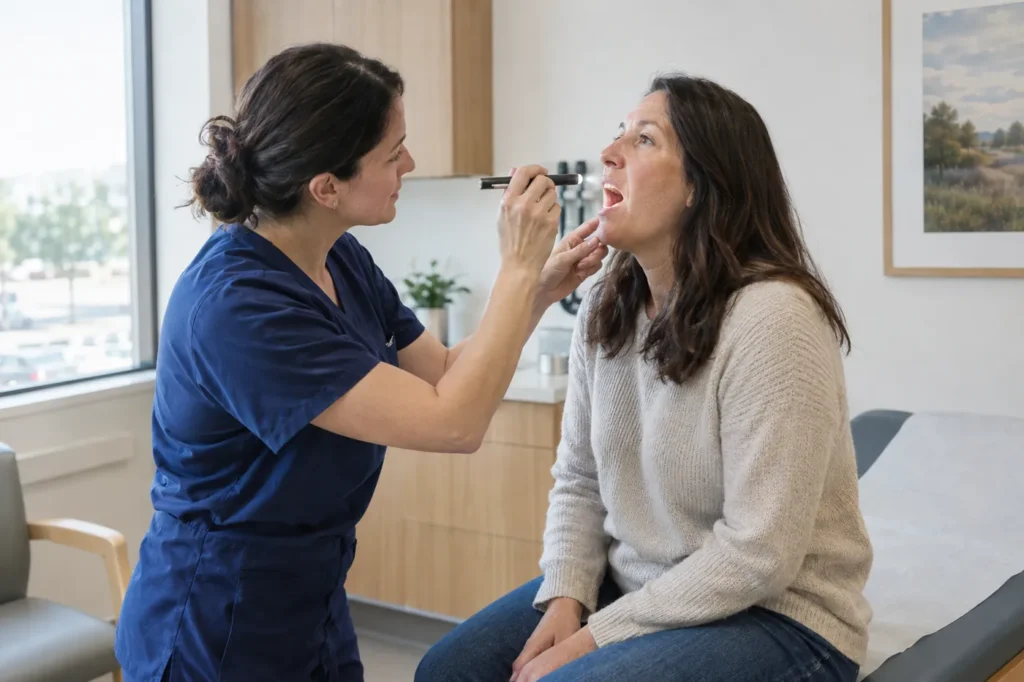
Other common causes of a sore throat
MedlinePlus lists colds, flu, coxsackievirus and mono as the usual causes of a sore throat. Sore throat is also on the CDC’s list of COVID-19 symptoms, so a sore throat with fever and body aches may call for a rapid flu or COVID test.
Mono tends to linger. The American Academy of Family Physicians notes that mono symptoms can last 4 weeks or more, and the treatment is rest and less exercise. In young children, the AAP says hand, foot and mouth disease, most common in summer and fall, can cause fever and painful sores in the mouth and throat.
Not every sore throat is an infection. The AAFP lists allergies, dry air, smoke and pollution as other causes, along with breathing through your mouth while you sleep. If allergies keep bringing the scratchy throat back, allergy testing can help find the triggers. Less often, gonorrhea or chlamydia is the cause. If that’s possible, tell the provider, since we offer confidential STD testing.
Virus or strep? Clues only a test can confirm
| Topic | Usually a virus | More likely strep |
|---|---|---|
| How it starts | Often along with cold symptoms | Suddenly, often severe |
| Cough, runny nose, hoarse voice, pink eye | Common | Not typical |
| Fever | Varies; can be high with flu | Often 101°F or higher |
| Throat and tonsils | Red, scratchy throat | Red, swollen tonsils, sometimes with white patches or tiny red spots on the roof of the mouth |
| Typical ages | Any age; the usual cause in toddlers and preschoolers | Most common ages 5 to 15; rare under 3 |
| Antibiotics | Do not help | Needed after a positive test |
| Getting better | Usually within a week; 7 to 10 days for colds in children | Often a day or two after starting antibiotics |
How to ease a sore throat at home
Rest, fluids and a few simple comforts are usually enough while a viral sore throat runs its course. The CDC’s sore throat guidance suggests:
- Suck on ice chips, ice pops or lozenges. Do not give lozenges to children younger than 4.
- Gargle with warm salt water several times a day. The MedlinePlus mix is 1/2 teaspoon of salt stirred into 1 cup of water.
- Drink warm liquids, such as tea with honey, and plenty of fluids overall.
- Moisten the air with a humidifier or cool mist vaporizer, and keep it clean.
- Save honey for people 1 year and older.
Pain relievers for adults and children
Over-the-counter acetaminophen or ibuprofen can ease the pain, per MedlinePlus. Follow the label or ask a pharmacist about the right dose. The CDC adds two cautions for children: babies younger than 6 months should get only acetaminophen, and children should never be given aspirin because it can cause Reye’s syndrome.

Get your sore throat checked today
Walk in to our Bolingbrook clinic any day for an exam and a rapid strep test if you need one, or save your spot online first.
When a sore throat should be checked today
A sore throat needs a same-day visit when it is severe, lasting or comes with other warning signs. The CDC and MedlinePlus list these:
- Symptoms that don’t improve within a few days, or that get worse
- A high fever, swollen lymph nodes in the neck, or a rash
- Swallowing that hurts enough to make eating or drinking hard
- Signs of dehydration
- Joint swelling and pain
- Blood in saliva or phlegm
- Strep that isn’t better 24 to 48 hours after starting antibiotics
- Fever of 100.4°F or higher in an infant under 3 months old (call the baby’s doctor right away)
Sore throats in children
The AAP advises calling your child’s doctor when their sore throat doesn’t improve over the course of the day, especially after drinking water, and sooner with fever, headache, stomachache, drooling or signs of dehydration. If a child tested negative for strep but isn’t better in 3 to 5 days, or develops an earache or a new fever, the AAP says to have them seen again. Babies and teens alike can be seen at our pediatric urgent care.
Sore throat treatment at our Bolingbrook clinic
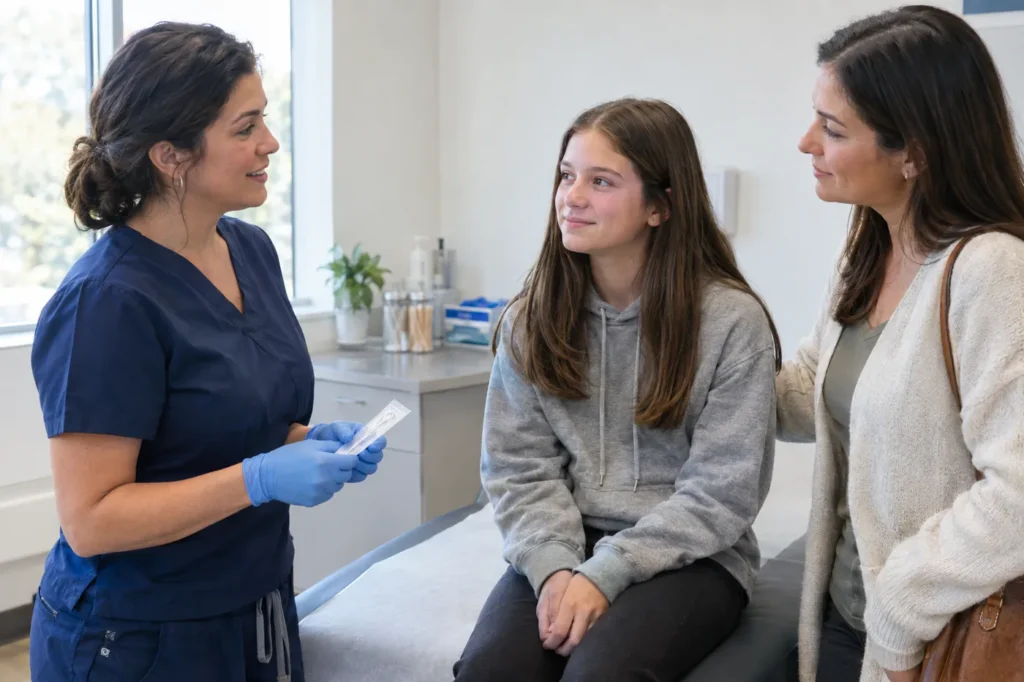
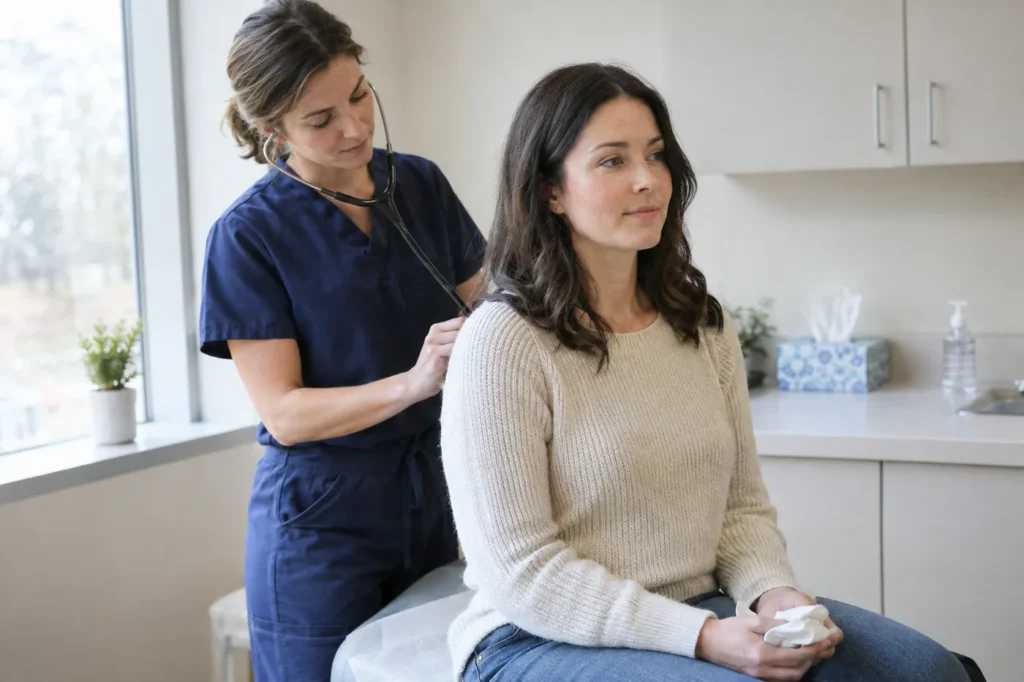
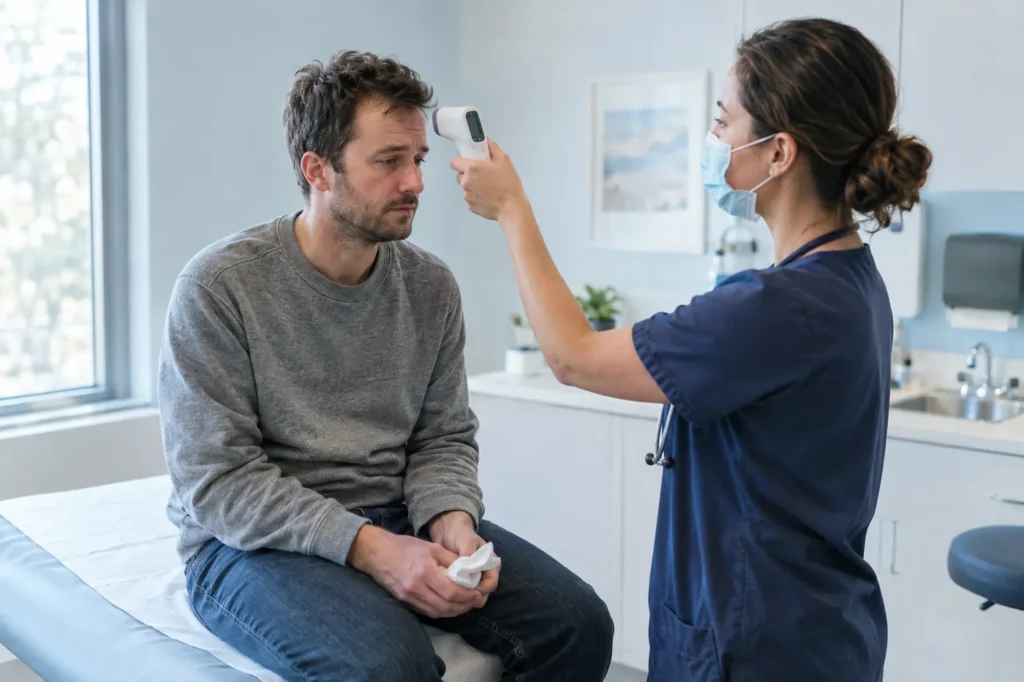
At your visit, a provider asks when the pain started and what else you’ve noticed, looks at your throat and feels the glands in your neck. If your symptoms fit strep, we do a rapid strep swab here, so you learn the result before you leave. MedlinePlus says the rapid strep test gives results in 10 to 20 minutes, and the swab may cause brief gagging but carries no risk.
A positive test means strep. MedlinePlus says treatment is usually an antibiotic for 10 days, and every dose should be taken, since stopping early can lead to complications such as rheumatic fever. After a negative rapid test, a virus is the likely cause, the AAP says. MedlinePlus notes that a throat culture, with results in 24 to 48 hours, sometimes finds strep a rapid test misses, which matters most for children and teens. Ask the provider what they recommend if your child’s rapid test is negative.
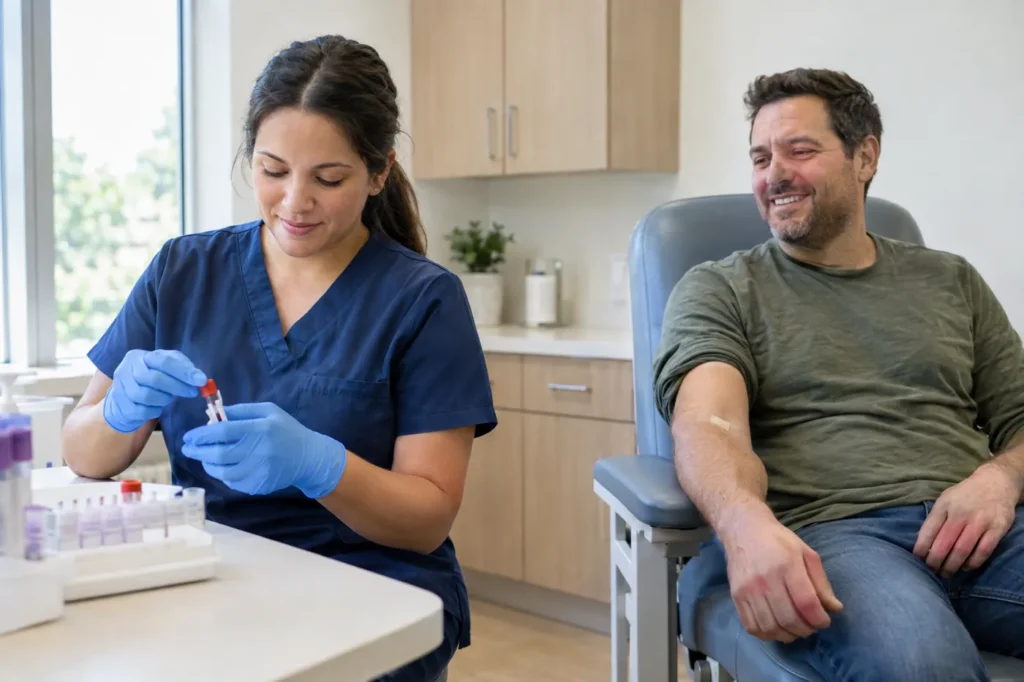
If flu or COVID seems more likely, rapid flu and COVID tests are done here during the visit too. When a blood test would help, we can collect a blood sample here for an outside lab to run. Our lab testing page explains which tests finish during your visit. Have your ID, insurance card and medicine list with you.
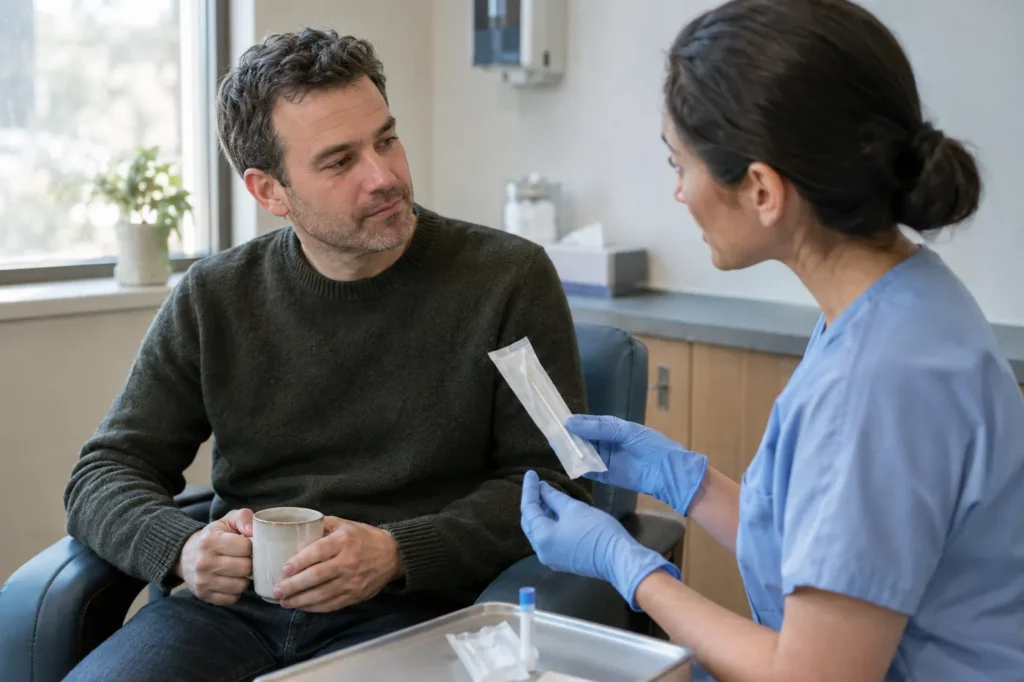
Going back to school or work
It depends on the cause. With strep, MedlinePlus advises staying home until there’s no fever and you’ve had at least 12 to 24 hours of antibiotics, and it says most people stop being contagious after a full day of treatment. Hand, foot and mouth disease is highly contagious, and the AAP says a child who has it should stay home until the blisters begin to heal.
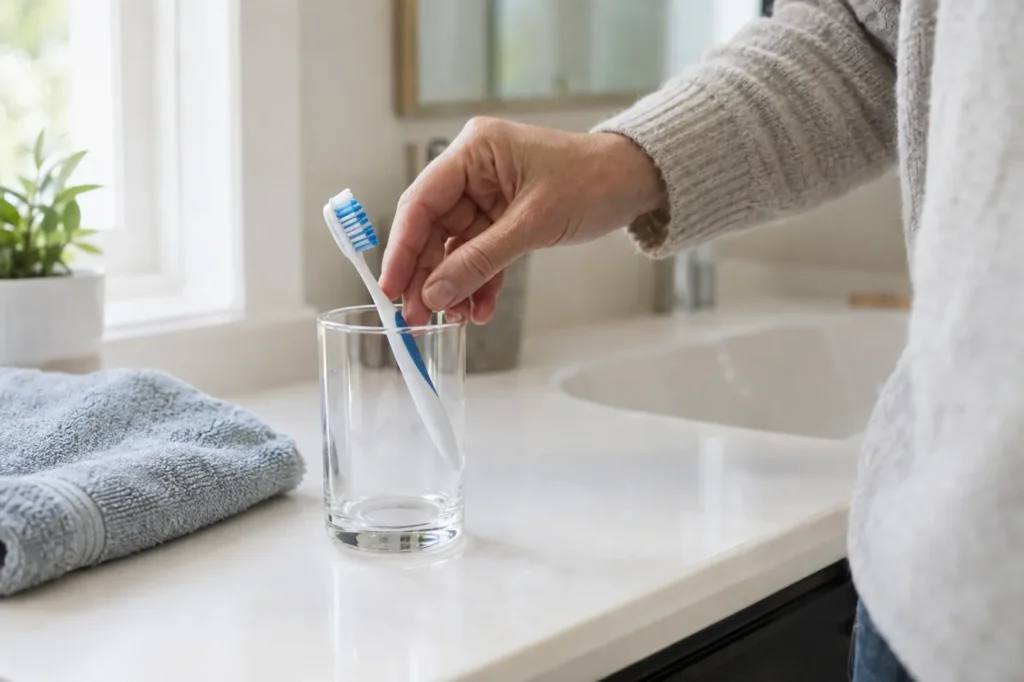
MedlinePlus also suggests a new toothbrush after 2 or 3 days of antibiotics, before the course ends. To keep a sore throat from spreading at home, the CDC advises washing hands often, not sharing cups or utensils with someone who is sick, and covering coughs and sneezes.
Hours, insurance and nearby towns
We’re open every day, weekends included, but not overnight. After 8 PM, call 911 for trouble breathing, or book a next-day visit online if your sore throat can wait.
US Census Bureau estimates place about 98% of Bolingbrook’s residents in Will County and the rest in DuPage County. Romeoville is roughly 10 minutes away by car, Woodridge 11. From Lisle, Darien or Lemont it’s about 14, from downtown Plainfield 15 (part of Plainfield lies in Kendall County), from Downers Grove 16, from Lockport 17 and from downtown Naperville 18.
Plans we take include Medicare, Humana, Cigna, Aetna, UnitedHealthcare, Blue Cross Blue Shield of Illinois and Illinois Medicaid plans (Meridian, Molina, CountyCare, YouthCare and HFS). Please call (630) 914-5373 to confirm your specific plan, or ask about self-pay.
The Pioneer walk-in visit
How a visit works
- Step 1Walk in or save your spot
No appointment needed. You can also save your spot online before you leave home.
- Step 2Check in
Bring a photo ID, your insurance card and a list of the medicines you take.
- Step 3See a provider
Get examined, with X-ray and rapid tests on site when you need them.
- Step 4Leave with a plan
You go home with a care plan and clear next steps.
Why families in Bolingbrook choose Pioneer
Walk-in care that fits real life
Open 7 days a week
8 AM to 8 PM, weekends included, so a Saturday sore throat does not have to wait until Monday.
X-ray and tests on site
X-ray every day we are open, plus rapid strep, flu and COVID tests, urinalysis and EKG.
Care for kids and adults
From infants through the teen years, and adults of every age, in one clinic.
Insurance and self-pay
Aetna, BCBS of Illinois, Cigna, Humana, Medicare, Illinois Medicaid plans and UnitedHealthcare. Call to confirm your plan.
Questions and answers
Questions we hear often
Still not sure? Call (630) 914-5373 and we will help you decide.
Can I walk in for a sore throat and a strep test today?
Yes. No appointment is needed, so you can walk in any day of the week or book a spot online ahead of time. If your symptoms fit strep, the provider does a rapid strep swab and you hear the result before you go. Once we close at 8 PM, the online booking page lists next-day times.
Do I need antibiotics for a sore throat?
Only if a test shows a bacterial cause such as strep. Most sore throats come from viruses, and antibiotics do nothing for them. Because strep can’t be diagnosed by looking, a swab comes first. If the flu is behind your sore throat, MedlinePlus notes that antiviral medicine may help, and a rapid flu test can check for it during the visit.
How long does a sore throat usually last?
The CDC says most sore throats clear up without treatment within one week. For colds in children, the AAP puts recovery at 7 to 10 days, and the AAFP says mono symptoms can last 4 weeks or more. With strep, people usually feel better a day or two after starting antibiotics.
Does my toddler need a strep test?
Often not. The CDC says strep throat is rare in children younger than 3, and the AAP calls it extremely uncommon in infants and toddlers, whose sore throats are usually viral. The provider decides after an exam whether a test makes sense. Drooling or trouble breathing in a young child means call 911.
Can I use a telehealth visit for a sore throat?
A telehealth visit lets you talk through your symptoms with a provider from home, which can help you decide on next steps. A strep, flu or COVID test needs a swab, though, so testing means coming in. With a sudden, severe sore throat, fever and no cough, an in-person visit is usually the better choice.
What does a sore throat visit cost without insurance?
The cost depends on the visit plus any tests the provider orders, such as a rapid strep test, and we don’t post prices online. Call (630) 914-5373 and ask for current self-pay pricing. If you do have insurance, bring your card and ask us to confirm your specific plan.



Sources for this page
- Sore Throat Basics. Centers for Disease Control and Prevention (CDC).
- About Strep Throat. Centers for Disease Control and Prevention (CDC).
- Pharyngitis: sore throat. MedlinePlus, National Library of Medicine.
- Strep A Test. MedlinePlus, National Library of Medicine.
- Epiglottitis. MedlinePlus, National Library of Medicine.
- Peritonsillar abscess. MedlinePlus, National Library of Medicine.
- When is a Sore Throat a More Serious Infection?. American Academy of Pediatrics (HealthyChildren.org).
- Sore Throat (Pharyngitis). American Academy of Family Physicians (familydoctor.org).