
Symptom guide · Pioneer Physicians
Cold and Cough Treatment in Bolingbrook
Most colds get better on their own in about a week, but a cough with trouble breathing, a fever that lasts, or symptoms past 10 days should be checked. At Pioneer Physicians Urgent Care in Bolingbrook, IL, we provide cold and cough treatment for adults and children. We’re open every day from 8 AM to 8 PM, and walk-ins are welcome.
- Open 7 days, 8 AM to 8 PM
- Walk-ins welcome
- X-ray and rapid tests on site
- Kids and adults
- Medicare and Medicaid plans accepted

When should a cough or cold be checked?
Get checked when breathing becomes hard or fast, a fever lasts more than 4 days, or symptoms go on past 10 days, and call 911 for severe trouble breathing. The CDC’s advice on managing a common cold gives those signs and also lists dehydration, symptoms that improve and then come back worse, and a long-term health condition that flares up during the cold.
MedlinePlus says to call a provider right away for any of these cough warning signs:
- A cough that lasts longer than 10 to 14 days
- A fever along with the cough
- Thick, foul-smelling, yellowish-green phlegm
- A high-pitched sound when you breathe in, called stridor
- A violent cough that starts suddenly
- Any cough in a baby younger than 3 months
- Night sweats or weight loss you can’t explain

What causes a cold and cough?
Viruses cause colds, and the AAP’s page on children and colds explains that antibiotics have no effect on viruses. A cold spreads through droplets from a cough or sneeze, and on hands that touch a toy or doorknob and then a nose or mouth. MedlinePlus says people are most contagious in the first 2 to 3 days and usually stop being contagious after the first week.
Coughing is how your body clears the airways, so a cough is a normal part of many colds. Adults usually have a low fever or none, while young children often run 100 F to 102 F.
Not every cough comes from a cold. MedlinePlus lists allergies, asthma, the flu, pneumonia, postnasal drip, acid reflux, smoking and some blood pressure medicines as other causes. If a high fever, chills and body aches came on with your cough, our page on flu symptoms and testing may fit better.
How long cold and cough symptoms usually last
- Most contagious
- The first 2 to 3 days. A cold is usually not contagious after the first week (MedlinePlus).
- A typical cold
- Most symptoms clear within a week. In children, a cold fades over 7 to 10 days (MedlinePlus, AAP).
- Chest cold cough
- Less than 3 weeks (CDC).
- Subacute cough
- 3 to 8 weeks (MedlinePlus). The CDC advises a visit once a chest cold passes 3 weeks.
- Chronic cough
- Longer than 8 weeks (MedlinePlus). A primary care visit can look for the cause.
- Get checked sooner
- Trouble breathing, fever over 4 days, or symptoms past 10 days (CDC).
Cold and cough treatment at home
Rest, fluids and time treat most colds. The CDC and MedlinePlus suggest these steps to ease symptoms:
- Rest, and drink plenty of fluids, which thin mucus so it is easier to cough up
- Add moisture to the air with a clean humidifier or a steamy shower
- Use saline nose spray or drops for a stuffy nose
- Try honey for a cough in anyone 1 year or older, and never give honey to a baby under 1
- Don’t give cough drops or lozenges to children under 4, since they can cause choking
- Stay away from cigarette smoke and secondhand smoke
Cough and cold medicine for adults and children
Store-bought cold medicines may help adults feel better, but MedlinePlus notes they don’t make a cold go away faster. If you have high blood pressure, ask a provider before taking a decongestant.
The AAP’s guide to coughs and colds in children says over-the-counter cough and cold medicine is not recommended under age 4, and at ages 4 to 6 it should be used only if your child’s doctor recommends it. For babies, the AAP suggests saline drops and gentle suction with a bulb syringe before feeds. Ask your pediatrician or pharmacist which fever medicine and dose fit your child’s age.

Do colds need antibiotics?
No. The CDC says antibiotics don’t work against the viruses that cause colds and won’t help you feel better. Unneeded antibiotics carry risks, including allergic reactions and infections that antibiotics can no longer treat.
Colored mucus doesn’t change that. MedlinePlus says the fluid from a runny nose often turns thick and yellow or green within a few days, and that this is normal. Bacteria only sometimes cause a chest cold, and the CDC says antibiotics are not recommended even then. Our bronchitis page covers that lingering chest cough.
Antibiotics do help when an exam or test finds a bacterial infection, such as strep throat or bacterial pneumonia. The provider decides that after seeing you.
Cough not getting better?
Walk in without an appointment for an exam, rapid flu, COVID or strep testing, and a chest X-ray if the provider thinks you need one.
How long a cough lasts, and when it’s too long
A cough often outlasts the cold that started it. The CDC says chest cold symptoms last less than 3 weeks, and MedlinePlus says a short-term cough usually clears by 3 weeks. A cough lasting 3 to 8 weeks is called subacute, and one lasting longer than 8 weeks is chronic.
The CDC advises seeing a provider when chest cold symptoms last more than 3 weeks or bronchitis keeps coming back. A cough that won’t go away can have another cause, such as postnasal drip, asthma or reflux. We offer primary care in Bolingbrook for that kind of follow-up.

Coughs and colds in babies and children
The AAP says most children catch around 8 to 10 colds in their first two years, and a typical cold fades slowly over 7 to 10 days. Babies need a lower bar: call the pediatrician at the first sign of illness in a baby 3 months or younger, because at that age a cold can quickly turn into bronchiolitis, croup or pneumonia. The CDC’s chest cold page adds that a fever of 100.4 F or higher in a baby under 3 months calls for a provider right away.
For children older than 3 months, the AAP advises calling the doctor for any of these:
- A daytime cough that lasts more than 10 days
- A runny nose that lasts longer than 10 to 14 days
- Ear pain, or fussiness that won’t stop
- A temperature over 102 F
- A child who seems too sleepy or too cranky
Coughing fits that could be whooping cough
Whooping cough starts like a cold. The CDC says coughing fits can begin 1 to 2 weeks later, with a high-pitched whoop on the breath in and vomiting during or after the fit. Many babies with whooping cough don’t cough at all. Instead they have pauses in breathing, called apnea, which can be life-threatening. Call 911 if a baby stops breathing or turns blue.
For a child’s cough that isn’t an emergency, walk in to our pediatric urgent care any day we are open.
What happens at a cold and cough visit
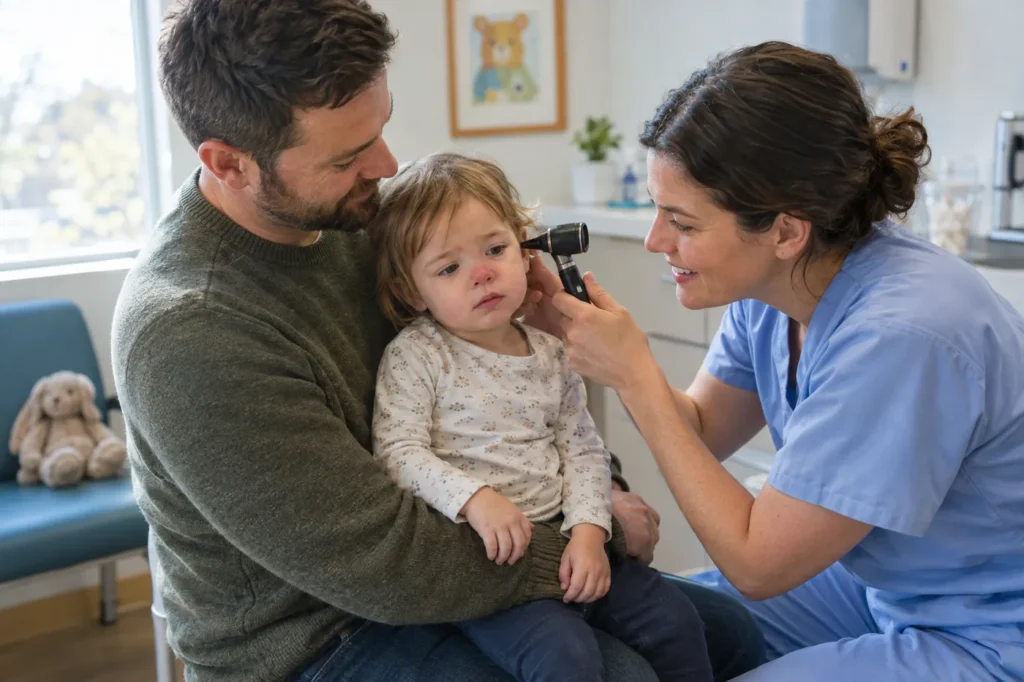
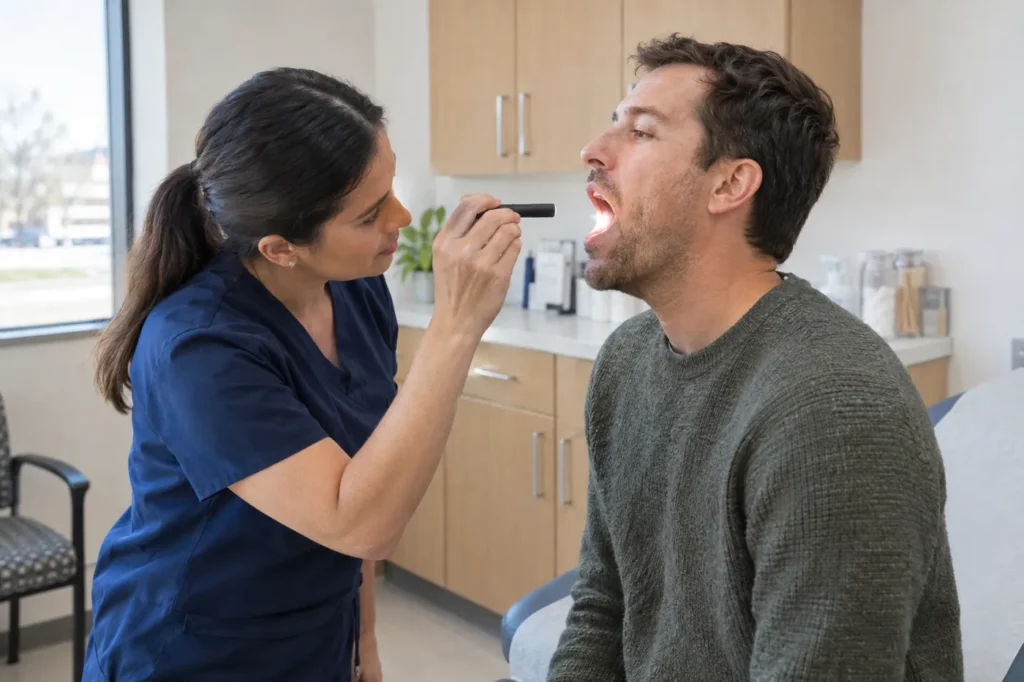
A provider asks about your cough, examines your ears, nose, throat and chest, and decides whether a test would help. MedlinePlus describes the usual questions: when the cough began, what it sounds like, what makes it better or worse, and if you have a fever.
The CDC says to get tested when cold-like symptoms could be flu or COVID-19, and to start flu treatment within 2 days of symptoms and COVID-19 treatment within 5 to 7 days, so come in early. We have no CT or MRI. Our walk-in X-ray page covers the imaging we do offer.
What we can do during the same visit:
- Rapid flu and COVID tests
- Rapid strep test, when a sore throat is part of the illness
- Chest X-ray, any day we are open, when the provider wants to look for pneumonia
- Blood work, drawn here and sent to an outside lab, with results after your visit
Is immediate care a good place for a cough?
Yes. Immediate care and walk-in clinic are other names for urgent care, and MedlinePlus names colds and the flu among the common problems an urgent care clinic can handle.
You can walk in without an appointment or save your spot online. After 8 PM, the booking page shows next-day times. For a mild cold where you mostly want advice, a telehealth visit may be enough, but tests and X-rays need an in-person visit.
We accept Aetna, Cigna, Medicare, Blue Cross Blue Shield of Illinois, Illinois Medicaid plans (HFS, Meridian, CountyCare, Molina and YouthCare), UnitedHealthcare and Humana. Call (630) 914-5373 to confirm your specific plan. Self-pay is available; the cost is the visit plus any tests, so call for current self-pay pricing.
The Pioneer walk-in visit
How a visit works
- Step 1Walk in or save your spot
No appointment needed. You can also save your spot online before you leave home.
- Step 2Check in
Bring a photo ID, your insurance card and a list of the medicines you take.
- Step 3See a provider
Get examined, with X-ray and rapid tests on site when you need them.
- Step 4Leave with a plan
You go home with a care plan and clear next steps.
Why families in Bolingbrook choose Pioneer
Walk-in care that fits real life
Open 7 days a week
8 AM to 8 PM, weekends included, so a Saturday sore throat does not have to wait until Monday.
X-ray and tests on site
X-ray every day we are open, plus rapid strep, flu and COVID tests, urinalysis and EKG.
Care for kids and adults
From infants through the teen years, and adults of every age, in one clinic.
Insurance and self-pay
Aetna, BCBS of Illinois, Cigna, Humana, Medicare, Illinois Medicaid plans and UnitedHealthcare. Call to confirm your plan.
Questions and answers
Questions we hear often
Still not sure? Call (630) 914-5373 and we will help you decide.
Which doctor should I see for a cough and cold?
For most colds and coughs, an urgent care clinic or your primary care doctor is the right place. Choose urgent care when you want to be seen today, including evenings and weekends. Call 911 or go to an ER for trouble breathing, bluish lips or face, coughing up blood or severe chest pain.
Can I walk in for a cough without an appointment?
Yes. Walk-ins are welcome, or you can save your spot online if you prefer. We’re open every day from 8 AM to 8 PM and are not open 24 hours. After 8 PM, the booking page offers next-day times, and an emergency should go to an ER.
How long does a cough last after a cold?
The CDC says a chest cold lasts less than 3 weeks, and MedlinePlus says most short-term coughs are gone by 3 weeks. Come in sooner if the cough goes past 10 to 14 days, comes with a fever, or makes breathing hard.
Does green or yellow mucus mean I need antibiotics?
No. MedlinePlus explains that the fluid from a runny nose often turns thick and yellow or green within a few days of a cold, and that this is normal. Color alone is not a reason for antibiotics. A provider weighs how many days you’ve been ill, your temperature and the exam before deciding.
Can I get a chest X-ray for a cough today?
Yes, when the provider thinks one would help. We can take a chest X-ray on site any day of the week, and it can show whether pneumonia is behind a cough. CT and MRI are not available here, so those scans happen at a hospital or an imaging center.
Do you see babies and children with colds?
Yes. Our pediatric urgent care is open to infants, children and teens every day of the week. For a baby 3 months or younger, the AAP advises calling the pediatrician at the first sign of illness. Call 911 for any child who is struggling to breathe, turns blue or stops breathing.







Sources for this page
- Manage Common Cold. Centers for Disease Control and Prevention.
- Chest Cold (Acute Bronchitis) Basics. Centers for Disease Control and Prevention.
- Symptoms of Whooping Cough. Centers for Disease Control and Prevention.
- Cough. MedlinePlus, National Library of Medicine.
- Common cold. MedlinePlus, National Library of Medicine.
- When to use the emergency room (adult). MedlinePlus, National Library of Medicine.
- Coughs and Colds: Medicines or Home Remedies?. HealthyChildren.org, American Academy of Pediatrics.
- Children and Colds. HealthyChildren.org, American Academy of Pediatrics.