
Symptom guide · Pioneer Physicians
Bronchitis Treatment in Bolingbrook, IL
Bronchitis treatment is mostly about easing the cough while a virus runs its course, since a chest cold usually clears without antibiotics. If your cough brings fever, trouble breathing or no improvement, walk in to Pioneer Physicians Urgent Care in Bolingbrook, IL. We’re open every day, 8 AM to 8 PM, and a chest X-ray on site can check for pneumonia.
- Open 7 days, 8 AM to 8 PM
- Walk-ins welcome
- X-ray and rapid tests on site
- Kids and adults
- Medicare and Medicaid plans accepted

Symptoms of bronchitis
The main symptom of bronchitis is a cough that hangs on, often bringing up mucus. The airways into your lungs, called bronchial tubes, swell and make extra mucus, and coughing clears it. The first few days can be hard to tell apart from a common cold, according to the American Academy of Family Physicians.
The cough typically lasts two to three weeks, and one research review put the average at 18 days. A cough that slowly improves is normal. One that worsens, or brings a rising fever or harder breathing, is not. Other common symptoms:
- Mucus that may be white, yellow or green
- Soreness or tightness in the chest, often worse when you cough
- Feeling tired and run down
- A low fever, or no fever at all
- Wheezing or mild shortness of breath
- Sore throat, stuffy nose or mild body aches

What causes acute and chronic bronchitis
Viruses cause most acute bronchitis, while chronic bronchitis comes mainly from long-term irritation such as cigarette smoke.
Acute bronchitis, the chest cold
Viruses cause most cases, often the same ones behind colds, the flu, RSV and COVID-19. Bacteria turn up in only 1% to 10% of cases. Tobacco smoke, air pollution, dust and fumes can also inflame the airways, per MedlinePlus. Hand washing, covering coughs and staying current on flu and COVID-19 vaccines lower your risk.
Chronic bronchitis
Chronic bronchitis is a cough with mucus that lasts at least three months and returns at least two years in a row. It is closely tied to COPD. The National Heart, Lung, and Blood Institute lists smoking, secondhand smoke, dust and fumes, older age and a family history of COPD as risk factors. Your regular doctor manages it over time, so mention it if you come in with a new chest cold.
Chest cold or pneumonia? How they usually differ
| Topic | Acute bronchitis (chest cold) | Pneumonia |
|---|---|---|
| Where it happens | Airways swell and make extra mucus | Air sacs in the lung fill with fluid or pus |
| Usual cause | A virus; bacteria in only 1% to 10% of cases | Bacteria most often; viruses and fungi too |
| Fever | Low or none, and not typical after the first few days | Common; older adults may have none |
| Breathing and pulse | Usually normal; may wheeze | Often fast breathing, fast pulse, short of breath |
| Chest X-ray | Usually not needed if vital signs and lung exam are normal | Used to confirm it |
| Antibiotics | Not recommended | Standard treatment for bacterial pneumonia |
| Course | Cough lasts about 2 to 3 weeks, then clears on its own | Mild to severe, depending on the cause, your age and your overall health |
Is it bronchitis or pneumonia?
Bronchitis inflames the airways, while pneumonia is an infection deeper in the lung, where the tiny air sacs fill with fluid or pus. Both cause a cough, so the difference shows up in other signs. A fever over 100°F after the first few days points toward the flu or pneumonia. Fast breathing, a fast heart rate, shortness of breath, or rusty or bloody mucus also raise concern for pneumonia.
Those signs are what lead a clinician to order a chest X-ray. Watch older relatives closely. After age 75, pneumonia can cause subtler signs and is less likely to bring a fever, and MedlinePlus notes that older adults may feel weak or suddenly become confused.
A chest X-ray takes two pictures, usually front and side, while you stand at the machine and hold a breath. MedlinePlus says it causes no discomfort and uses a low radiation dose. Tell the staff first if you might be pregnant. When the provider orders one, it is taken at our on-site X-ray on any day we are open, and our pneumonia page covers that illness in depth.

Do you need antibiotics for bronchitis?
Usually not. The CDC says antibiotics will not help you feel better from a chest cold, even in the uncommon cases caused by bacteria. A review in American Family Physician found they shorten the illness by only about half a day, and they can cause side effects such as allergic reactions, nausea, vomiting and a bowel infection called C. diff.
Green or yellow mucus does not change that, because colored phlegm is common with viral bronchitis. The answer can differ for people with chronic lung disease, or when the cause turns out to be pneumonia or whooping cough.

Chest cold dragging on?
A provider can listen to your lungs today in Bolingbrook and, if the exam calls for it, take a chest X-ray during the same visit. No appointment is needed.
How to ease a chest cold at home
Home care does most of the work. These steps come from CDC and NIH advice:
- Rest, and drink plenty of fluids.
- Run a humidifier or cool mist vaporizer.
- Breathe in steam from a hot shower or a bowl of hot water.
- Sip hot tea or warm water with honey. Never give honey to a baby under 1.
- Use throat lozenges or cough drops, but not for young children.
- Ask your doctor or pharmacist before using over-the-counter dextromethorphan (for cough) or guaifenesin (to loosen mucus) if you take other medicines.
- Avoid smoke and fumes. If you smoke, quitting is the first step the NHLBI lists for preventing another bout.
Bronchitis in children
In healthy children, bronchitis comes from a virus, according to the American Academy of Pediatrics (AAP). Yellow or green phlegm is a normal part of healing, not a reason for antibiotics. Extra fluids and warm mist from a running shower help loosen a tight cough.
From age 1, half a teaspoon to 1 teaspoon of honey works as a homemade cough medicine. The AAP does not advise over-the-counter cough medicines under age 6, and cough drops are a choking risk before then.
Have your child seen right away for wheezing, breathing much faster than normal, chest pain with a deep breath, coughing up blood or a fever above 104°F, and within a day for a fever lasting more than 3 days. A baby under 3 months with a temperature of 100.4°F or higher needs care right away: call your pediatrician now, and give no fever medicine before the baby is seen. Our pediatric urgent care checks lingering coughs in babies, children and teens.

When a chest cold needs a visit
Most chest colds do not need a visit. The CDC advises seeing a clinician for any of these:
- A fever of 104°F or higher, or a fever that lasts more than 5 days
- Mucus with blood in it
- Shortness of breath or trouble breathing
- Symptoms that last more than 3 weeks
- Bronchitis that keeps coming back
Coughing fits or repeat bouts
Coughing fits that end in a high-pitched whoop, vomiting or exhaustion can mean whooping cough, and the CDC notes those fits usually go on for 1 to 6 weeks. Bronchitis that keeps returning can point to asthma. The NHLBI notes that two of three people who had bronchitis at least twice in five years also had asthma. Our asthma treatment page explains that care.
Bronchitis treatment at our Bolingbrook clinic
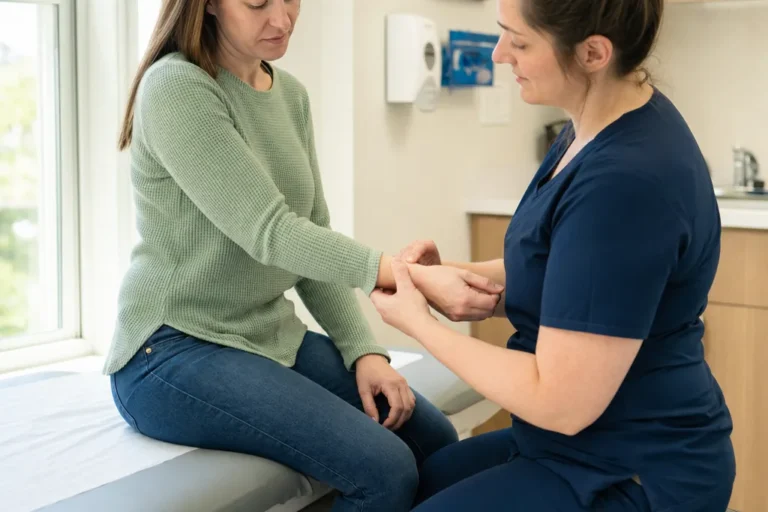
The visit starts with questions about how long the cough has lasted, whether it is improving, and any fever, shortness of breath or lung condition. A provider then checks your temperature, heart rate and breathing and listens to your lungs.
If anything points past a simple chest cold, a chest X-ray can be taken during the same visit. When flu or COVID-19 could be the cause, the provider may add a rapid test, which is run here during your visit. Blood work, when needed, is drawn here and sent to an outside lab.
You leave with a plan for the cough and the warning signs that mean coming back or heading to the ER. If your cough is still at the head cold stage, see our cold and cough page.

Walk-in hours and insurance for a cough visit
A cough visit needs no appointment: walk-ins are welcome, or you can save your spot online. We’re open every day from 8 AM to 8 PM, and in the evening the booking page offers next-day times. We are not open 24 hours, so if a cough worsens overnight, check the 911 signs above.
Our insurance list includes Medicare, Aetna, Blue Cross Blue Shield of Illinois, Cigna, Humana, UnitedHealthcare and the Illinois Medicaid plans HFS, Meridian, CountyCare, Molina and YouthCare. Call (630) 914-5373 to confirm your specific plan. Self-pay is available too. The cost is the visit plus any tests you need, such as an X-ray, so call for current self-pay pricing.
The Pioneer walk-in visit
How a visit works
- Step 1Walk in or save your spot
No appointment needed. You can also save your spot online before you leave home.
- Step 2Check in
Bring a photo ID, your insurance card and a list of the medicines you take.
- Step 3See a provider
Get examined, with X-ray and rapid tests on site when you need them.
- Step 4Leave with a plan
You go home with a care plan and clear next steps.
Why families in Bolingbrook choose Pioneer
Walk-in care that fits real life
Open 7 days a week
8 AM to 8 PM, weekends included, so a Saturday sore throat does not have to wait until Monday.
X-ray and tests on site
X-ray every day we are open, plus rapid strep, flu and COVID tests, urinalysis and EKG.
Care for kids and adults
From infants through the teen years, and adults of every age, in one clinic.
Insurance and self-pay
Aetna, BCBS of Illinois, Cigna, Humana, Medicare, Illinois Medicaid plans and UnitedHealthcare. Call to confirm your plan.
Questions and answers
Questions we hear often
Still not sure? Call (630) 914-5373 and we will help you decide.
How long does bronchitis last?
The cough from acute bronchitis usually lasts two to three weeks, about 18 days on average. Fever and aches tend to fade within the first several days. See a clinician if symptoms last more than 3 weeks, keep getting worse or keep coming back. A cough with mucus lasting three months or more may be chronic bronchitis.
Is bronchitis contagious?
Acute bronchitis can spread, because the viruses behind it pass through coughs, sneezes and unwashed hands. Chronic bronchitis is different: it comes from long-term airway irritation, such as smoking, rather than a new infection. Cover your cough and wash your hands often to protect the people around you.
Do I need a chest X-ray for bronchitis?
Usually not. Guidelines cited by the AAFP say imaging is not needed when your pulse, breathing rate, temperature and lung exam are normal. A chest X-ray mainly checks for pneumonia when you have fast breathing, a fast pulse, a fever over 100°F, shortness of breath, rusty or bloody mucus, or an abnormal lung exam. If the provider orders one, we take it on site any day we are open.
Is bronchitis bacterial or viral?
Acute bronchitis is usually viral. Bacteria turn up in only 1% to 10% of cases, according to an AAFP review, and in healthy children the AAP says a virus is always the cause. That is why the CDC does not recommend antibiotics for a chest cold, even when bacteria are involved.
Can bronchitis turn into pneumonia?
It can. Bacterial pneumonia sometimes follows a viral infection such as a cold or the flu, according to MedlinePlus. Watch for a fever that returns or climbs, faster breathing, shortness of breath, chest pain when you breathe, or rusty or bloody mucus. Those signs mean you should be seen the same day for an exam and possibly a chest X-ray.
Where can I get bronchitis treatment near me?
Pioneer Physicians Urgent Care, at 148 S Bolingbrook Dr in Bolingbrook, IL, treats bronchitis on a walk-in basis, with no appointment needed. We’re open every day from 8 AM to 8 PM. From Romeoville, Woodridge, Lemont, Darien, Lisle or downtown Plainfield, the drive is about 15 minutes or less. For severe trouble breathing or bluish lips, call 911 instead of driving to any clinic.







Sources for this page
- Chest Cold (Acute Bronchitis) Basics. Centers for Disease Control and Prevention (CDC).
- Acute Bronchitis. MedlinePlus, National Library of Medicine.
- Bronchitis. National Heart, Lung, and Blood Institute (NIH).
- Acute Bronchitis: Rapid Evidence Review. American Family Physician (American Academy of Family Physicians).
- Cough (Symptom Checker). American Academy of Pediatrics (HealthyChildren.org).
- Pneumonia. MedlinePlus, National Library of Medicine.
- Chest x-ray. MedlinePlus, National Library of Medicine.
- Symptoms of Whooping Cough. Centers for Disease Control and Prevention (CDC).