
Symptom guide · Pioneer Physicians
Pneumonia Treatment and Chest X-Ray in Bolingbrook, IL
Yes, urgent care can check you for pneumonia. At Pioneer Physicians Urgent Care in Bolingbrook, IL, a provider listens to your lungs, orders a chest X-ray on site when needed, and starts pneumonia treatment when it is safe to recover at home. We’re open every day, 8 AM to 8 PM, and walk-ins are welcome, but call 911 for severe trouble breathing, confusion or bluish lips.
- Open 7 days, 8 AM to 8 PM
- Walk-ins welcome
- X-ray and rapid tests on site
- Kids and adults
- Medicare and Medicaid plans accepted
What causes pneumonia
Pneumonia is a lung infection that fills the small air sacs in one or both lungs with fluid or pus. Many germs can cause it, according to the CDC. Common viral causes include flu, COVID-19, RSV and rhinovirus. Common bacterial causes include pneumococcus and Mycoplasma pneumoniae, although providers can’t always pin down the exact germ.
Pneumonia can start out looking like a cold or the flu, and bacterial pneumonia can set in after a viral illness. In children, the AAP says, most pneumonia follows a viral infection of the nose and throat, and it is common in fall, winter and early spring.
What is walking pneumonia?
Walking pneumonia is a common name for a milder pneumonia caused by bacteria such as Mycoplasma pneumoniae. Many people feel well enough to stay on their feet. The AAP reports a recent rise in Mycoplasma infections, especially in children, and a cough with fever that is not getting better still deserves an exam.
Pneumonia symptoms in adults, older adults and babies
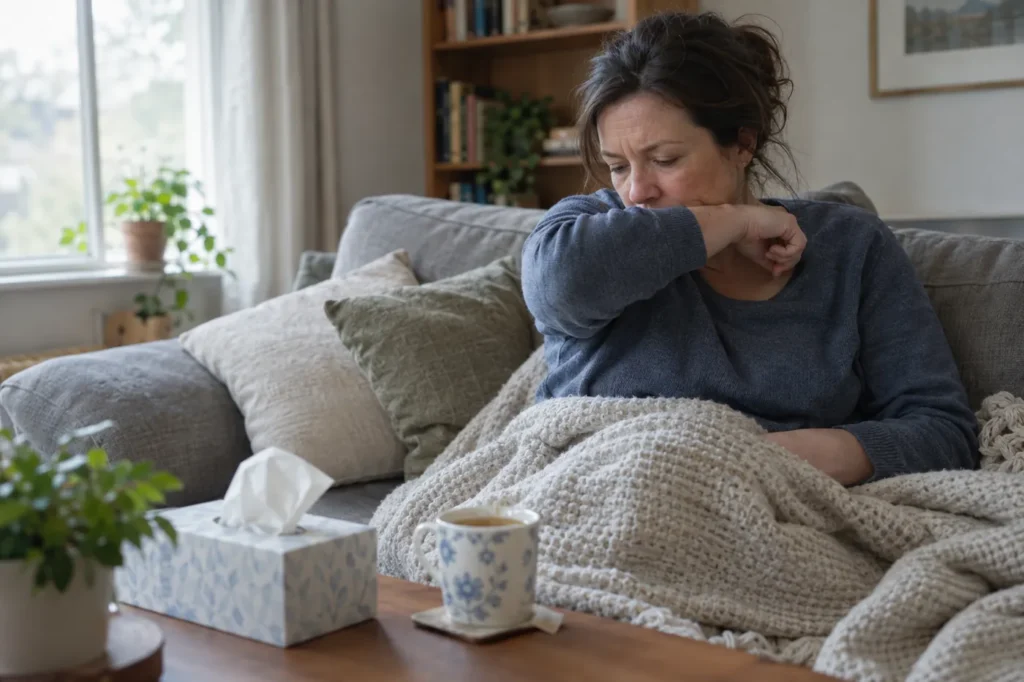
The most common symptoms are a cough, fever or chills, and shortness of breath. The CDC and MedlinePlus list these:
- A cough, often bringing up thick mucus that may be green, yellow or even bloody
- Fever, which may be mild or high, or shaking chills
- Shortness of breath, which may show up only on stairs or with effort
- Sharp chest pain when you breathe deeply or cough
- Tiredness, nausea, vomiting or diarrhea
- Confusion, especially in older people
Symptoms in older adults and babies
Pneumonia doesn’t always look typical. According to MedlinePlus, older adults and people with weak immune systems may have milder symptoms and even a lower-than-normal temperature. An older adult may simply seem weak or suddenly confused. Newborns may show no signs at all, while other babies may vomit, run a fever, cough, seem restless or have no energy.
Pneumonia or bronchitis?
Both cause a cough. Bronchitis is inflammation of the airways that carry air to the lungs, while pneumonia reaches the air sacs deeper in. A review in American Family Physician lists bronchitis, asthma or COPD flare-ups and heart failure among the conditions that can look like pneumonia, so an exam, and sometimes a chest X-ray, sorts them out. Our bronchitis page covers the chest cold that can leave a cough for weeks.
What we can help with today
- Breathing
- Short of breath with activity, or a child breathing a little faster with mild effort
- Talking
- Can speak in full sentences
- Lips and fingertips
- Normal color
- Alertness
- Tired but awake and making sense
- Fever
- Fever with a cough, or a child’s fever lasting more than 3 days
- Fluids
- Drinking enough to stay hydrated
Who is at higher risk for pneumonia
MedlinePlus lists children 2 and younger and adults 65 and older as higher risk. So are people who smoke or drink heavily, were recently sick with a cold or flu, have a weak immune system, or live with lung disease, heart failure, diabetes, or liver or kidney disease. Young children, older adults and people with serious health conditions are also more likely to get very sick, so get symptoms checked early.
Cough and fever not letting up?
Walk in with no appointment to have your lungs checked and, if the provider wants one, a chest X-ray the same day. You can also save your spot online first.
How to care for pneumonia at home
Most people with pneumonia can be treated at home, according to MedlinePlus. These steps help adults while the lungs heal:
- Take every dose of any antibiotic you are prescribed, even after you start to feel better.
- Skip cough and cold medicine unless your provider says it is OK. Coughing helps clear mucus from your lungs.
- Breathe warm, moist air from a humidifier, and take a couple of deep breaths two or three times every hour.
- Drink at least 6 to 10 cups of water, juice or weak tea a day unless your provider says otherwise, and skip alcohol.
- Rest, and nap during the day if you sleep poorly at night.
Home care for children
The AAP advises against cough medicines that contain codeine or dextromethorphan for children. Ask the provider how much your child should drink each day. Viral pneumonia in a child usually improves after a few days with rest and fever care, although the cough can last several weeks.
When pneumonia needs care today
Get checked the same day, at urgent care or with your own doctor, if a cough or fever comes with any of these:
- Shortness of breath, shaking chills or a fever that won’t go away
- Fast or painful breathing, or chest pain that gets worse when you cough or breathe in
- Mucus that is rust-colored or streaked with blood
- Symptoms that improved and then got worse
- A child who breathes a little faster than normal with some noise or effort, or whose fever has gone on more than 3 days without improving
- A fever that lasts more than a few days on an antibiotic, or goes away and comes back
Pneumonia treatment at our Bolingbrook clinic
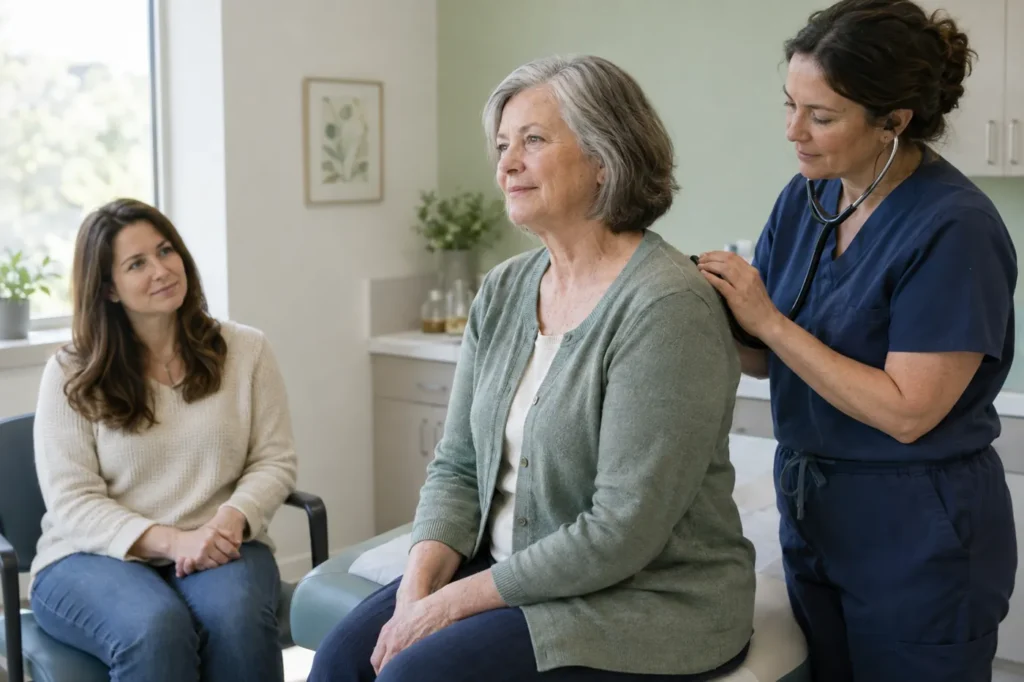
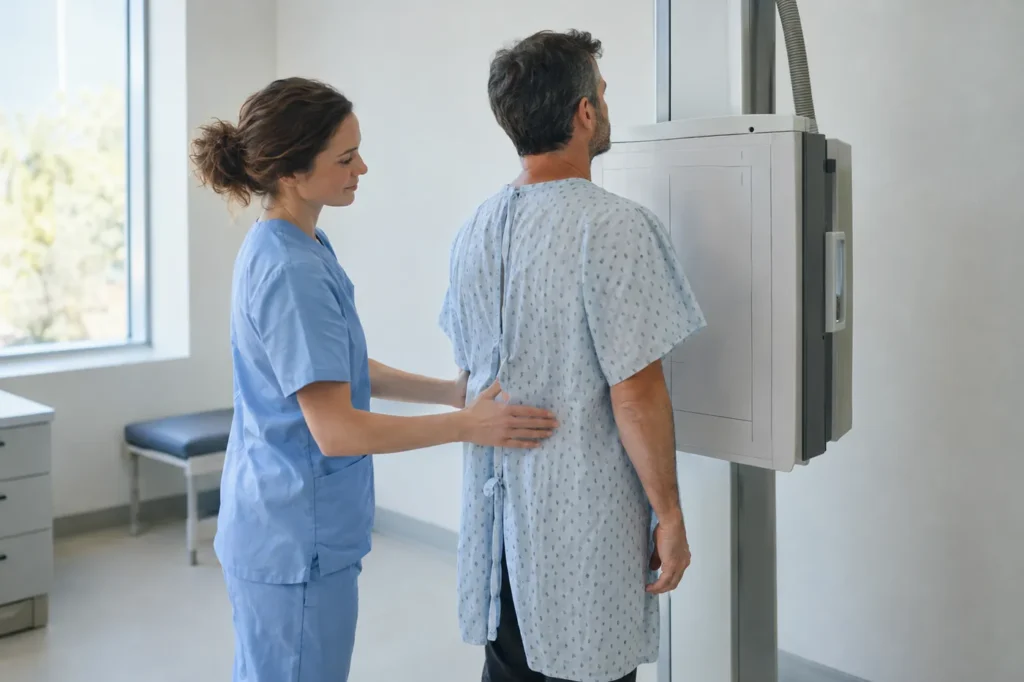
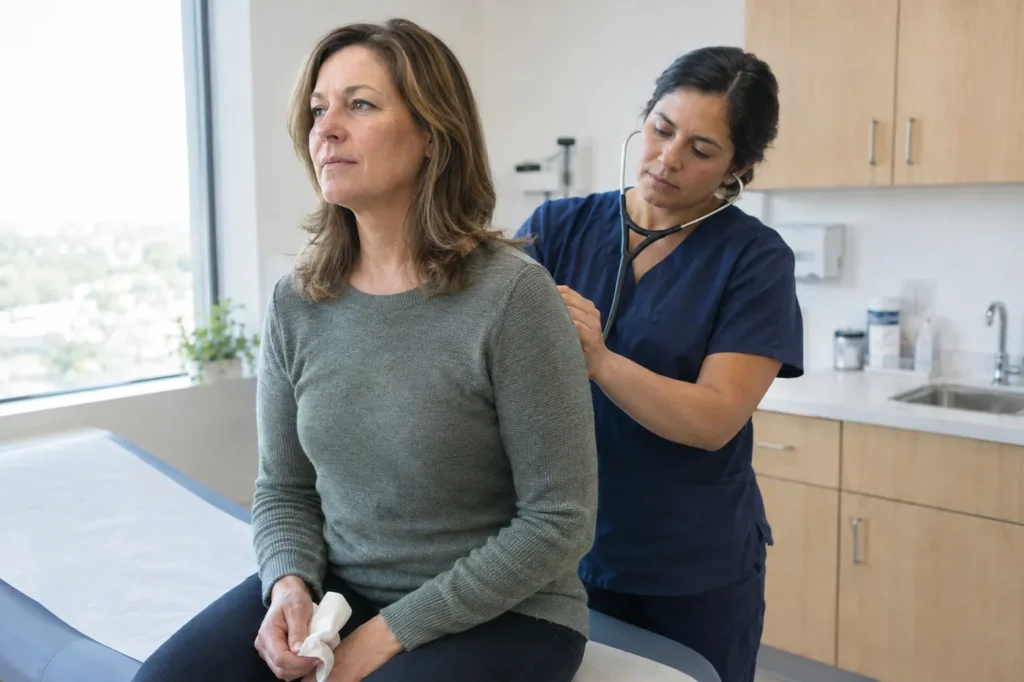
A provider asks about your symptoms, health conditions and medicines, then listens to your lungs for crackles or other abnormal sounds. If pneumonia seems likely, the next step is usually a chest X-ray. Our on-site X-ray is available every day we are open, so there’s no separate trip to an imaging center. Tell the staff first if you are or could be pregnant.
Not every cough needs an X-ray: in the American Family Physician review, adults with a respiratory infection were unlikely to have pneumonia when their vital signs and lung exam were normal. Because flu and COVID-19 can cause pneumonia, the provider may add a rapid flu or COVID test. Blood is drawn here and sent to an outside lab, and our lab testing page explains each test.
When bacterial pneumonia is likely, the provider may prescribe an antibiotic. Antibiotics do not work on viral pneumonia, and an antiviral is sometimes used when flu is the cause. There is no CT or MRI at our clinic. If you need that kind of imaging or hospital care, the provider will tell you to go to an emergency room.
Pneumonia care for children
We see children from infancy through the teen years at our pediatric urgent care. The AAP says doctors usually diagnose pneumonia in children from symptoms and an exam, with a chest X-ray sometimes needed to confirm it. Because it is often hard to tell a virus from bacteria, a child may be prescribed an antibiotic.
How to lower your risk of pneumonia
Vaccines prevent some of the most common causes. The CDC recommends a pneumococcal vaccine for all children younger than 5 and all adults 50 and older, plus older children and younger adults with certain health conditions. A yearly flu vaccine helps prevent pneumonia caused by flu, and a COVID-19 vaccine can help prevent severe pneumonia from COVID-19.
We do not give childhood vaccinations, so a child’s pneumococcal shots come from their regular doctor or the Will County or DuPage County health department. Adults can get a flu shot at our clinic. For a pneumococcal vaccine, ask your doctor or pharmacist whether you are due. Washing your hands often and not smoking help too, since tobacco damages the lungs’ ability to fight infection.

The Pioneer walk-in visit
How a visit works
- Step 1Walk in or save your spot
No appointment needed. You can also save your spot online before you leave home.
- Step 2Check in
Bring a photo ID, your insurance card and a list of the medicines you take.
- Step 3See a provider
Get examined, with X-ray and rapid tests on site when you need them.
- Step 4Leave with a plan
You go home with a care plan and clear next steps.
Why families in Bolingbrook choose Pioneer
Walk-in care that fits real life
Open 7 days a week
8 AM to 8 PM, weekends included, so a Saturday sore throat does not have to wait until Monday.
X-ray and tests on site
X-ray every day we are open, plus rapid strep, flu and COVID tests, urinalysis and EKG.
Care for kids and adults
From infants through the teen years, and adults of every age, in one clinic.
Insurance and self-pay
Aetna, BCBS of Illinois, Cigna, Humana, Medicare, Illinois Medicaid plans and UnitedHealthcare. Call to confirm your plan.
Questions and answers
Questions we hear often
Still not sure? Call (630) 914-5373 and we will help you decide.
Can urgent care diagnose pneumonia?
Yes. A provider diagnoses pneumonia from your history, a lung exam and, when needed, a chest X-ray, which we take on site every day we are open. We treat pneumonia that can be managed at home. Severe pneumonia needs a hospital, so call 911 for serious trouble breathing, confusion or bluish lips.
Do I need a chest X-ray for pneumonia?
Not always. The AAP says doctors often diagnose pneumonia in children from symptoms and an exam, and a review in American Family Physician notes that adults with normal vital signs and a normal lung exam are unlikely to have it. When the exam points toward pneumonia, a chest X-ray helps confirm it. The provider decides at your visit.
Is pneumonia contagious?
The germs behind it are. Most pneumonia is linked to viruses or bacteria that spread from person to person, the AAP says. While you are sick, cough or sneeze into a tissue or your elbow, wash your hands often, and keep your distance from babies, older adults and anyone with a weak immune system.
How long does pneumonia last?
Most people improve quickly with treatment and feel close to normal within about two weeks, MedlinePlus says, but some need a month or more. A chest X-ray can take weeks to clear, so a follow-up X-ray may come later. See your regular doctor for follow-up, and get rechecked sooner if you are not improving.
Can I walk in for pneumonia on a weekend or in the evening?
Yes. We are open 7 days a week, 8 AM to 8 PM, including weekends, and walk-ins are welcome with no appointment needed. You can also save your spot online. We are not open overnight. After 8 PM, the booking page shows next-day times, and hard breathing at night is a reason to call 911.
Does insurance cover a pneumonia visit?
We accept Aetna, Cigna, Medicare, Blue Cross Blue Shield of Illinois, Illinois Medicaid plans (HFS, Meridian, CountyCare, Molina and YouthCare), UnitedHealthcare and Humana. Call (630) 914-5373 to confirm your specific plan. Self-pay is also an option. The bill is the visit plus any test ordered, such as a chest X-ray. Call for current self-pay pricing.


Sources for this page
- About Pneumonia. Centers for Disease Control and Prevention.
- Pneumococcal Vaccination. Centers for Disease Control and Prevention.
- Pneumonia. MedlinePlus, National Library of Medicine.
- Community-acquired pneumonia in adults. MedlinePlus, National Library of Medicine.
- Pneumonia in adults: discharge. MedlinePlus, National Library of Medicine.
- Pneumonia in Children: Causes, Symptoms, Treatment and Prevention. American Academy of Pediatrics, HealthyChildren.org.
- Urgent Care, ER or Pediatrician? A Parent Guide. American Academy of Pediatrics, HealthyChildren.org.
- Community-Acquired Pneumonia in Adults: Rapid Evidence Review. American Academy of Family Physicians, American Family Physician.