
Symptom guide · Pioneer Physicians
Pink Eye Treatment in Bolingbrook, IL
Most pink eye comes from a virus and clears on its own, but thick discharge, a fever or eyes that are no better after a day or two deserve a same-day check. Pioneer Physicians Urgent Care provides walk-in pink eye treatment in Bolingbrook, IL for adults and children. We’re open every day, 8 AM to 8 PM, and no appointment is needed.
- Open 7 days, 8 AM to 8 PM
- Walk-ins welcome
- X-ray and rapid tests on site
- Kids and adults
- Medicare and Medicaid plans accepted

What pink eye is and what causes it
Pink eye, or conjunctivitis, is swelling of the thin, clear layer that covers the white of the eye and lines the eyelids. The inflamed layer makes tiny blood vessels show, so the eye looks pink or red. The CDC calls pink eye one of the most common and treatable eye conditions. Signs in one or both eyes include:
- Pink or red color in the white of the eye
- Swollen eyelids
- Watery eyes, or a discharge of mucus or pus
- Crusts after sleep that can glue the lids shut
- Itching, burning or a gritty, sandy feeling
The usual causes
Viruses cause most cases, and viral pink eye often arrives with a cold. Bacteria are the other common germ cause. Bacterial pink eye is more common in children than adults and shows up more often from December through April. Allergies to pollen, dust mites, mold or pet dander cause itchy pink eye, and smoke, pool chlorine, chemicals or overworn contact lenses can irritate the eye too. MedlinePlus notes that pink eye can even show up in people with COVID-19 before their other symptoms.

Is it viral or bacterial pink eye?
The discharge is your best clue at home, but it takes an exam to judge, and even then the two can be hard to tell apart, as the American Academy of Pediatrics points out. Viral pink eye usually makes watery discharge, often starts in one eye and reaches the other within days, and comes with a cold. Bacterial pink eye tends to make thick, often yellowish pus that sticks the lids together overnight, and it sometimes arrives with an ear infection.
Allergic pink eye usually affects both eyes at once with strong itching, often with sneezing, and it does not spread to other people. If your eyes flare every spring or around a pet, our page on allergic reactions covers the bigger picture.
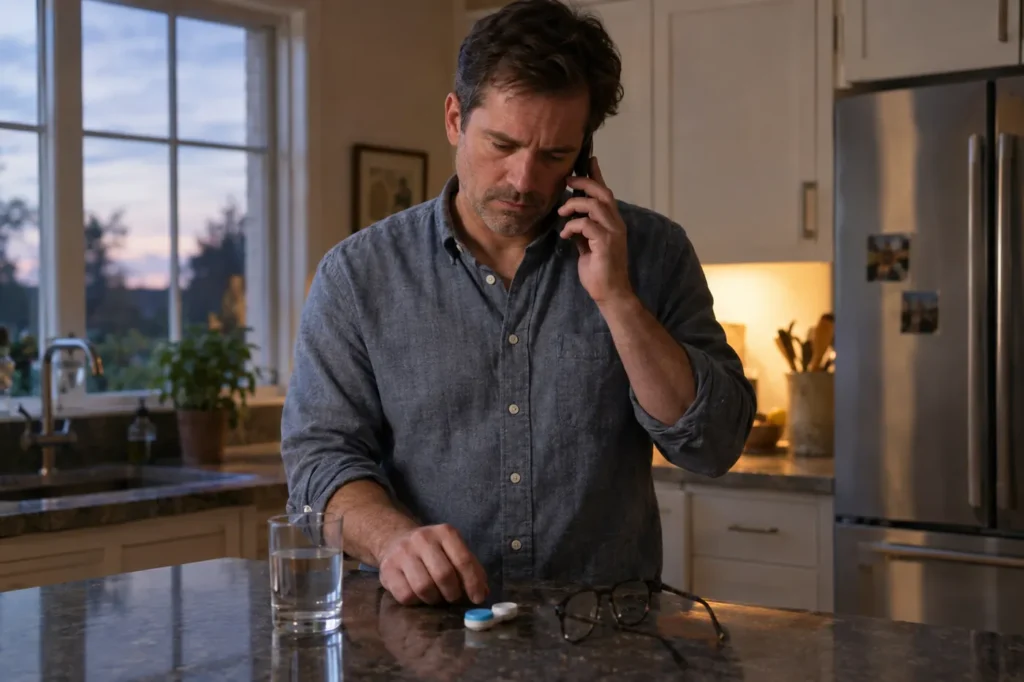
Viral or bacterial pink eye? Common clues (an exam decides)
| Topic | Usually a virus | More likely bacteria |
|---|---|---|
| Discharge | Watery, not thick | Thick, often yellowish pus |
| In the morning | Some crusting is possible | Lids often stuck together |
| Eyes involved | Often starts in one eye and spreads to the other within days | One or both eyes |
| Often comes with | A cold, flu or other breathing illness | Sometimes an ear infection |
| Do antibiotics help? | No | Drops or ointment may shorten it |
| Typical course | 7 to 14 days, sometimes 2 to 3 weeks or more | Mild cases 2 to 5 days, up to 2 weeks |
| Contagious? | Yes, while symptoms last | Yes, until treatment starts or symptoms clear |
Is pink eye contagious?
Yes, viral and bacterial pink eye spread easily, while allergic and irritant pink eye do not. Germs pass through handshakes, coughs and sneezes, and through towels or surfaces touched before someone rubs their eyes. These CDC steps help keep it from moving through a home or classroom:
- Wash hands with soap and water for at least 20 seconds, especially after touching the eyes.
- Wipe discharge with a clean washcloth or a fresh cotton ball, then wash the cloth or throw the cotton away.
- Do not share towels, pillows, eye drops or eye makeup.
- Wash pillowcases, sheets and towels in hot water.
- Throw away disposable contact lenses and eye makeup used while the eye was infected, and skip swimming pools until it clears.
- Try not to rub your eyes, which carries germs to the other eye.

When can my child go back to school or daycare?
Usually once there is no fever and your child feels well enough to join in, but the rule at your child’s school or daycare decides it. The AAP’s child care guidance says a child with red eyes and discharge does not necessarily need to stay home when there is no fever, and the CDC says people without fever or other symptoms may return with their doctor’s approval.
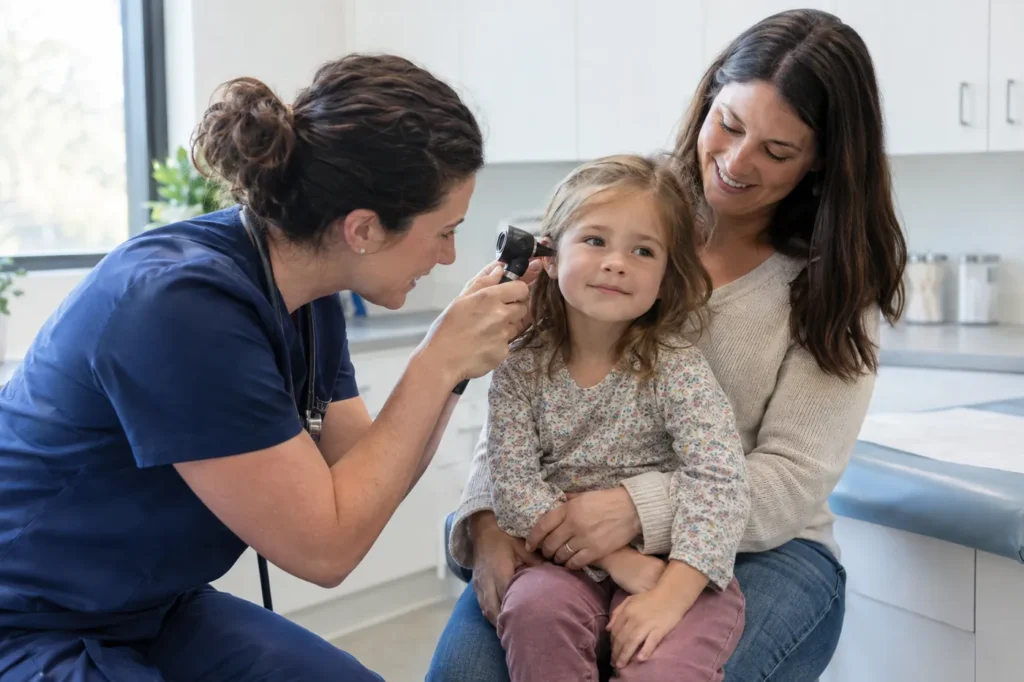
Many schools let a child return 24 hours after starting antibiotic drops, the AAP notes, which is one reason parents bring a child in when the discharge looks thick. Our pediatric urgent care sees babies, children and teens, so a call from the school nurse can turn into a visit that same afternoon or evening.
Pink eye that is not clearing up?
Walk in to our Bolingbrook clinic any day, no appointment needed, or reserve a spot online to learn whether your red, crusty eye needs drops or just time.
How to ease pink eye at home
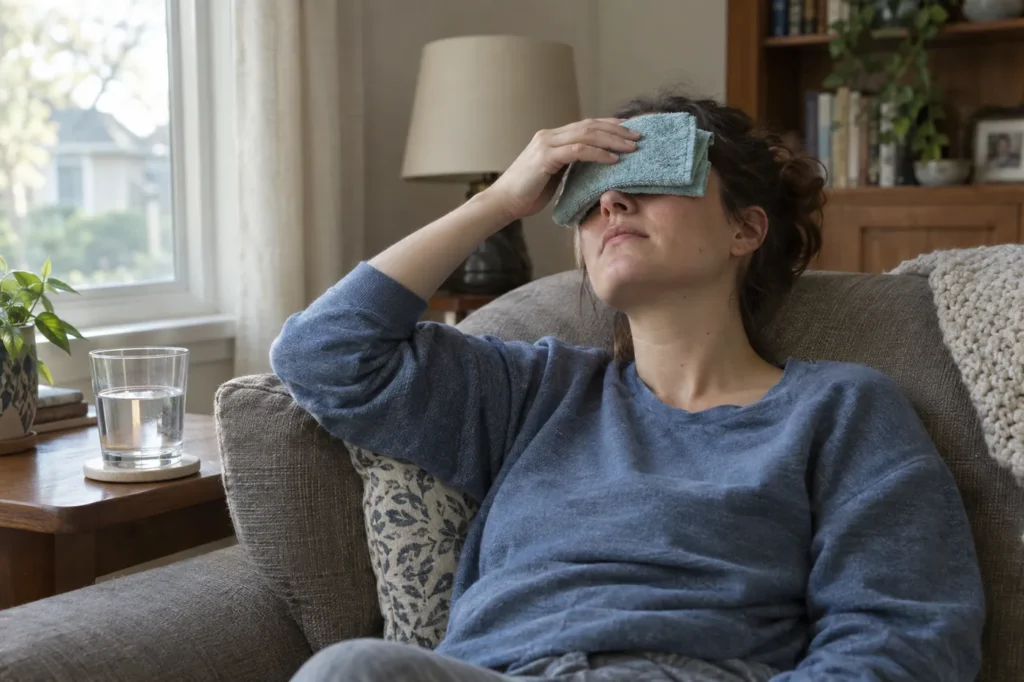
Simple comfort care helps most cases while the eye heals. The CDC says antibiotics will not improve viral pink eye, which usually clears in 7 to 14 days but can take 2 to 3 weeks or more. Mild bacterial pink eye often clears in 2 to 5 days even without treatment.
- Hold a cool compress on closed eyes for swelling and itching, or a warm one to loosen crusts.
- Use artificial tears for dryness and grit, and wait about 10 minutes between different kinds of drops.
- Wear glasses until the eye is fully clear, and never put drops in with a lens in place.
- Stay away from smoke and direct wind, and for allergic pink eye, from the pollen, dust or pet dander behind it.
When pink eye needs care today
Get checked the same day if the eye is not better after 24 to 48 hours, if a fever starts, or if thick pus keeps coming back. The Illinois Department of Public Health lists the first two as reasons to see a provider, and the CDC says antibiotics may be needed when there is pus. Also come in if:
- Symptoms last longer than 3 or 4 days
- Bacterial pink eye is not better after 24 hours of antibiotic drops
- You have a weakened immune system
- The eyelids or the skin around the eye become red or swollen
- A child has pink eye along with ear pain, a sore throat or a cough
What happens during pink eye treatment in Bolingbrook
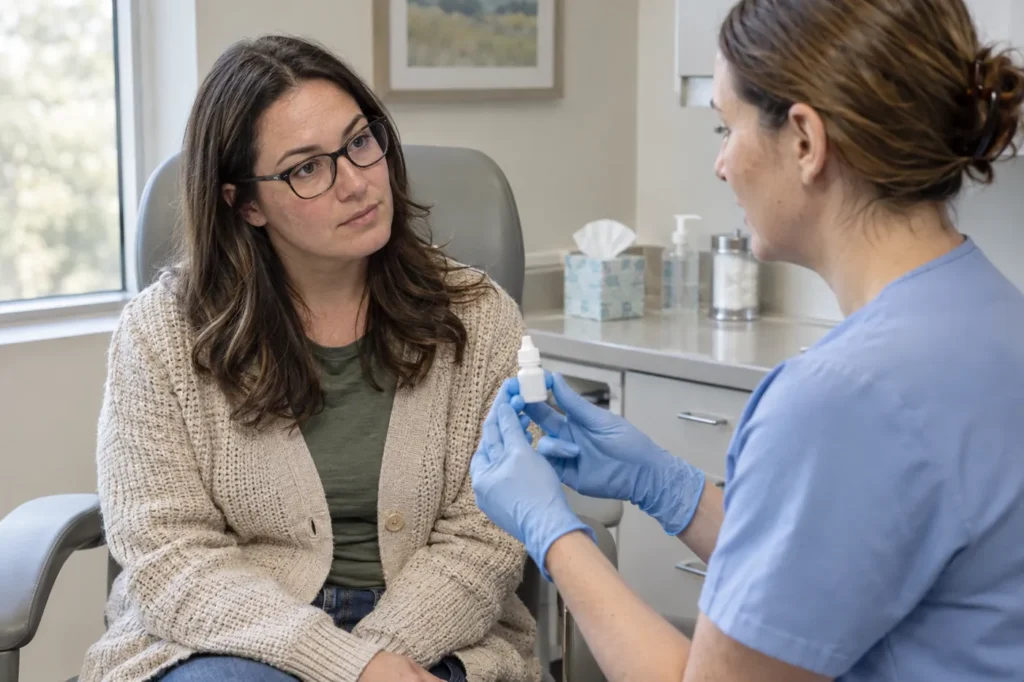
Walk in without an appointment, and a provider will examine your eyes and treat you based on the most likely cause. Expect questions about when it started, one eye or both, the discharge, contact lens use, and whether anyone around you has red eyes.
If bacteria look likely, antibiotic eye drops or ointment may be prescribed, as the CDC describes. If it looks viral, we will explain why antibiotics would not help and go over comfort care. For allergic pink eye, allergy eye drops or medicine can ease the itch, and allergy testing can help find the trigger if it keeps coming back.
When red eyes come with a fever, sore throat or cough, a rapid strep, flu or COVID test can be done at the same visit if the provider thinks one would help. If the exam points to something other than pink eye, we will say so and point you to an eye doctor or the ER. We also offer telehealth visits; call (630) 914-5373 to ask whether one suits your symptoms.
Same-day pink eye treatment near Naperville and Will County
Our clinic at 148 S Bolingbrook Dr takes walk-ins every day, in a village that sits almost entirely in Will County. Romeoville is about 10 minutes away by car, downtown Plainfield about 15 and downtown Naperville about 18, and south Naperville is closer still. Our urgent care near Naperville page has more for families coming from there.
After 8 PM, book a next-day visit online. Wear glasses rather than contacts to the visit, and bring your insurance card and a photo ID.
The Pioneer walk-in visit
How a visit works
- Step 1Walk in or save your spot
No appointment needed. You can also save your spot online before you leave home.
- Step 2Check in
Bring a photo ID, your insurance card and a list of the medicines you take.
- Step 3See a provider
Get examined, with X-ray and rapid tests on site when you need them.
- Step 4Leave with a plan
You go home with a care plan and clear next steps.
Why families in Bolingbrook choose Pioneer
Walk-in care that fits real life
Open 7 days a week
8 AM to 8 PM, weekends included, so a Saturday sore throat does not have to wait until Monday.
X-ray and tests on site
X-ray every day we are open, plus rapid strep, flu and COVID tests, urinalysis and EKG.
Care for kids and adults
From infants through the teen years, and adults of every age, in one clinic.
Insurance and self-pay
Aetna, BCBS of Illinois, Cigna, Humana, Medicare, Illinois Medicaid plans and UnitedHealthcare. Call to confirm your plan.
Questions and answers
Questions we hear often
Still not sure? Call (630) 914-5373 and we will help you decide.
Can urgent care treat pink eye?
Yes. Most people who come to urgent care for pink eye are checked and treated in one visit. A provider examines the eye, decides whether it looks viral, bacterial or allergic, and explains treatment and how to avoid spreading it. Eye pain, vision changes or a contact lens problem call for an eye doctor or the ER instead.
Can I get pink eye treatment the same day?
Yes. Our doors are open every day from 8 AM to 8 PM, Saturdays and Sundays too, and walk-ins are welcome with no appointment needed. Saving your spot online before you head out also works. After 8 PM, the booking page lists next-day times, and cool compresses plus artificial tears can ease the eye until morning.
How long is pink eye contagious?
Viral and bacterial pink eye can spread for as long as symptoms last or the eye still looks abnormal, says the Illinois Department of Public Health. The AAP notes that bacterial pink eye stops being contagious once treatment starts or symptoms clear, while adenovirus, a common viral cause, can spread for weeks. Allergic pink eye is not contagious.
Can you treat my child’s pink eye?
Yes. We see babies, children and teens any day we are open, with no appointment needed. Tell us if your child also has a fever, ear pain or a sore throat, since pink eye often comes with a cold and sometimes with an ear infection. If the throat hurts, the provider may run a rapid strep test during the same visit.
Is it pink eye or something in my eye?
A stray eyelash or grain of sand usually causes sudden scratchiness in one eye, and blinking and tearing often clear it. MedlinePlus says mild scratchiness can last a day or two afterward; get checked if discomfort or blurred vision continues. If something is stuck in the eye, leave it alone and go to the ER.
Does insurance cover a pink eye visit?
Coverage depends on your plan. We accept Aetna, Cigna, Medicare, UnitedHealthcare, Humana, Blue Cross Blue Shield of Illinois and Illinois Medicaid plans (HFS, Meridian, CountyCare, Molina and YouthCare); call (630) 914-5373 to confirm your specific plan. Without insurance, self-pay covers the exam plus any test you need; ask us for current pricing.






Sources for this page
- About Pink Eye (Conjunctivitis). Centers for Disease Control and Prevention.
- Treatment of Pink Eye (Conjunctivitis). Centers for Disease Control and Prevention.
- Contact Lens-related Eye Infections. Centers for Disease Control and Prevention.
- Conjunctivitis or pink eye. MedlinePlus, U.S. National Library of Medicine.
- Eye emergencies. MedlinePlus, U.S. National Library of Medicine.
- Conjunctivitis. Illinois Department of Public Health.
- When to Keep Your Child Home From Child Care. American Academy of Pediatrics (HealthyChildren.org).
- Do I need to keep my son home if he has pinkeye?. American Academy of Pediatrics (HealthyChildren.org).