
Symptom guide · Pioneer Physicians
Sprain Treatment and Strain Care in Bolingbrook, IL
Pioneer Physicians Urgent Care provides walk-in sprain treatment in Bolingbrook, IL. We’re open every day, 8 AM to 8 PM, and no appointment is needed. We check twisted ankles, sore wrists and pulled muscles, take an X-ray here if a bone might be broken, and fit a splint or crutches when the injury needs support.
- Open 7 days, 8 AM to 8 PM
- Walk-ins welcome
- X-ray and rapid tests on site
- Kids and adults
- Medicare and Medicaid plans accepted
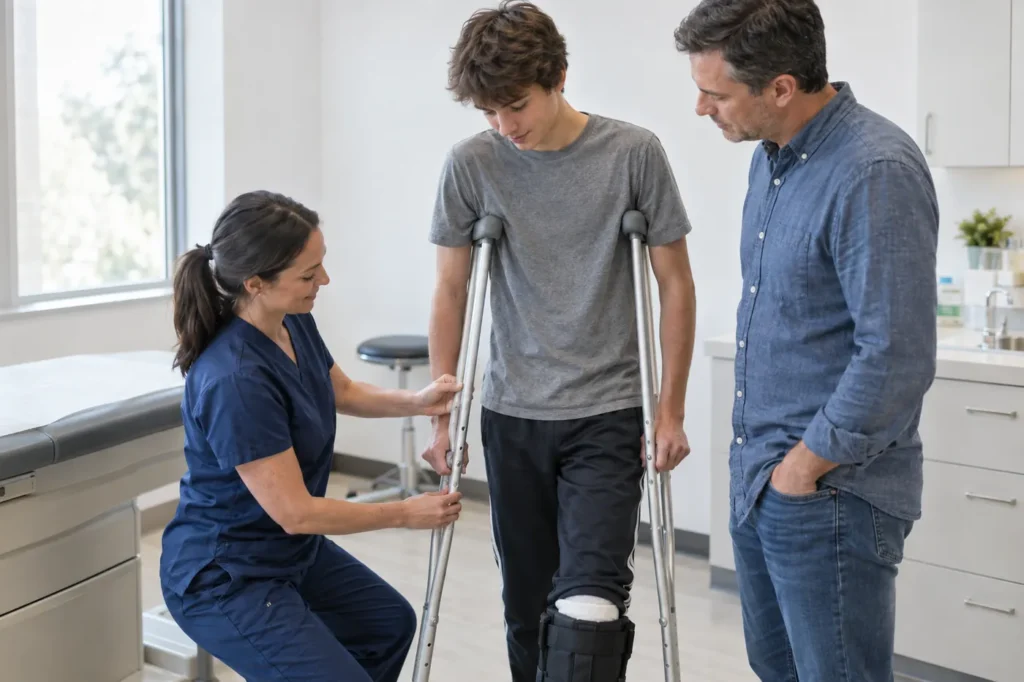
Walk-in sprain treatment at our Bolingbrook clinic
We’re a walk-in clinic for sprains, strains and other minor injuries, open 7 days a week, and X-ray is here any day we’re open, so a possible break is checked in one stop.
You can also save your spot online. For an injury after 8 PM that isn’t an emergency, follow the home care steps below and book a next-day time online. The drive from Romeoville is about 10 minutes.
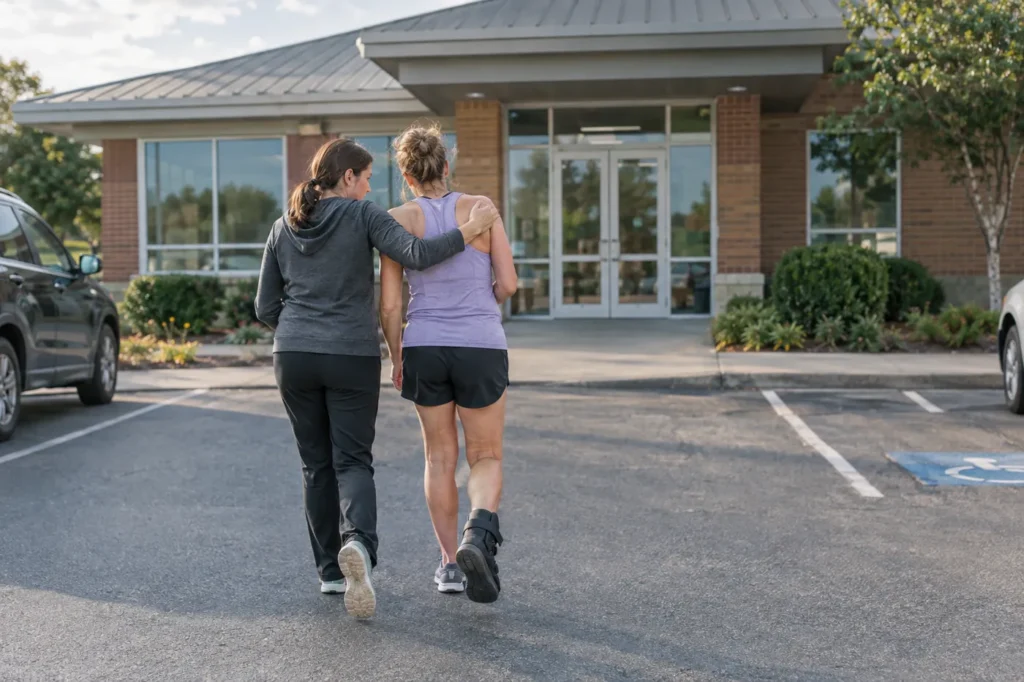
How a sprain differs from a strain
A sprain hurts a ligament, and a strain hurts a muscle or tendon. Ligaments are the tough bands that hold bones together at a joint. MedlinePlus explains that a sprain happens when a joint is forced into an unnatural position and a ligament stretches too far or tears. Ankles, knees and wrists sprain most often.
A strain, often called a pulled muscle, is a muscle or tendon that is stretched too far or torn. It tends to follow heavy effort, a skipped warm-up or a fall. The lower back and the hamstring are common spots.
Sprains are graded 1 (stretched), 2 (partly torn) or 3 (fully torn). A grade 3 sprain may need a brace, splint or cast for several weeks, and sometimes surgery.
Sprain or strain at a glance
| Topic | Sprain | Strain (pulled muscle) |
|---|---|---|
| What is hurt | A ligament, which joins bone to bone at a joint | A muscle, or a tendon that joins muscle to bone |
| Common places | Ankle, knee and wrist | Lower back and hamstring |
| Typical cause | A twist, fall or hit that forces a joint out of position | Heavy effort, a skipped warm-up, poor flexibility or a fall |
| Main symptoms | Pain, swelling, bruising and a stiff joint, sometimes a pop | Pain, muscle spasm, swelling and trouble moving the muscle |
| How bad it gets | Grade 1 stretch to grade 3 complete tear | Minor stretch to a full tear |
| First care | Rest, ice, compression, elevation | Rest and ice, then gentle stretching as pain eases |
Symptoms of a sprain or pulled muscle
Sprains, strains and some broken bones share many of the same signs, which is why an exam matters.
- Pain around a joint or in a muscle
- Swelling
- Bruising, which may take a few days to show and can spread toward the toes after an ankle sprain
- A stiff joint, or trouble moving the joint or muscle
- Muscle spasms, with a strain
- A pop or tearing feeling at the moment of injury

Is it sprained or broken?
Often you can’t tell by looking, so an exam, and sometimes an X-ray, settles it. For ankle and midfoot pain, providers use the Ottawa ankle rules. An X-ray is advised if you couldn’t manage four steps both just after the injury and at the exam, or if certain spots on the ankle or midfoot bones are tender to press.
According to the American Academy of Family Physicians, these checks pick up close to 100 percent of ankle fractures in adults and in kids 5 and older, so when neither sign is present, an X-ray usually isn’t needed. When one is, we take it here, as our X-ray page explains.
Kids and teens are different
In a child, the same twist that sprains an adult’s ankle can injure a growth plate, the softer area near the end of a long bone. The National Institute of Arthritis and Musculoskeletal and Skin Diseases (NIAMS) notes that growth plates are weaker than the nearby ligaments and that an injury there may not show on an X-ray. Pain that won’t settle, swelling at the end of a bone, or a child who won’t use the limb needs a prompt check at our pediatric urgent care, which sees infants through teens.
Hurt an ankle, wrist or back today?
Get it checked today, with an X-ray, splint or crutches if the injury calls for them. Walk in with no appointment, or hold a spot online.
How to treat a sprain or strain at home
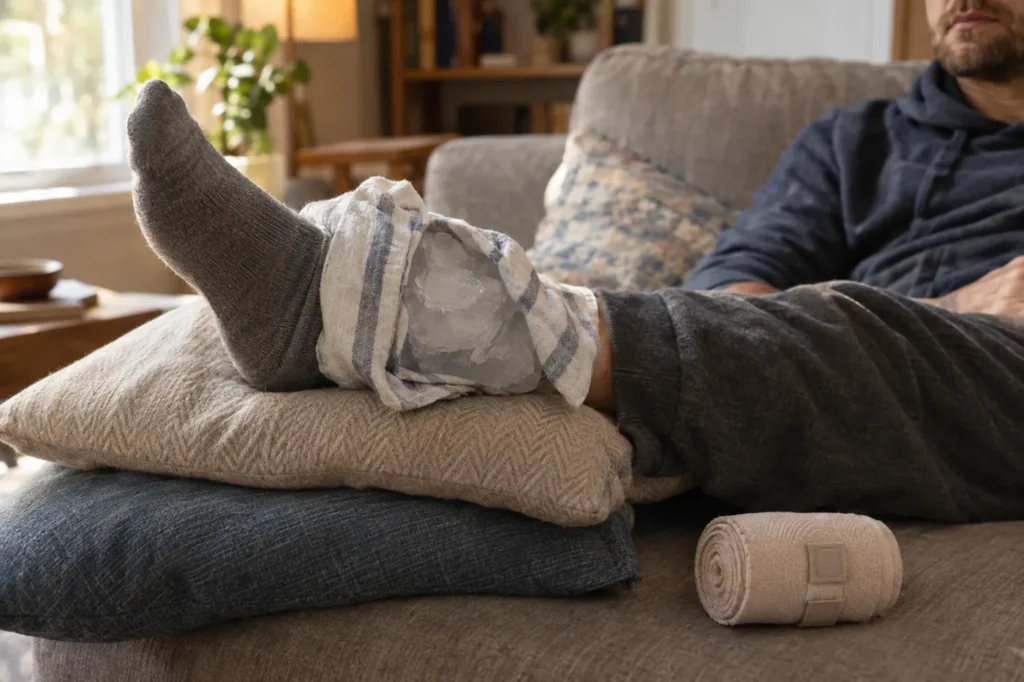
Most mild sprains and strains start to heal with rest, ice, compression and elevation, or RICE. These steps follow NIAMS guidance.
- Rest: limit use of the injured area for at least a day or two, and try to keep weight off it.
- Ice: up to 20 minutes at a time, four to eight times a day, with a towel between the ice and your skin.
- Compression: wrap an elastic bandage snugly, but not so tight that it cuts off blood flow.
- Elevation: prop the injured limb on a pillow above the level of your heart.
Pain relief and when to start moving
Hold off on heat for the first 72 hours, since NIAMS says it tends to increase swelling. Over-the-counter ibuprofen or naproxen can ease pain and swelling. MedlinePlus advises checking with a provider first if you have heart, kidney or liver disease, high blood pressure, or past stomach ulcers or internal bleeding. Don’t give aspirin to children.
Gentle use usually beats long rest. The AAFP reports that early movement, with weight on the ankle as pain allows, gets people back to work and sports sooner than prolonged rest. MedlinePlus notes that ankle pain and swelling most often ease within 48 hours, and then you can slowly put weight back on the foot.
Pulled muscle treatment, including back strains
A pulled muscle gets similar care. MedlinePlus suggests ice for 10 to 15 minutes every hour on the first day, then every 3 to 4 hours through day 3. For a strained lower back, skip long bed rest and avoid heavy lifting or twisting for about 6 weeks. Back pain with burning when you pee or blood in the urine needs a prompt check, since kidney infections and kidney stones can also cause back pain (see our UTI page).
When a sprain or strain needs care today
See a provider the same day if an injury looks worse than a mild sprain or isn’t healing the way one should. Signs include:
- You can’t take four steps or put any weight on the leg
- Back pain comes with loss of control over urine or stool, or new weakness or numbness in the legs
- Pressing on the bone itself hurts
- Pain doesn’t ease with ice, rest and over-the-counter pain medicine
- Swelling hasn’t started to go down within 2 days
- The ankle feels no better after 5 to 7 days, or it keeps giving way
- The skin turns red, warm and painful, or you have a fever over 100°F (38°C)
- Your child won’t use an arm or leg after a fall
What happens at your sprain visit
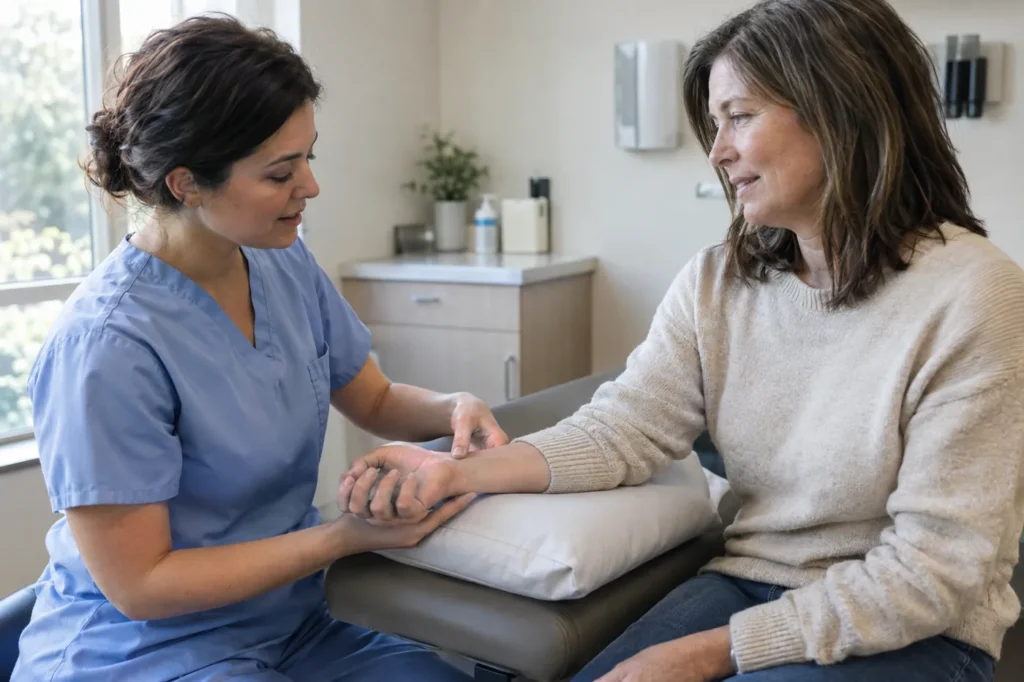
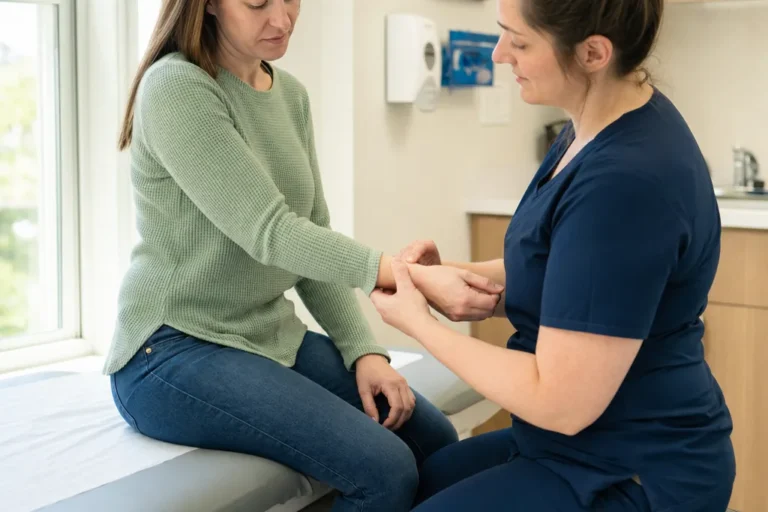
A provider asks how you got hurt, examines the injury and decides whether an X-ray will help. The exam usually checks where it hurts, how the joint moves, and the blood flow and feeling below the injury.
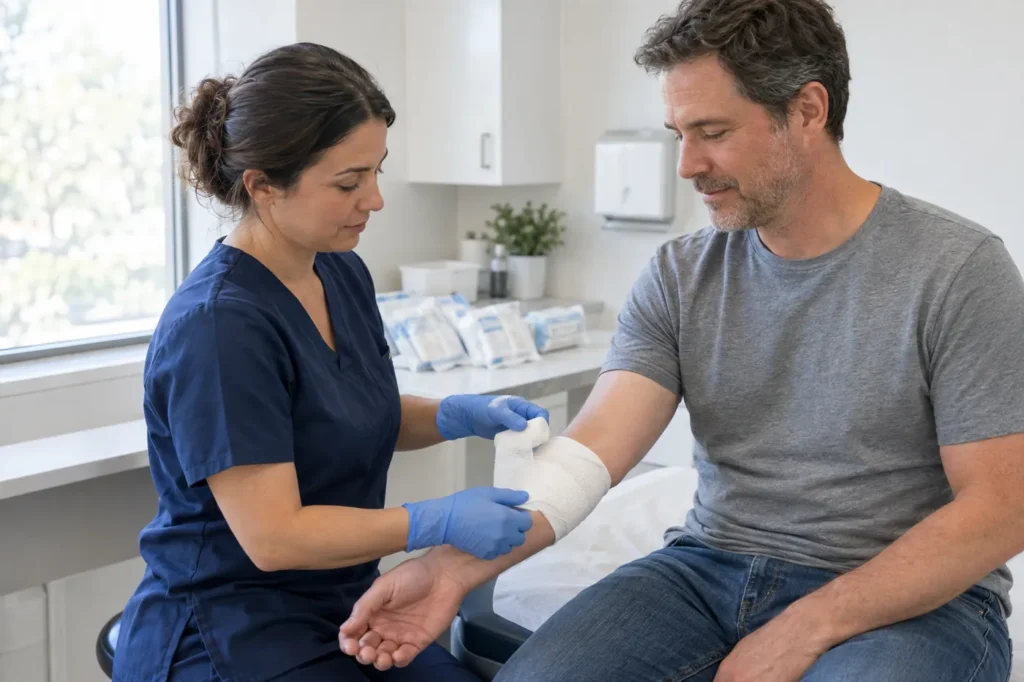
When the injury needs support, we can fit a splint, and crutches if you shouldn’t put full weight on a leg. Before you go, your provider explains home care and the signs that mean you should follow up.
CT and MRI aren’t available here. MedlinePlus notes that an MRI is sometimes ordered to look for a ligament injury. If your provider decides you need one, they’ll tell you why and go over next steps.
Is this an orthopedic urgent care?
No. We’re a general urgent care, not an orthopedic specialty practice. Still, many injuries people take to an orthopedic walk-in clinic can start here with an exam, an X-ray if needed, and a splint or crutches. NIAMS notes that a primary care clinician can manage most injuries and refer you to a specialist when needed. An orthopedic or sports medicine doctor, or a physical therapist, may be the next step when:
- A ligament may be completely torn (a grade 3 sprain), which sometimes needs surgery
- The joint stays weak or keeps giving way
- A child may have a growth plate injury
- Back pain lasts longer than a month
Follow-up after your visit
Your provider will say if you need follow-up and how soon. For ongoing care, see your regular doctor or our primary care clinicians.
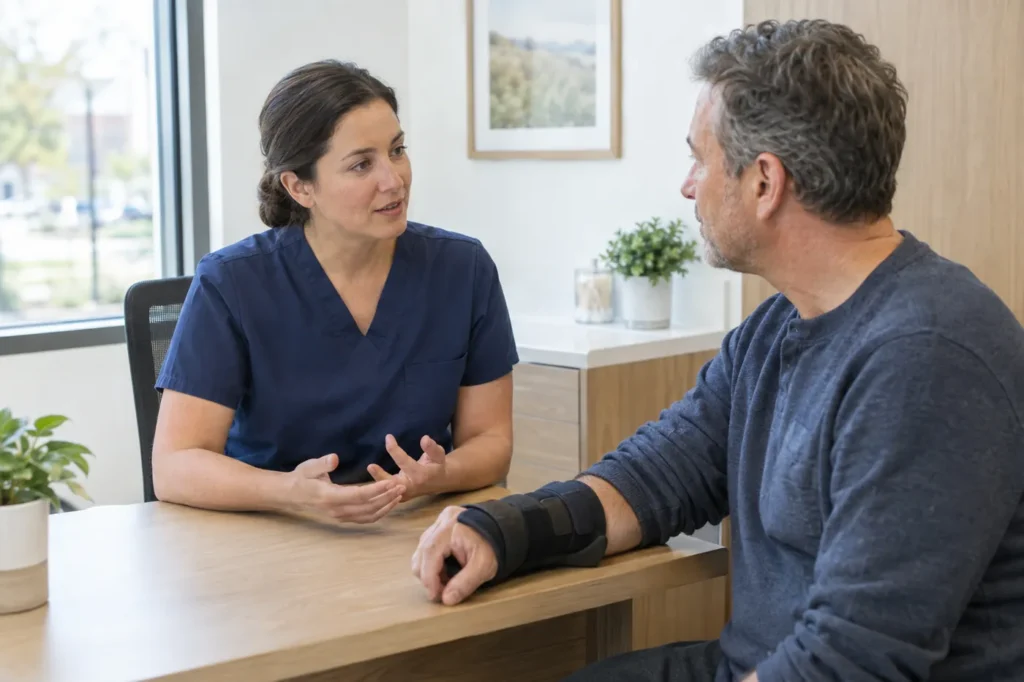
The Pioneer walk-in visit
How a visit works
- Step 1Walk in or save your spot
No appointment needed. You can also save your spot online before you leave home.
- Step 2Check in
Bring a photo ID, your insurance card and a list of the medicines you take.
- Step 3See a provider
Get examined, with X-ray and rapid tests on site when you need them.
- Step 4Leave with a plan
You go home with a care plan and clear next steps.
Why families in Bolingbrook choose Pioneer
Walk-in care that fits real life
Open 7 days a week
8 AM to 8 PM, weekends included, so a Saturday sore throat does not have to wait until Monday.
X-ray and tests on site
X-ray every day we are open, plus rapid strep, flu and COVID tests, urinalysis and EKG.
Care for kids and adults
From infants through the teen years, and adults of every age, in one clinic.
Insurance and self-pay
Aetna, BCBS of Illinois, Cigna, Humana, Medicare, Illinois Medicaid plans and UnitedHealthcare. Call to confirm your plan.
Questions and answers
Questions we hear often
Still not sure? Call (630) 914-5373 and we will help you decide.
Is there a walk-in clinic for sprains near me?
Yes. Pioneer Physicians Urgent Care in Bolingbrook is open 7 days a week, 8 AM to 8 PM, and sees sprains and strains with no appointment needed. X-ray, splints and crutches are here every day we’re open. We’re about 11 minutes from Woodridge and 14 from Lemont.
What is the best treatment for a pulled muscle?
Rest it for at least a day and ice it in short sessions for the first 3 days. When the pain eases, stretch gently and add activity back slowly. Call 911 if you can’t move the muscle at all or the injury is bleeding, and see a provider if the pain hasn’t gone away after several weeks.
Can I get a splint and crutches at urgent care?
Yes. We keep splints and crutches at the clinic. If your provider decides the injury needs support, or that you shouldn’t put full weight on a leg, you’re fitted during the same visit. Your provider will also tell you if a specialist should follow up.
How long does a sprained ankle take to heal?
Most ankle sprains settle in 2 to 6 weeks, the AAFP reports, and MedlinePlus says a mild one often heals in 7 to 10 days. A high ankle sprain, just above the ankle joint, can sideline people for up to 4 to 5 months. If your ankle isn’t better after 5 to 7 days, or keeps giving way, have it checked.
Is it a sprain or a break if I can still walk?
Walking is a good sign, but it doesn’t rule out a break. Under the Ottawa ankle rules, tenderness when certain spots on the ankle or midfoot bones are pressed calls for an X-ray even if you can walk. If you can take four steps and the bone isn’t tender, a fracture is much less likely.
Do you take insurance for sprain and strain visits?
Yes. We accept Aetna, Cigna, Medicare, Blue Cross Blue Shield of Illinois, UnitedHealthcare, Humana and Illinois Medicaid plans (HFS, Meridian, CountyCare, Molina and YouthCare). Call (630) 914-5373 to confirm your specific plan. Self-pay is available too. If you’re paying yourself, the cost is the visit plus any tests, like an X-ray. Call for current self-pay pricing.





Sources for this page
- Sprains. MedlinePlus Medical Encyclopedia, National Library of Medicine.
- Strains. MedlinePlus Medical Encyclopedia, National Library of Medicine.
- Ankle sprain: aftercare. MedlinePlus Medical Encyclopedia, National Library of Medicine.
- Broken bone. MedlinePlus Medical Encyclopedia, National Library of Medicine.
- Low back pain: acute. MedlinePlus Medical Encyclopedia, National Library of Medicine.
- Sports Injuries: Diagnosis, Treatment, and Steps to Take. National Institute of Arthritis and Musculoskeletal and Skin Diseases (NIAMS), NIH.
- Growth Plate Injuries. National Institute of Arthritis and Musculoskeletal and Skin Diseases (NIAMS), NIH.
- Acute Ankle Sprain: An Update. American Family Physician, American Academy of Family Physicians.