
Walk-in care · Bolingbrook, IL
IV Hydration Therapy in Bolingbrook, IL
Pioneer Physicians Urgent Care offers IV therapy for hydration at 148 S Bolingbrook Dr in Bolingbrook, IL. A drip sends fluid and electrolytes straight into a vein, which helps most when you’re dehydrated and can’t keep enough down by mouth. We’re open 7 days a week, 8 AM to 8 PM. Walk-ins are welcome, or you can save your spot online.
- Open 7 days, 8 AM to 8 PM
- Walk-ins welcome
- X-ray and rapid tests on site
- Kids and adults
- Medicare and Medicaid plans accepted
What IV hydration therapy is
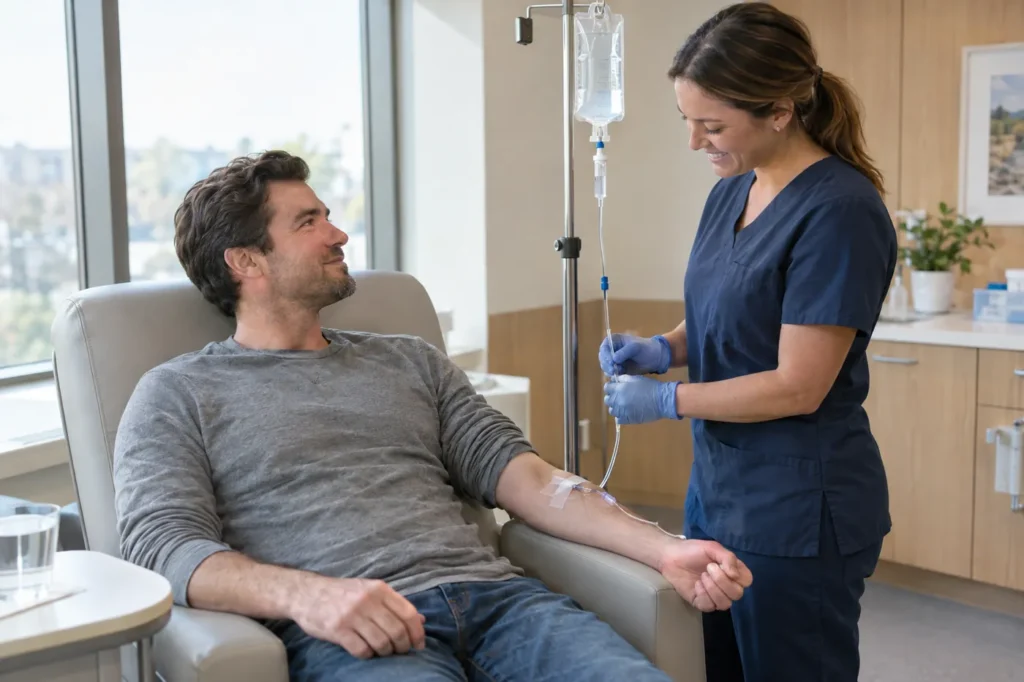
IV hydration therapy replaces lost fluid and electrolytes through a thin, flexible tube placed in a vein. IV is short for intravenous, which means into a vein. The fluid goes directly into your bloodstream and never passes through your stomach, which matters when nausea or vomiting keeps sending every sip back up.
Electrolytes are minerals such as sodium, potassium and chloride. MedlinePlus explains that sodium and chloride help control how much fluid your body holds, while potassium helps your heart, muscles and cells work properly. Heavy sweating, vomiting and diarrhea drain these minerals along with water.
According to Cleveland Clinic’s guide to IV fluids, common choices include normal saline, which is salt in water, and lactated Ringer’s, which also carries potassium and calcium. How much fluid you get, and how quickly, is set by a clinician who weighs your age, body weight and medical conditions.

Who IV hydration is for
At an urgent care clinic, IV hydration is meant for people who are dehydrated but not severely, and who are struggling to drink enough to catch up. A stomach bug, a fever, a long day of sweating in the heat or a hard workout without enough water are common causes. MedlinePlus adds that older adults and people with conditions such as diabetes run a higher risk.
If you can drink, start there. MedlinePlus advises taking water a sip at a time, letting ice cubes melt in your mouth, or choosing a sports drink that has electrolytes. It warns that salt tablets can cause serious complications. An IV makes more sense when those steps aren’t working, for example when nothing stays down for long. For stomach bug home care, see our page on nausea, vomiting and diarrhea.
People also ask about IV drips after a long race or a night of drinking, which the research section below covers.
Mild to moderate vs. severe dehydration
| Topic | Mild to moderate | Severe |
|---|---|---|
| How you feel | Thirsty, with a dry or sticky mouth | Dizzy, confused, irritable or listless |
| Urine | Peeing less, with darker yellow urine | No urine, or very dark yellow or amber urine |
| Skin | Dry and cool | Dry and shriveled |
| Other signs | Headache and muscle cramps | Rapid heartbeat, rapid breathing, sunken eyes |
| Where IV fluids fit | IV hydration at our clinic if drinking isn’t working | Hospital care, where the cause is treated too |
Should you be screened before an IV drip?
Yes. An IV is a medical procedure, and your health history decides whether it’s safe for you. In its review of IV vitamin infusions, Cleveland Clinic advises checking with your regular provider first, and it says to avoid IV vitamin therapy if you’re pregnant or a provider is treating you for high blood pressure, heart trouble or kidney disease.
Fluid itself can cause trouble when it goes in too quickly. Cleveland Clinic calls this fluid overload and describes headache, high blood pressure and trouble breathing. For vitamin drips, its list of risks adds interactions with medicines you already take and toxicity when doses run too high.
Complications from IV fluids are uncommon, according to Cleveland Clinic. Its list includes a swollen vein (phlebitis), fluid leaking into the tissue around the vein, a deep bruise, infection and, rarely, air getting into the vein. If you’re unsure an IV fits your health, call (630) 914-5373 and ask before you drive over.

What happens at an IV therapy visit
Most of an IV therapy visit is sitting still while fluid drips in through a small tube in your arm or hand. You can walk in without an appointment or save your spot online before you leave home.
Cleveland Clinic describes the usual steps. The skin is cleaned, most often at the inside of the elbow or on the back of the hand. A needle guides a small plastic tube into the vein, which can pinch for a moment. The tube is taped down and connected to a bag of fluid.
How long the drip takes depends on how much fluid you need and how fast it’s set to run, so ask at check-in if you’re on a schedule. Many people need no recovery time afterward, Cleveland Clinic says. While the fluid runs, tell staff right away about pain or puffiness at the needle site, a headache, or any trouble breathing.
Bring these to the visit:
- A photo ID and your insurance card, if you have one
- A list of your prescriptions, vitamins and supplements, with doses
- Your allergies, and any heart disease, kidney disease, high blood pressure or pregnancy
- When you got sick and how much you’ve managed to drink
- A shirt with sleeves that push up easily, since the IV usually goes near the elbow or on the hand

Ask about IV hydration today
Walk in any day with no appointment, save your spot online, or call (630) 914-5373 to ask whether an IV fits your health.
What the research says about IV vitamin drips
IV fluids reliably correct dehydration, but the case for adding vitamins in people who are already healthy is weak so far. Cleveland Clinic finds little proof that IV vitamins improve general wellness, and the doctor it interviews says researchers are still waiting on high-quality studies. The FDA has also raised safety concerns about IV bags mixed at hydration clinics and spas, the article adds.
After a long race or a hot workout, an IV helps only if you’re actually dehydrated. Cleveland Clinic lists overdoing exercise, or long hours in the heat without enough to drink, among the causes of serious dehydration that call for IV fluids.
We don’t claim that an IV boosts immunity, raises energy or clears skin. If you want to know what can go into a drip here beyond fluid and electrolytes, call (630) 914-5373 and ask whether it makes sense for you.
What an IV can and can’t do after drinking
It can replace fluid if vomiting keeps you from drinking, but no remedy has been shown to end a hangover sooner. MedlinePlus says popular fixes have very little scientific evidence behind them. Its prevention advice is plain: drink slowly, with food, and have a glass of water between alcoholic drinks.
IV hydration for children and teens
For most children, fluids by mouth come first. The American Academy of Pediatrics calls oral rehydration an effective and safe way to prevent dehydration at home. Its advice for a vomiting child is to offer small amounts every few minutes, with a goal of at least 1 ounce an hour. Children 1 year and older can have a store-bought oral rehydration solution. Babies 6 months to 1 year should get breast milk or formula, then an oral rehydration solution if that isn’t tolerated, and not plain water. Sports drinks can carry enough sugar to make diarrhea worse, the AAP cautions.
Call your child’s doctor right away, the AAP advises, if your child is too sick to drink, becomes unusually sleepy or fussy, has a dry mouth and few tears, or pees less often, which for babies means fewer than six wet diapers a day.
We see children for urgent care from infancy through the teen years. Whether IV hydration is an option depends on your child’s age and health, so call before coming in for an IV specifically. See pediatric urgent care for what a children’s visit covers.

What we do not do
IV hydration here replaces fluid. It isn’t emergency care, and we don’t promise that a drip will prevent illness or end a hangover.
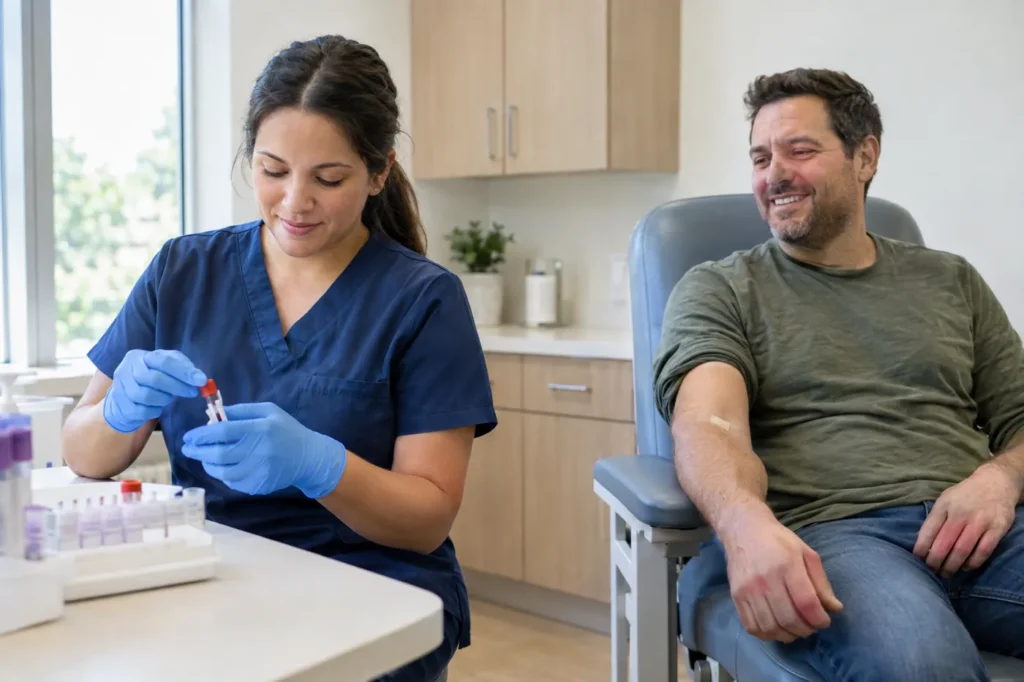
An IV also doesn’t explain how you got so dry. If you’ve been sick, an urgent care visit can look for the reason. Rapid flu, COVID and strep tests and urinalysis can be done during the visit, and blood can be drawn on site for an outside lab to test.
Insurance and self-pay for IV hydration
Insurance coverage for IV fluids varies with your plan and the reason you need them, so call first. We accept Aetna, Cigna, Medicare, Blue Cross Blue Shield of Illinois, UnitedHealthcare, Humana, and Illinois Medicaid plans including HFS, Meridian, CountyCare, Molina and YouthCare. Call to confirm your specific plan.
Self-pay is available, and the cost depends on what your visit includes. Call (630) 914-5373 for current self-pay pricing.

Coming in from nearby towns
Our clinic is in Bolingbrook, a short drive from most neighboring towns. Romeoville is the quickest trip at about 10 minutes, with Woodridge close behind at 11. Lemont, Darien and Lisle each sit around 14 minutes out, and downtown Plainfield about 15. Downers Grove takes about 16 minutes, Lockport 17, and downtown Naperville 18, though south Naperville is nearer.
For driving routes and the nearest emergency room from those two towns, see IV hydration near Plainfield and IV hydration near Woodridge.
The Pioneer walk-in visit
How a visit works
- Step 1Walk in or save your spot
No appointment needed. You can also save your spot online before you leave home.
- Step 2Check in
Bring a photo ID, your insurance card and a list of the medicines you take.
- Step 3See a provider
Get examined, with X-ray and rapid tests on site when you need them.
- Step 4Leave with a plan
You go home with a care plan and clear next steps.
Why families in Bolingbrook choose Pioneer
Walk-in care that fits real life
Open 7 days a week
8 AM to 8 PM, weekends included, so a Saturday sore throat does not have to wait until Monday.
X-ray and tests on site
X-ray every day we are open, plus rapid strep, flu and COVID tests, urinalysis and EKG.
Care for kids and adults
From infants through the teen years, and adults of every age, in one clinic.
Insurance and self-pay
Aetna, BCBS of Illinois, Cigna, Humana, Medicare, Illinois Medicaid plans and UnitedHealthcare. Call to confirm your plan.
Questions and answers
Questions we hear often
Still not sure? Call (630) 914-5373 and we will help you decide.
Do I need an appointment for IV therapy in Bolingbrook?
No appointment is needed. We’re open every day from 8 AM to 8 PM, walk-ins are welcome, and you can also save your spot online. Because an IV isn’t right for everyone, call (630) 914-5373 first if you have heart, kidney or blood pressure problems, are pregnant, or want IV hydration for a child.
Is IV hydration better than drinking water?
Not for mild dehydration. MedlinePlus recommends sipping water or an electrolyte drink first, and says dehydration caught and treated early should clear up completely. An IV helps most when you can’t keep fluids down or you’re more dehydrated than drinking can fix quickly. If you’re drinking well and your urine is pale, you may not be dehydrated at all.
Do I need a medical screening before an IV drip?
You should have one. Before the IV goes in, tell the clinician about your health conditions, allergies, and every medicine and supplement you take. Cleveland Clinic suggests asking your regular provider first, and it says anyone pregnant or under care for heart trouble, kidney disease or high blood pressure is best off avoiding IV vitamin drips.
Does insurance cover IV hydration therapy?
Coverage varies. Your insurer decides based on your plan and why the IV was given, so ask them, then call us at (630) 914-5373 to confirm we take your specific plan. We accept Aetna, Cigna, Medicare, BCBS of Illinois, UnitedHealthcare, Humana and Illinois Medicaid plans. Paying yourself is also an option; ask for current self-pay pricing.
Can IV hydration cure a hangover?
There’s no proven hangover cure. MedlinePlus says recovery is usually a matter of time and most hangovers fade within 24 hours. It suggests rest and sports drinks or bouillon to replace lost salt and potassium. If vomiting keeps you from holding anything down, a clinician can check how dry you are. Avoid acetaminophen after drinking, since it may harm the liver.
Can children get IV hydration?
Call first to ask about your child’s age and situation. For most kids, the AAP recommends small, frequent sips of an oral rehydration solution at home, which is safe and effective. If your child can’t keep fluids down, is unusually sleepy, or has few wet diapers, get them checked. We see children from infancy through the teen years.
Can I get IV fluids at night in Bolingbrook?
Not at our clinic. We’re open 8 AM to 8 PM and aren’t open overnight, so late-night IV fluids aren’t available here. After 8 PM, online booking shows next-day times. Overnight, severe signs such as fainting, confusion, very dark or no urine, or a racing heartbeat mean an emergency room or 911.





Sources for this page
- IV Fluids (Intravenous Fluids): Types and Uses. Cleveland Clinic.
- Intravenous Vitamin Infusion Pros and Cons. Cleveland Clinic Health Essentials.
- Dehydration. MedlinePlus, National Library of Medicine.
- Fluid and Electrolyte Balance. MedlinePlus, National Library of Medicine.
- Hangover treatment. MedlinePlus, National Library of Medicine.
- Drinks to Prevent Dehydration When Your Child is Vomiting. American Academy of Pediatrics, HealthyChildren.org.
- Signs of Dehydration in Infants and Children. American Academy of Pediatrics, HealthyChildren.org.