
Symptom guide · Pioneer Physicians
COVID-19 Testing and Care in Bolingbrook, IL
You can walk in for COVID testing in Bolingbrook, IL at Pioneer Physicians Urgent Care without an appointment. We’re open every day, 8 AM to 8 PM. A provider checks your symptoms and the rapid COVID test is run here during your visit, so you can go over the result and next steps before you leave.
- Open 7 days, 8 AM to 8 PM
- Walk-ins welcome
- X-ray and rapid tests on site
- Kids and adults
- Medicare and Medicaid plans accepted
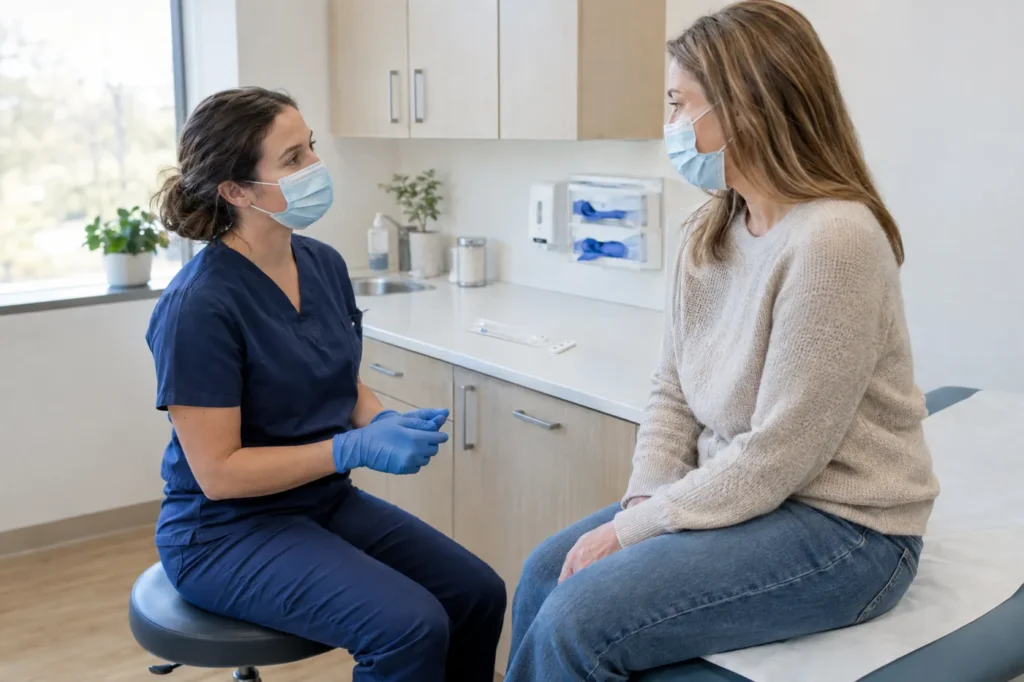
Walk-in COVID testing in Bolingbrook
No appointment is needed for a COVID test here. Walk-ins are welcome every day, or you can pick a time online before you leave home. We’re open 8 AM to 8 PM, and after we close, the online booking page lists times for the next day.
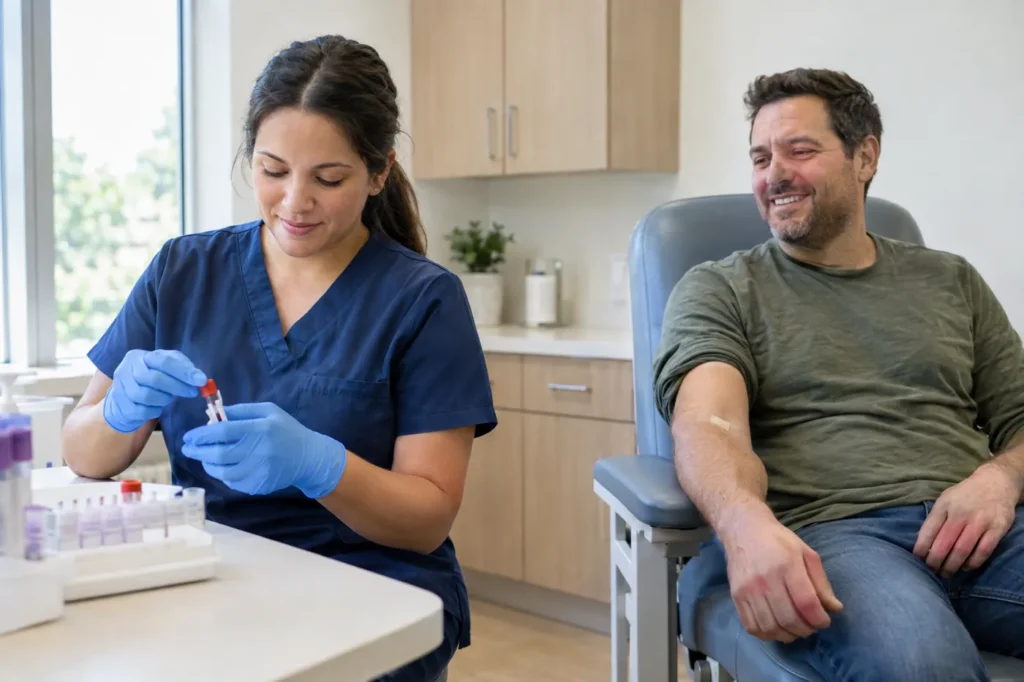
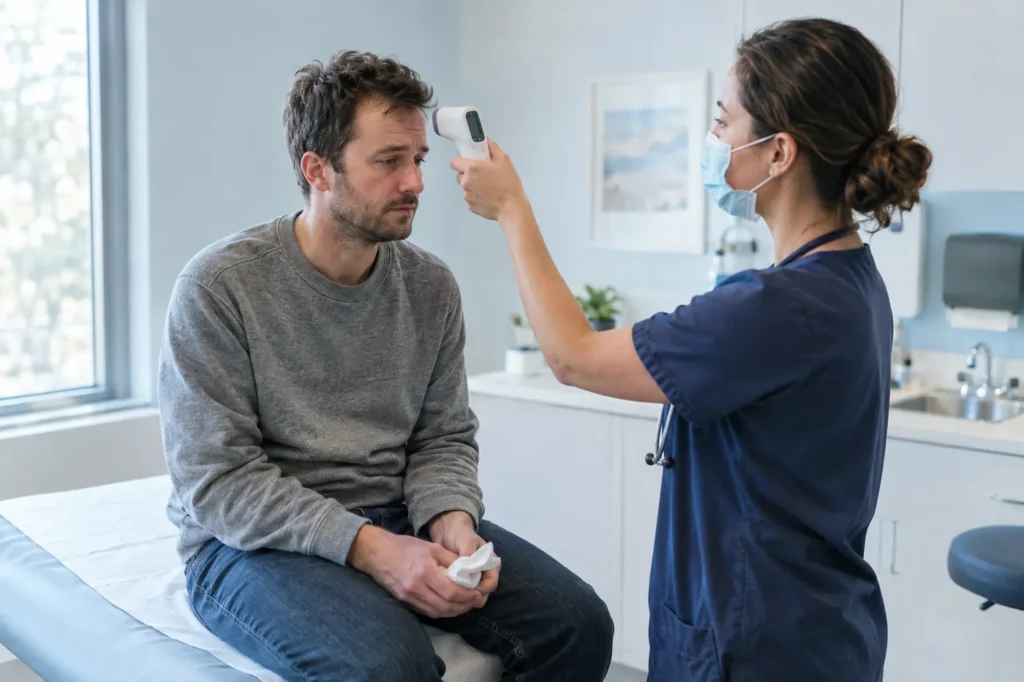
The test is part of an urgent care visit. A provider asks about your symptoms and health, examines you, and a swab is taken from your nose for the rapid test, one of several we run in the clinic (see our lab testing page). Have your photo ID, insurance card and medicine list with you. If you own a mask, wear it into the building to help protect other patients.
From neighboring towns the drive is short. Plan on roughly 10 minutes from Romeoville and 11 from Woodridge. Lemont, Darien and Lisle are each about 14 minutes out, downtown Plainfield about 15 and downtown Naperville about 18.
COVID-19 symptoms to watch for
COVID-19 is a viral illness, and symptoms can show up 2 to 14 days after exposure, according to the CDC’s list of COVID symptoms. Some people have mild symptoms and others become severely ill. The CDC lists these symptoms:
- Fever or chills
- Cough
- Shortness of breath or trouble breathing
- Sore throat
- Stuffy or runny nose
- New loss of taste or smell
- Tiredness
- Muscle or body aches
- Headache
- Nausea, vomiting or diarrhea
Symptoms in children
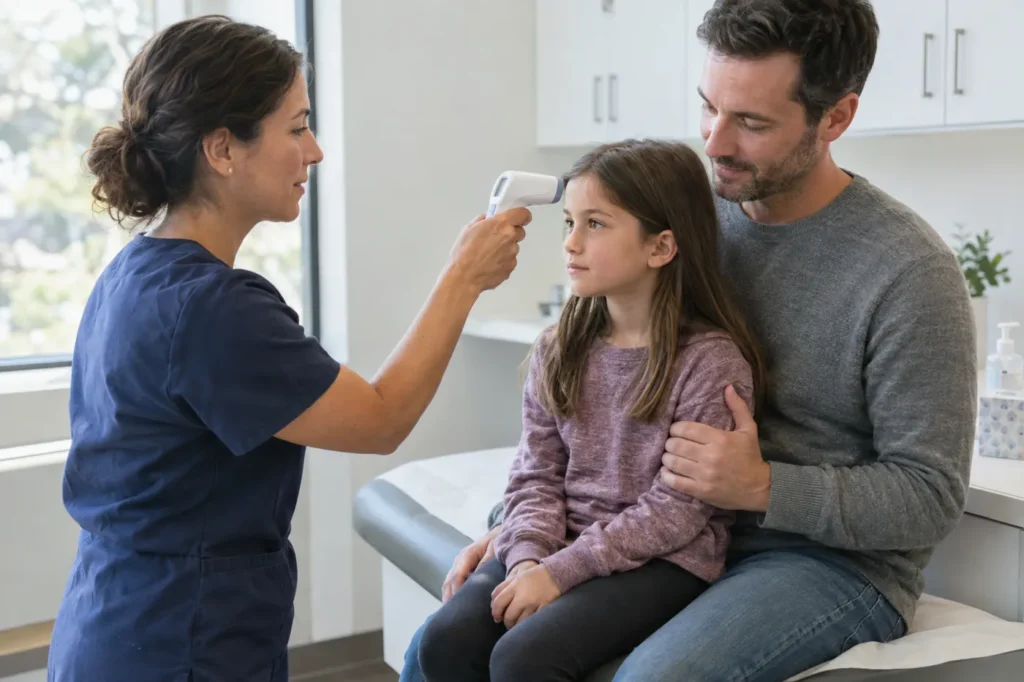
Children can have the same symptoms as adults. The American Academy of Pediatrics lists fever, cough, sore throat, congestion and loss of taste or smell among the usual ones, with tiredness, nausea, vomiting and diarrhea less common. A child can also have no symptoms at all and still pass the virus to others. The AAP notes that studies show young children are more likely to get very sick from COVID and need hospital care, and that asthma, obesity, diabetes, sickle cell disease and heart conditions raise a child’s risk.
COVID testing timing at a glance
- You have symptoms
- Test right away.
- Exposed, no symptoms
- Wait a full 5 days after the exposure, then test.
- Negative with symptoms
- Repeat the rapid test after 48 hours.
- Negative after exposure, no symptoms
- Three tests in total, 48 hours apart, unless one is positive.
- Higher risk and positive
- Ask about treatment right away. It must start within 5 to 7 days of the first symptoms.
- Back to normal activities
- After 24 hours of improving symptoms with no fever, then 5 days of extra care.
When to test after symptoms or an exposure
Test right away if you have symptoms. If you were around someone with COVID and you feel fine, MedlinePlus advises waiting a full 5 days after the exposure before you test. Testing too soon can miss the virus, because it may not be detectable yet.
One negative rapid test doesn’t rule COVID out. The MedlinePlus guide to COVID self-testing says people with symptoms should repeat a negative test after 48 hours. After an exposure with no symptoms, the advice is three tests in total, each 48 hours apart, unless one of them comes back positive.
If you’ve already tested positive on your own, you can trust that result. The CDC calls positive antigen results accurate and reliable. Come in anyway if you’re at higher risk of getting very sick, want to talk about treatment, or feel worse.

Rapid tests and PCR tests are not the same
Both look for a current infection, but they work differently. Rapid tests are often antigen tests, which look for proteins from the virus and give a result in minutes. PCR tests and other molecular tests look for the virus’s genetic material and are more likely to detect it, but samples go to a lab and results can take up to 3 days, the CDC says. The COVID test we do in the clinic is a rapid test.
Sick or exposed and need a COVID test?
Walk in any day for a rapid COVID test with an exam, or reserve a visit time online before you head over.
Is it COVID, flu or a cold?
Most of the time you can’t tell by symptoms alone. The CDC says flu and COVID-19 share so many signs that testing is needed to confirm which one you have. Having both at once is uncommon, but people who do can be sicker than with either one alone. Flu symptoms tend to start 1 to 4 days after infection, while COVID symptoms usually start 2 to 5 days after, and sometimes as late as 14.
With rapid flu and COVID tests here, the provider can check for one or both at the same visit, and a rapid strep test is available when a sore throat points that way. Our flu page and cold and cough page cover those illnesses.
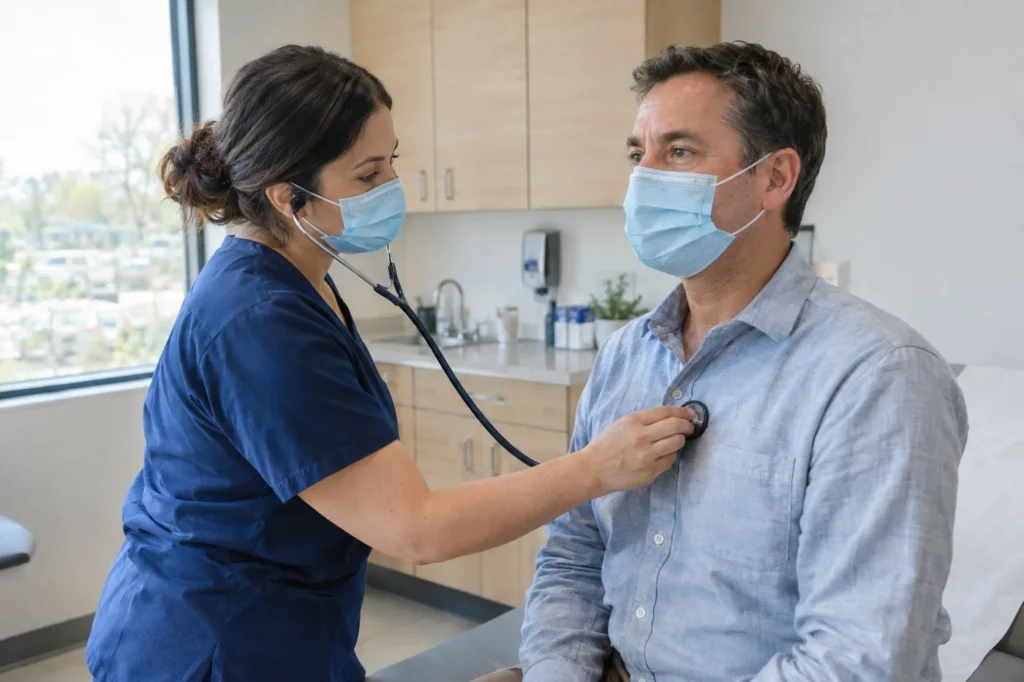
Who should get checked early
If you’re more likely to get very sick, test and get checked early rather than waiting to see how things go. The CDC’s COVID treatment guidance names older adults, especially people 75 and older, people who aren’t up to date on COVID vaccines, and people with conditions such as chronic lung disease, heart disease or a weakened immune system.
Antiviral treatment can lower the risk of severe illness, but the CDC says it must start within 5 to 7 days of your first symptoms. That’s why the CDC tells higher-risk people to talk with a provider about testing and treatment right away, even if symptoms are mild. At your visit, tell the provider about your health conditions and every medicine you take, and ask whether treatment makes sense for you. The AAP says treatment is also available for some higher-risk children, and our pediatric urgent care sees kids from infancy through the teen years.
Caring for COVID at home
Mild COVID can usually be cared for at home. Rest, drink plenty of fluids, and ease fever and aches with over-the-counter medicines such as acetaminophen or ibuprofen, which the CDC lists for symptom relief. Ask a pharmacist or doctor about the right dose for a young child.
Keep apart from others while you’re sick, and that includes anyone in your household who isn’t ill. Going back to work, school and errands depends on two things holding true for at least 24 hours, per the CDC: your symptoms are getting better overall, and you’ve had no fever while off fever-reducing medicine. You may still be contagious after that, so for the next 5 days the CDC suggests extra steps around others, such as a well-fitted mask, cleaner indoor air, handwashing, keeping your distance or testing.
For a sick child, the AAP suggests keeping them comfortable and hydrated, apart from higher-risk family members when possible, and calling the pediatrician if symptoms get worse.

When COVID symptoms need care today
After a positive test, contact a provider or come in the same day if your symptoms are getting worse, you have an ongoing health condition, or you’re an older adult. MedlinePlus lists all three as reasons to call after a positive test, along with a home pulse oximeter reading below 90%.
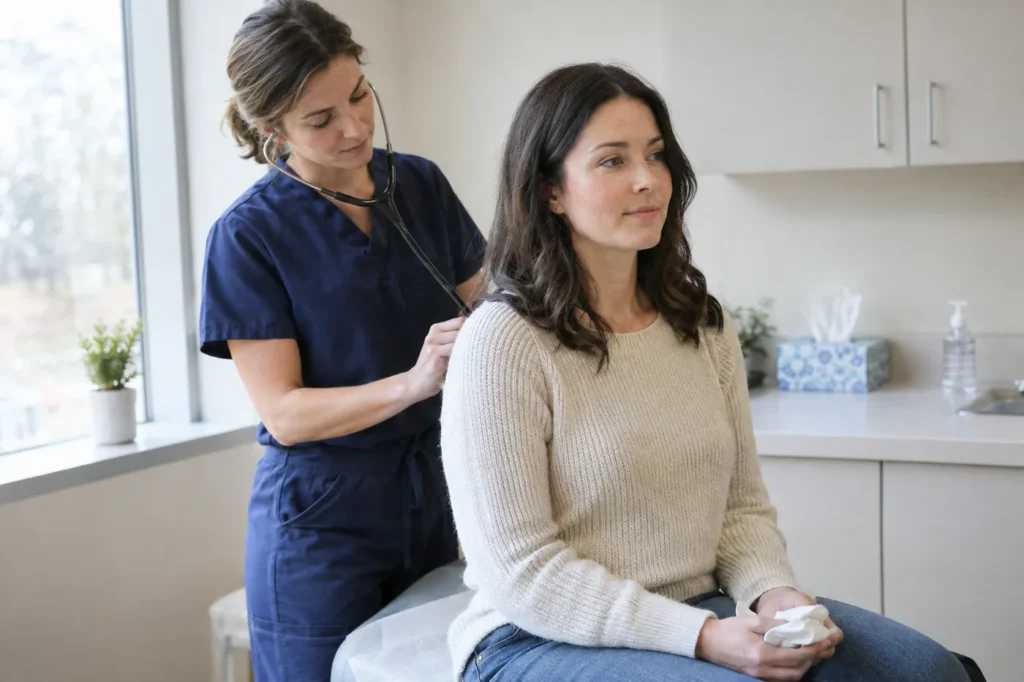
COVID can also reach the lungs. If the exam raises concern for pneumonia, the provider may order a chest X-ray, which we can take here on any day we’re open.
The Pioneer walk-in visit
How a visit works
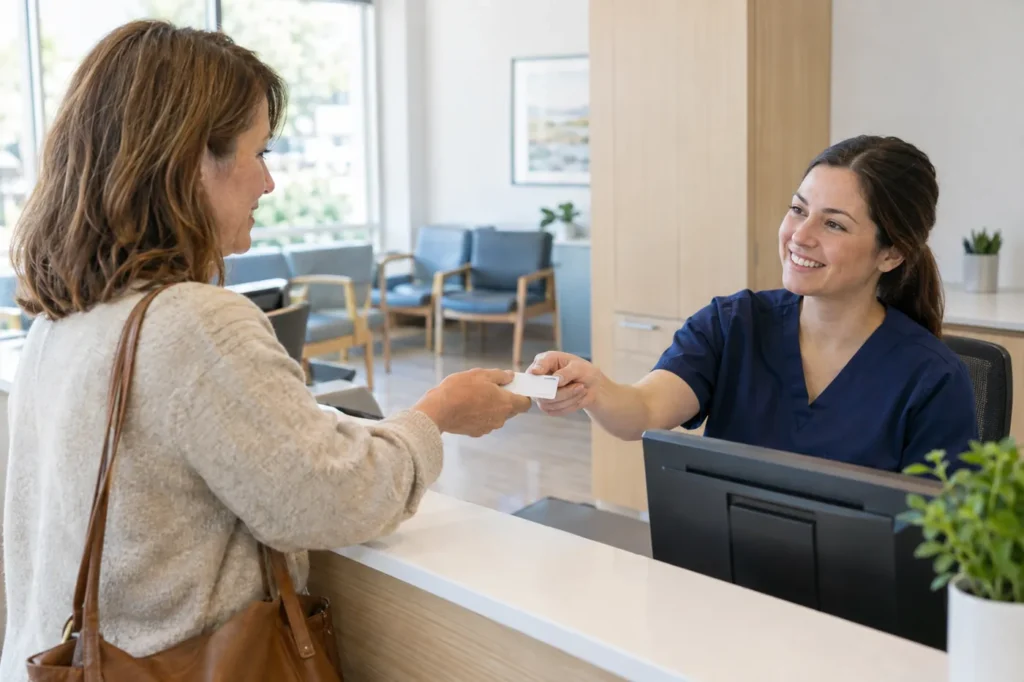
- Step 1Walk in or save your spot
No appointment needed. You can also save your spot online before you leave home.
- Step 2Check in
Bring a photo ID, your insurance card and a list of the medicines you take.
- Step 3See a provider
Get examined, with X-ray and rapid tests on site when you need them.
- Step 4Leave with a plan
You go home with a care plan and clear next steps.
Why families in Bolingbrook choose Pioneer
Walk-in care that fits real life
Open 7 days a week
8 AM to 8 PM, weekends included, so a Saturday sore throat does not have to wait until Monday.
X-ray and tests on site
X-ray every day we are open, plus rapid strep, flu and COVID tests, urinalysis and EKG.
Care for kids and adults
From infants through the teen years, and adults of every age, in one clinic.
Insurance and self-pay
Aetna, BCBS of Illinois, Cigna, Humana, Medicare, Illinois Medicaid plans and UnitedHealthcare. Call to confirm your plan.
Questions and answers
Questions we hear often
Still not sure? Call (630) 914-5373 and we will help you decide.
Where can I get COVID testing near me without an appointment?
Pioneer Physicians Urgent Care at 148 S Bolingbrook Dr takes walk-ins for COVID testing every day. We’re open 8 AM to 8 PM, and there’s no need to book, though you can reserve a time online. Your rapid test is part of an urgent care visit, which means a provider also looks at your symptoms and explains what the result means for you.
Do you offer PCR COVID testing?
Our on-site COVID test is a rapid test, with the result back during your visit. PCR and other lab-based molecular tests are more likely to detect the virus, but the CDC says results can take up to 3 days. If a school, employer, surgeon or travel rule asks for a PCR test specifically, call (630) 914-5373 before you come to ask what we can do.
How long does a rapid COVID test take?
Rapid antigen tests usually give a result in 15 to 30 minutes, according to the CDC. Our on-site COVID test is a rapid test, so the result comes back during your visit. Keep in mind that a negative rapid test can miss an early infection. If you still have symptoms, the CDC and MedlinePlus advise testing again 48 hours later.
Can my child get a COVID test here?
Yes. We see children from infancy through the teen years, and rapid COVID, flu and strep tests are done in the clinic. Bring their insurance card and the names of any medicines they’re taking. If your child is struggling to breathe, has bluish or gray lips, or is hard to wake, call 911 instead of coming in.
Does insurance cover a COVID test visit?
Plans we take include Medicare, Aetna, Cigna, Blue Cross Blue Shield of Illinois, UnitedHealthcare, Humana and Illinois Medicaid plans. Coverage and what you owe vary by plan, so call to confirm your specific plan before you come. Self-pay is available if you don’t have insurance: you pay for the visit plus any tests needed. Call (630) 914-5373 for current self-pay pricing.
Do I need antibiotics for COVID-19?
No. COVID-19 is caused by a virus, and antibiotics don’t work on viral infections. Taking them when they aren’t needed won’t help and can cause side effects such as rash, nausea or diarrhea. Antiviral medicines are different: the CDC’s treatment guidance is aimed at people at higher risk of severe illness, and treatment must start within 5 to 7 days of the first symptoms.
Can I do a telehealth visit instead of coming in?
For mild symptoms, a telehealth visit can help you decide what to do next and if you need an exam. A COVID swab, a flu test or a chest X-ray all need an in-person visit, so come to the clinic if you need testing. If you have trouble breathing or chest pain that won’t go away, call 911.

Sources for this page
- Symptoms of COVID-19. Centers for Disease Control and Prevention.
- Testing for COVID-19. Centers for Disease Control and Prevention.
- Treatment Options for COVID-19. Centers for Disease Control and Prevention.
- Preventing Spread of Respiratory Viruses When You’re Sick. Centers for Disease Control and Prevention.
- Similarities and Differences between Flu and COVID-19. Centers for Disease Control and Prevention.
- Self-testing for COVID-19. MedlinePlus Medical Encyclopedia, National Library of Medicine.
- Antibiotics. MedlinePlus, National Library of Medicine.
- COVID-19: What Families Need to Know. American Academy of Pediatrics, HealthyChildren.org.