
Patient guide · Pioneer Physicians
Urgent Care vs Emergency Room in Bolingbrook, IL
The urgent care vs emergency room choice comes down to one question: could this be life threatening? If it could, call 911 or go to the ER; if it needs care today but isn’t an emergency, like a sore throat or a sprained ankle, urgent care fits. Our Bolingbrook, IL clinic is open every day from 8 AM to 8 PM, and walk-ins are welcome.
- Open 7 days, 8 AM to 8 PM
- Walk-ins welcome
- X-ray and rapid tests on site
- Kids and adults
- Medicare and Medicaid plans accepted

Urgent care vs emergency room at a glance
The emergency room is for problems that could kill you or cause lasting harm. Urgent care is for problems that need attention today but are not dangerous. A hospital emergency department is open around the clock, every day of the year, and gives patients who need them access to X-rays, CT scans and surgery.
Urgent care fills the gap when your own doctor can’t see you soon enough. MedlinePlus advises choosing urgent care when a problem is not life threatening or risking disability but still worries you, such as a cold, an earache, a sprain or a minor burn.
Here, same-day care includes X-ray every day we are open, splints and crutches, rapid strep, flu and COVID tests, urinalysis and EKG. Blood drawn here goes to an outside lab, and we do not have CT or MRI.

Call 911 for these warning signs
Call 911 instead of driving to any clinic when someone could die or be permanently disabled without fast help. MedlinePlus lists these as reasons to have the emergency team come to you:
- Choking or stopped breathing
- Severe chest pain or pressure
- Severe shortness of breath
- Sudden weakness or drooping on one side of the body
- Suddenly not able to speak, see, walk or move
- A head injury with passing out, fainting or confusion
- A neck or spine injury, especially with numbness or trouble moving
- A seizure that lasts more than 1 minute, or one the person does not wake up from quickly
- A severe burn, an electric shock or a lightning strike
Stroke and heart attack need an ambulance
The National Heart, Lung, and Blood Institute teaches the FAST check for stroke: a drooping face, one arm that drifts down, slurred or strange speech, and time to call 911. Paramedics can begin treatment on the way, so don’t drive yourself or let someone else drive you.
Heart attack symptoms can be quieter than people expect. Along with chest pain or heaviness, they include discomfort in the arms, back, neck, jaw or upper belly, shortness of breath, heavy sweating and nausea. NHLBI’s advice is to call 911 even if you are not sure.
Urgent care or the ER: a side-by-side guide
| Topic | Urgent care | Emergency room or 911 |
|---|---|---|
| Hours | Our clinic: 8 AM to 8 PM, 7 days; walk-ins welcome | Open around the clock, every day |
| Fever | Adult or child over 3 months who is drinking and alert | Baby under 3 months at 100.4°F or higher; fever with a stiff neck or purple rash |
| Breathing | Cough or mild wheeze, still talking and playing normally | Ribs pulling in, blue or gray lips, can’t speak in full sentences |
| Chest pain | Not a reason to come to urgent care | Call 911 for chest pain or pressure, even if unsure |
| Injuries | Sprain or possible break with no deformity; X-ray here | Bone bent or through the skin; head injury with vomiting or passing out |
| Cuts and burns | Minor burns; call first about cuts that may need stitches | Bleeding that won’t stop, deep wounds, serious burns |
| Allergic reactions | Hives or mild swelling with normal breathing | Any trouble breathing, or a severe reaction with swelling and hives |
| Imaging | X-ray every day we are open; no CT or MRI | X-ray, CT scans and surgery when needed |
When to go to the emergency room
Some problems are not always a 911 call but still belong in a hospital emergency department today. MedlinePlus names these as reasons to go to the ER or call 911:
- Trouble breathing, or passing out
- Pain in the arm or jaw
- A sudden, unusual or very bad headache
- Dizziness or weakness that does not go away, or sudden confusion
- Heavy bleeding, a deep wound or a serious burn
- A possible broken bone with loss of movement, especially if the bone pushes through the skin
- Coughing up or throwing up blood, or severe pain anywhere in the body
- A severe allergic reaction with trouble breathing, swelling and hives
- A high fever with a headache and stiff neck, or one that medicine does not bring down
- Vomiting or diarrhea that will not stop
Mental health emergencies and poisoning
If you are thinking about hurting yourself or someone else, call or text 988, the Suicide and Crisis Lifeline, which answers 24/7, or call 911. For a possible poisoning, call poison control at 1-800-222-1222 right away. Call 911 instead if the person has trouble breathing, has passed out or is having a seizure.
When urgent care is the right choice
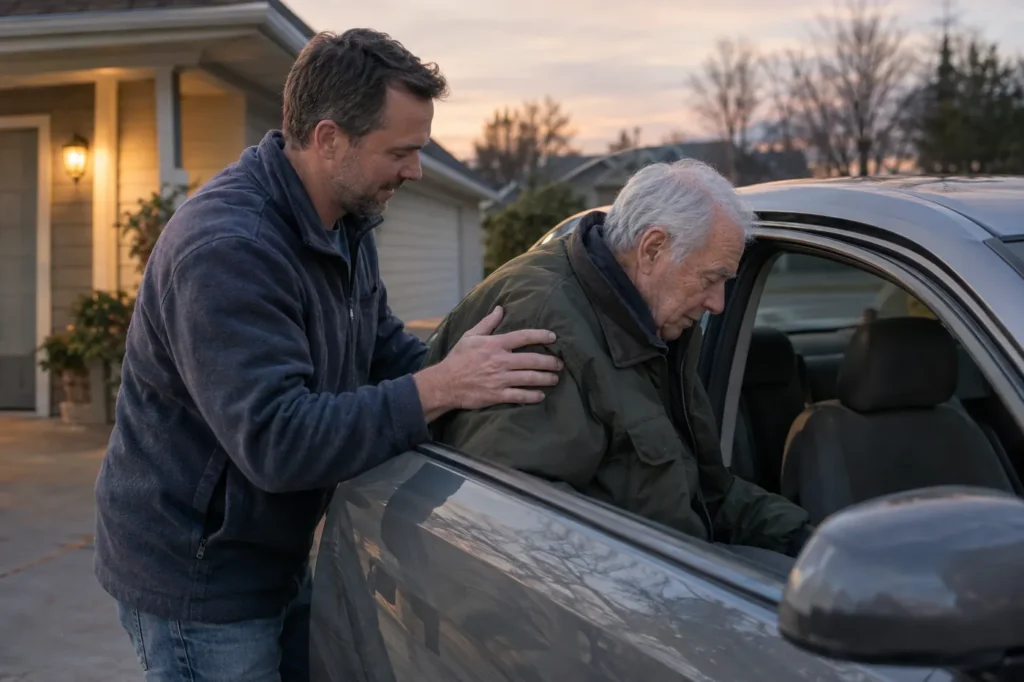
Urgent care is the right choice when a problem came on suddenly, isn’t life threatening and can’t wait for a regular appointment. Good reasons to come in include:
- Sore throat, cough, cold, flu or COVID symptoms, with rapid tests on site
- Ear pain, sinus pressure or pink eye
- Burning or pain when you urinate, with urinalysis here
- Fever in an adult, or in a child over 3 months who is drinking and alert
- Vomiting or diarrhea while you can still keep fluids down
- Sprains and possible broken bones that are not bent out of shape, with X-ray, splints and crutches here
- Minor burns, rashes and bug bites
- Mild allergic reactions, such as hives, with normal breathing
- Coughing or wheezing that isn’t improving at home but isn’t causing distress
Walk in or save your spot
You don’t need an appointment. Walk in, or save your spot online. For a cut that may need stitches, call first (see the FAQ below). For more conditions, see what urgent care treats and our on-site X-ray page.

Not an emergency? Walk in today
For an illness or injury that can’t wait but isn’t life threatening, walk in any day of the week or save your spot online.
Signs a child needs the ER instead of urgent care
Take your child to the ER, or call 911, for any of the signs below, because young babies can get sick quickly and a child’s breathing can get worse in minutes. We see children from infancy through the teen years in our pediatric urgent care, but these belong in the emergency room:
- A baby younger than 3 months with a temperature of 100.4°F (38°C) or higher
- Skin pulling in between the ribs with each breath, blue or gray lips, or not able to speak in full sentences
- A child who is very hard to wake or suddenly confused
- Signs of dehydration: a dry mouth, no tears, no wet diaper in 18 hours or a sunken soft spot on a baby’s head
- A head injury followed by vomiting, confusion or passing out
- A seizure in a child who has never had one; call 911 if a seizure lasts 3 to 5 minutes
- A purple or bruise-like rash that appears suddenly
- A broken bone that is visibly bent or poking through the skin
A quick check for parents
The AAP’s parent guide offers three questions: is your child breathing normally, alert and responsive, and able to keep fluids down? If the answer to any of those is no, get care the same day, at urgent care or the ER depending on how severe it looks. For a child with asthma, follow the asthma action plan, and go to the ER if symptoms don’t improve within 15 to 20 minutes of the rescue inhaler.
How the cost compares
For the same problem, the ER usually costs more. MedlinePlus notes that emergency department care can cost 2 to 3 times more than the same care in a provider’s office, and insurance may charge a higher copay for the ER. The AAP says urgent care is often less expensive than the ER.
Cost should never keep you out of the ER in a real emergency. Under the federal Emergency Medical Treatment and Labor Act, hospitals that take part in Medicare and offer emergency services must give a screening exam to anyone who asks for emergency care, regardless of ability to pay, and must then provide stabilizing treatment, or a proper transfer, when they find an emergency.
Here, what you pay depends on your plan and any tests you need. Plans we take include Aetna, Cigna, Medicare, Blue Cross Blue Shield of Illinois, UnitedHealthcare, Humana and Illinois Medicaid plans (HFS, Meridian, CountyCare, Molina and YouthCare); call to confirm your specific plan. Without insurance, you can pay for yourself; the cost is the visit plus any tests, and you can call (630) 914-5373 for current self-pay pricing.

What happens if urgent care isn’t enough
If the exam shows you need hospital care, we will tell you and direct you to the emergency room. That can happen when a problem needs a CT scan, an MRI, surgery or a hospital stay, none of which we offer here. Bolingbrook’s hospital ER is at UChicago Medicine AdventHealth Bolingbrook, 500 Remington Blvd.
Evenings, weekends and after 8 PM
We keep the same hours on Saturday and Sunday as on weekdays, and we are not open 24 hours. After 8 PM you can book a next-day visit online, and anything that can’t wait until morning goes to the ER or 911. Our page on urgent care open weekends and evenings has the details.
If you’re unsure at night, call your doctor’s office. MedlinePlus explains that after-hours calls may be forwarded to a nurse or an on-call provider, and that your provider or insurer may offer a nurse advice line. It also suggests saving these numbers in your phone now:
- Your doctor’s office
- The closest emergency department
- Your plan’s nurse advice line, if it has one
- An urgent care clinic, such as ours at (630) 914-5373
- Poison control, 1-800-222-1222

The Pioneer walk-in visit
How a visit works
- Step 1Walk in or save your spot
No appointment needed. You can also save your spot online before you leave home.
- Step 2Check in
Bring a photo ID, your insurance card and a list of the medicines you take.
- Step 3See a provider
Get examined, with X-ray and rapid tests on site when you need them.
- Step 4Leave with a plan
You go home with a care plan and clear next steps.
Why families in Bolingbrook choose Pioneer
Walk-in care that fits real life
Open 7 days a week
8 AM to 8 PM, weekends included, so a Saturday sore throat does not have to wait until Monday.
X-ray and tests on site
X-ray every day we are open, plus rapid strep, flu and COVID tests, urinalysis and EKG.
Care for kids and adults
From infants through the teen years, and adults of every age, in one clinic.
Insurance and self-pay
Aetna, BCBS of Illinois, Cigna, Humana, Medicare, Illinois Medicaid plans and UnitedHealthcare. Call to confirm your plan.
Questions and answers
Questions we hear often
Still not sure? Call (630) 914-5373 and we will help you decide.
Is urgent care the same as an emergency room?
No. An emergency room is part of a hospital, is open around the clock and handles life-threatening problems such as heart attacks, strokes and major injuries. Urgent care treats illnesses and injuries that need care today but are not emergencies. Our Bolingbrook clinic closes at 8 PM and does not have CT or MRI. For an emergency, call 911.
Is there an emergency room in Bolingbrook?
Yes. UChicago Medicine AdventHealth Bolingbrook, at 500 Remington Blvd, has an emergency department that lists its hours as open 24/7. If someone shows signs of a heart attack or stroke, call 911 instead of driving there, so paramedics can start care on the way. For problems that are not emergencies, our clinic at 148 S Bolingbrook Dr welcomes walk-ins every day.
Should I go to urgent care or the ER for chest pain?
Call 911 for chest pain or pressure, even if you are not sure it is your heart. The National Heart, Lung, and Blood Institute says an ambulance is the safest way to get to the hospital, because paramedics can start tests and medicines right away. We do EKGs at our clinic, but chest pain is not a reason to come to urgent care for one.
Can I get an X-ray at urgent care instead of the ER?
Often, yes. We have X-ray every day we are open, plus splints and crutches, which suits a sprain or a possible broken bone that isn’t bent out of shape. We do not have CT or MRI. Go to the ER for a bone that is bent or poking through the skin, a body part near the injury that is numb, cold or pale, or a head injury with vomiting, confusion or passing out.
When does a baby with a fever need the ER?
Go to the ER right away if a baby younger than 3 months has a temperature of 100.4°F (38°C) or higher, the American Academy of Pediatrics advises. At any age, a fever with trouble breathing, extreme sleepiness, a stiff neck, a sudden purple rash or vomiting that keeps fluids from staying down needs the ER too. Older babies and children with a fever who are drinking and alert can be seen at urgent care.
Can urgent care stitch a cut?
It depends on the clinic. The American Academy of Pediatrics notes that wound repair options vary between urgent care centers and suggests calling ahead, so call us at (630) 914-5373 to ask about your cut before you come in. Heavy bleeding or a deep wound belongs in the ER, and bleeding that won’t stop with firm pressure is a reason to call 911.








Sources for this page
- When to use the emergency room: adult. MedlinePlus, U.S. National Library of Medicine.
- When to use the emergency room: child. MedlinePlus, U.S. National Library of Medicine.
- Urgent Care, ER or Pediatrician? A Parent Guide. American Academy of Pediatrics (HealthyChildren.org).
- Stroke Symptoms. National Heart, Lung, and Blood Institute (NIH).
- Heart Attack Symptoms. National Heart, Lung, and Blood Institute (NIH).
- Emergency Medical Treatment and Labor Act (EMTALA). Centers for Medicare and Medicaid Services.
- ER 101. American College of Emergency Physicians.
- Poisoning. MedlinePlus, U.S. National Library of Medicine.