
Walk-in care · Bolingbrook, IL
Lab Tests, Blood Work and EKG in Bolingbrook, IL
Pioneer Physicians Urgent Care does walk-in lab tests and EKGs in Bolingbrook, IL, and you don’t need an appointment. Rapid strep, flu and COVID swabs, urinalysis and EKGs are done during your visit, while any blood we draw is tested at an outside lab. We’re open 7 days a week, 8 AM to 8 PM.
- Open 7 days, 8 AM to 8 PM
- Walk-ins welcome
- X-ray and rapid tests on site
- Kids and adults
- Medicare and Medicaid plans accepted
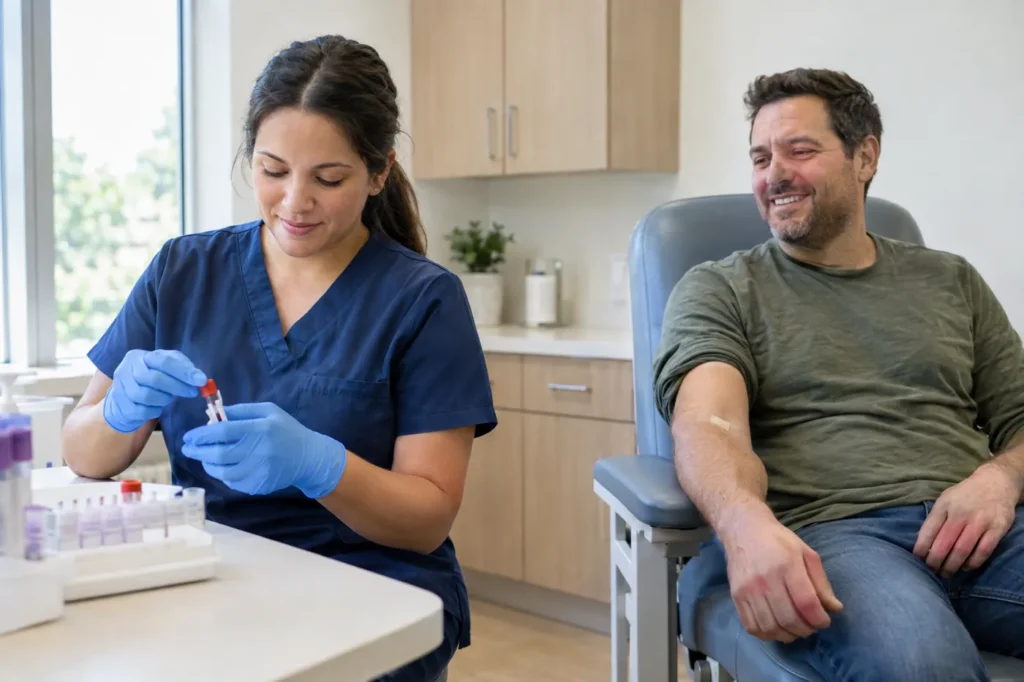
Lab tests and EKG at our Bolingbrook clinic
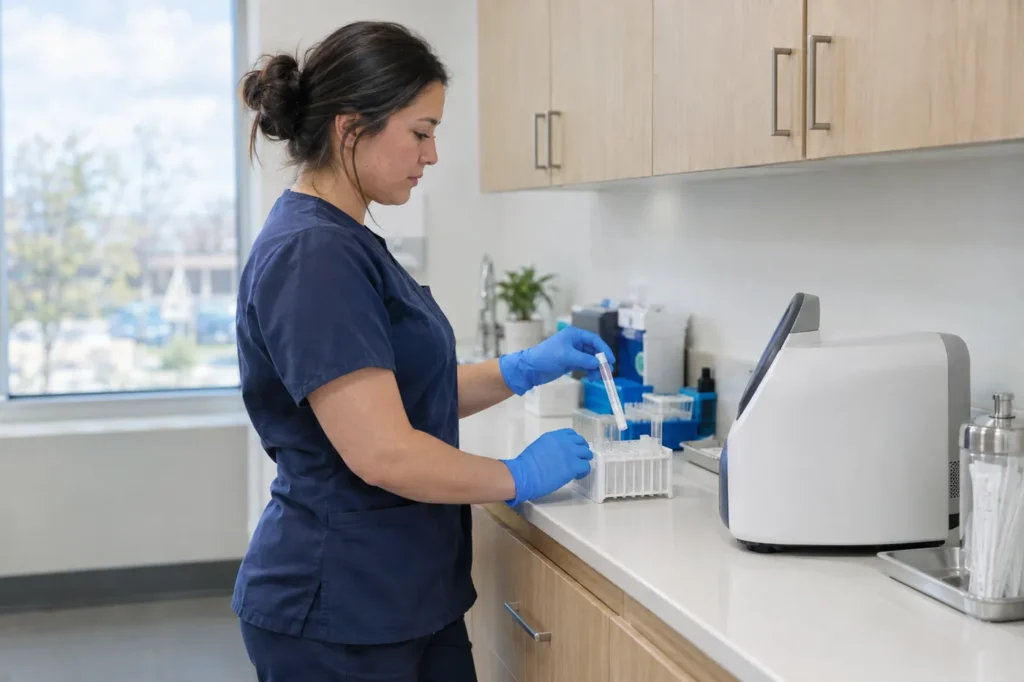
Most testing happens in our clinic during the same visit, and blood is the one sample that leaves the building. These are the tests we do on site:
- Rapid strep test, a throat swab that checks for the bacteria behind strep throat
- Rapid flu test, a swab that checks for influenza
- Rapid COVID test, a swab that checks for the virus that causes COVID-19
- Urinalysis, which looks at a urine sample for signs of infection and other problems
- EKG (electrocardiogram), a short recording of your heart’s electrical signals
- Blood draw, with the sample sent to an outside lab for testing
How testing fits into your visit
Testing is part of an urgent care visit, not a separate stop. You tell us what’s wrong, a provider examines you and then orders the tests that can answer the question. A sore throat with fever might call for a strep swab, and a fluttering heartbeat might lead to an EKG.
Can I get an EKG without an appointment?
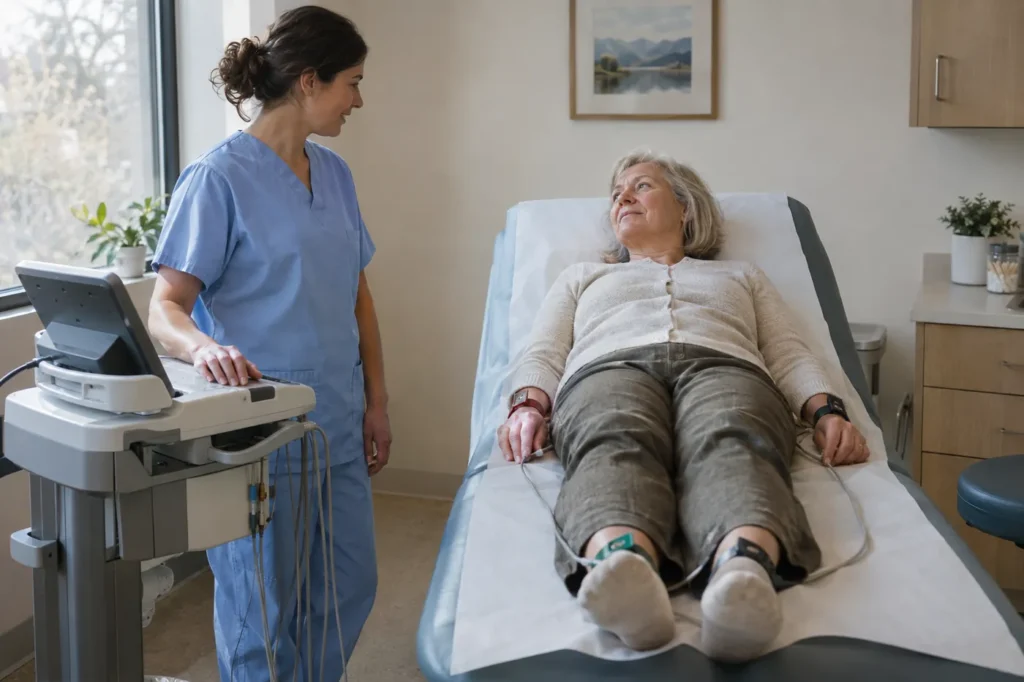
Yes. When a provider decides during your walk-in visit that you need an EKG, it’s done here the same day. MedlinePlus describes an EKG as a simple, quick test that records the electrical signals your heart makes with each beat. It shows how fast your heart is beating and whether the rhythm is steady or irregular.
Common reasons for an EKG include a heartbeat that feels rapid or irregular, dizziness, shortness of breath, unusual tiredness, or finding it harder to exercise than before. You lie on the exam table while small sticky sensors called electrodes go on your arms, legs and chest. The whole test lasts a few minutes. The machine only records your heart’s signals and sends no electricity into your body.
Tell the provider about every medicine and supplement you take, because some can affect the results. An EKG is a snapshot of a short stretch of time, so a rhythm problem that comes and goes may not show up. In that case the provider may suggest seeing your primary care doctor or a cardiologist for longer monitoring.
Chest pain is a different situation. The CDC’s heart attack warning signs include chest discomfort that lasts more than a few minutes or goes away and comes back, feeling weak, light-headed or faint, a cold sweat, pain in the jaw, neck, back, arms or shoulders, and shortness of breath.
Which tests finish during your visit
| Topic | Done during your visit | Drawn here, sent to an outside lab |
|---|---|---|
| Tests | Rapid strep, flu and COVID tests, urinalysis, EKG | Blood tests your provider orders |
| Sample | Throat or nose swab, urine cup, or sticky sensors on the skin | A small amount of blood from a vein in your arm |
| Collection | A few minutes | Usually under five minutes |
| Results | Part of the same visit | Take longer; timing depends on the test |
| Fasting | Not needed | Only for some tests, such as a cholesterol panel |
| Who orders it | The provider you see | The provider you see, or call about an outside order |
Can I get blood work done at urgent care?
Yes. Here, the provider orders it, we draw the blood, and an outside lab runs the tests. Providers use blood work to help diagnose illness, to check how organs such as the liver, kidneys and thyroid are working, and to see whether the immune system is having trouble fighting an infection.
The draw itself is quick. A small needle goes into a vein in your arm and collects a small amount of blood in a tube. MedlinePlus says you may feel a little sting as the needle goes in or out, and the draw usually takes less than five minutes. You may have slight soreness or a bruise afterward, which usually goes away quickly.
The provider picks blood tests based on your symptoms and health history. Two common ones are a complete blood count (CBC), which measures red and white blood cells and platelets, and a basic metabolic panel, which checks glucose, calcium and electrolytes.
Do I need to fast first?
Only for some tests. MedlinePlus explains that tests such as blood sugar, a cholesterol panel and a basic metabolic panel often call for 8 to 12 hours without food or drink, though plain water is allowed. Gum, smoking and exercise are off limits during the fast too. You don’t need to fast before coming in with new symptoms. If a fasting test makes sense, ask the provider how and when to have it drawn, and keep taking your medicines unless you’re told otherwise.
Results from the outside lab
Blood results take longer than the tests we run during the visit, because the sample travels to the lab first. For routine checkup labs, or blood work for a long-term condition such as diabetes or high cholesterol, a primary care visit is often the better fit, and we offer primary care too.
Rapid strep, flu and COVID tests
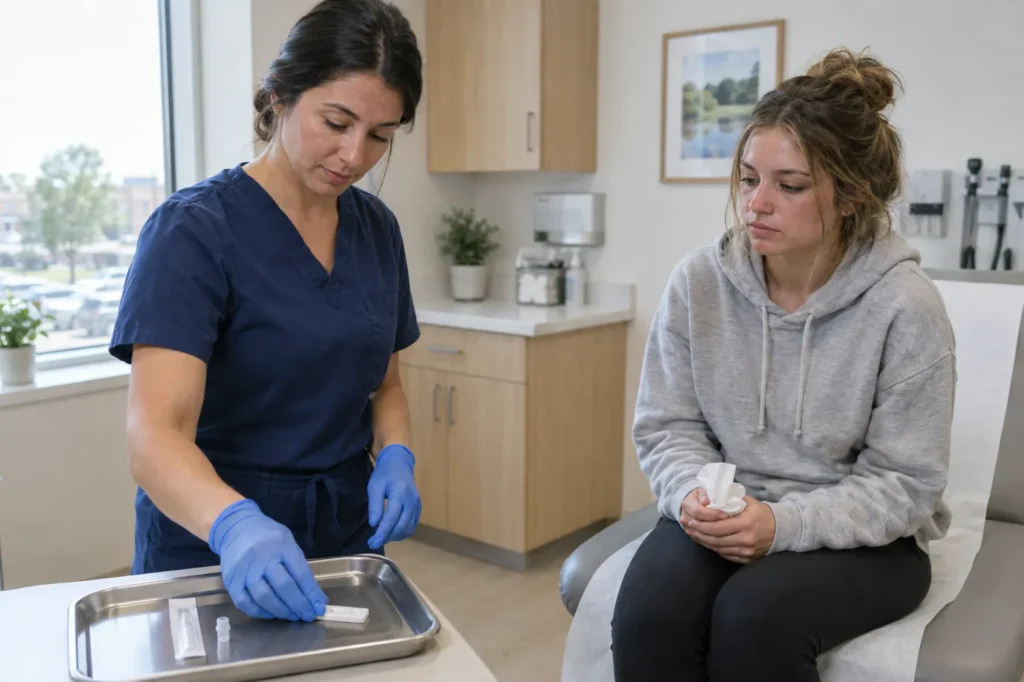
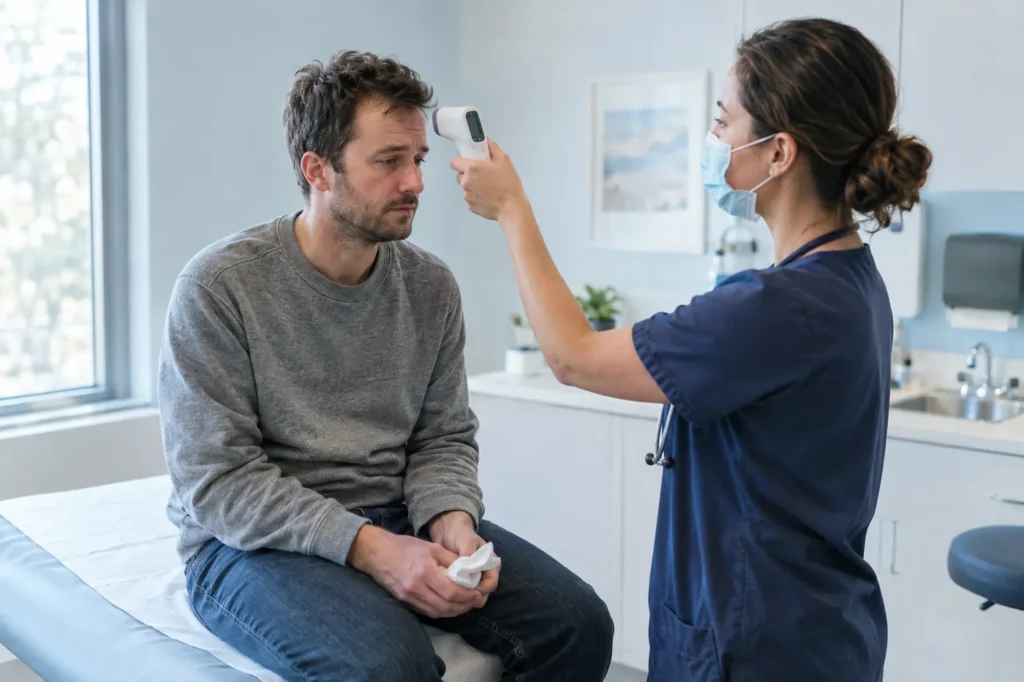
Each of these tests uses a swab, and the result is part of the same visit. None of them is perfect, so the provider reads the result alongside your symptoms and exam. A swab can cause slight discomfort or a quick gag, MedlinePlus notes, but it carries no risk.
Strep test
MedlinePlus puts rapid strep results at 10 to 20 minutes. The swab brushes the tonsils and the back of the throat. Anyone can get strep throat, but school-age children from 5 to 15 get it most often. A sudden, severe sore throat, pain with swallowing, a fever of 101°F or higher and white patches on the tonsils point toward strep, while a cough and runny nose point toward a virus. Read more about strep throat.
Flu test
Rapid flu tests can return results in under 30 minutes, MedlinePlus says, though rapid antigen tests are less accurate than molecular tests. Early testing may be especially important for people at higher risk from flu, including children under 5, adults 65 and older, and people with asthma, diabetes or heart disease. Flu antiviral medicines work best when started within 2 days of getting sick.
COVID test
The CDC says rapid antigen tests usually give results in 15 to 30 minutes. With an antigen test, a positive result is reliable. A negative one can miss an infection, so for people with symptoms the FDA advises two negative antigen tests taken 48 hours apart. See our COVID-19 page for symptoms and when to get care.
Need a test today?
Walk in any day with no appointment or save your spot online, and the provider will order the tests your symptoms call for.
What a urine test can show
A urinalysis checks a urine sample for signs of infection, blood, sugar and protein, and we do it during your visit. As MedlinePlus explains, a urinalysis can include a look at the sample’s color and clarity, a dipstick with chemical pads that change color, and an exam under a microscope.
Providers use it to diagnose a urinary tract infection, to check for blood in the urine and to look for signs of diabetes or kidney disease. Giving the sample means simply urinating into a cup. You may be asked for a clean-catch sample, which means cleaning the area first and catching urine midstream in a cup, so germs from the skin stay out of the sample.
Some medicines, and foods such as beets, can change the color of urine without meaning anything is wrong, so tell the provider what you take.
What to bring for lab tests or an EKG
Bring these if you can:
- Photo ID and, if you’re insured, your insurance card
- The names of any medicines, vitamins or supplements you take, since some can change EKG, blood or urine results
- Recent test results from another doctor that relate to this visit
- Your child’s insurance card and medicine list when the test is for them
Small things that help
Drink water unless you’ve been told not to. MedlinePlus notes that staying well hydrated keeps more fluid in your veins, which can make a blood draw easier. Sleeves that roll up past the elbow help too.

Tests we don’t do here
CT and MRI scans aren’t available here. We’re also an urgent care clinic rather than a stand-alone laboratory, so blood isn’t tested in our building. Each sample goes to an outside lab after it’s drawn.
If you need a specific test that isn’t described on this page, call (630) 914-5373 to ask before you come.
Paying for lab tests with insurance or self-pay
We take many common plans, and self-pay is available. Accepted plans include Aetna, Cigna, Medicare, Blue Cross Blue Shield of Illinois, UnitedHealthcare, Humana and Illinois Medicaid plans (HFS, Meridian, CountyCare, Molina and YouthCare). Plans differ, so call to confirm your specific plan before you come.
Self-pay costs come from the visit plus whatever testing you need, so your total depends on the tests ordered. Call (630) 914-5373 for current self-pay pricing.

Coming in from nearby towns
Several neighboring towns are within about 20 minutes of our clinic. The closest is Romeoville, roughly 10 minutes by car, then Woodridge at 11. Coming from Lemont, Darien or Lisle, expect a drive of roughly 14 minutes. Downtown Plainfield is a 15-minute trip, Downers Grove runs about 16 and Lockport about 17. Downtown Naperville is roughly 18 minutes out, with south Naperville closer.
For details by town, see lab tests near Lockport, blood work near Naperville and EKG and lab tests near Downers Grove.
The Pioneer walk-in visit
How a visit works
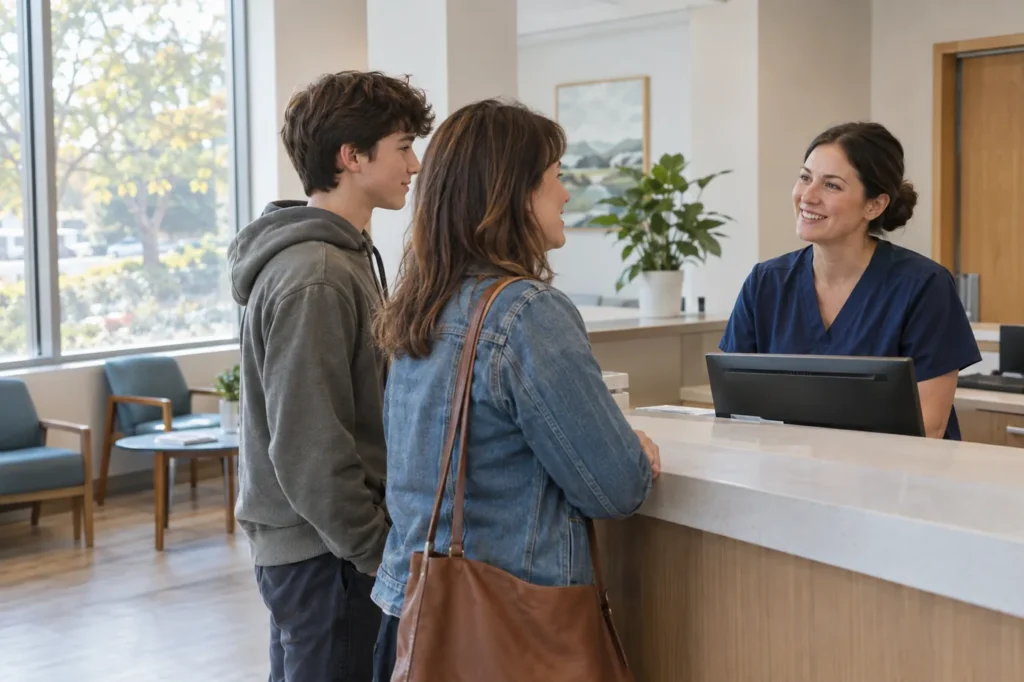
- Step 1Walk in or save your spot
No appointment needed. You can also save your spot online before you leave home.
- Step 2Check in
Bring a photo ID, your insurance card and a list of the medicines you take.
- Step 3See a provider
Get examined, with X-ray and rapid tests on site when you need them.
- Step 4Leave with a plan
You go home with a care plan and clear next steps.
Why families in Bolingbrook choose Pioneer
Walk-in care that fits real life
Open 7 days a week
8 AM to 8 PM, weekends included, so a Saturday sore throat does not have to wait until Monday.
X-ray and tests on site
X-ray every day we are open, plus rapid strep, flu and COVID tests, urinalysis and EKG.
Care for kids and adults
From infants through the teen years, and adults of every age, in one clinic.
Insurance and self-pay
Aetna, BCBS of Illinois, Cigna, Humana, Medicare, Illinois Medicaid plans and UnitedHealthcare. Call to confirm your plan.
Questions and answers
Questions we hear often
Still not sure? Call (630) 914-5373 and we will help you decide.
Can I walk in for blood work in Bolingbrook?
Yes. Walk-ins are welcome every day, no appointment needed, or you can save your spot online. The provider examines you first, then orders the blood tests that fit your symptoms. The sample is drawn here and tested at an outside lab, which means those results arrive after you leave rather than during the visit.
Where can I get an EKG near me?
At our clinic at 148 S Bolingbrook Dr, 7 days a week, as part of a walk-in visit. The provider decides whether an EKG will help, and the test itself lasts just a few minutes. For chest pain or pressure, shortness of breath with a cold sweat, or other heart attack warning signs, call 911 rather than driving yourself anywhere.
Can I get a COVID test in Bolingbrook?
Yes. Rapid COVID tests are part of our walk-in visits, and we’re open 7 days a week. If a rapid antigen test is negative but you still feel sick, test again 48 hours after the first one, as the FDA recommends, because a single negative antigen test can miss an infection.
Is Pioneer Physicians a laboratory?
No. We’re a walk-in urgent care clinic in Bolingbrook, not a stand-alone lab or blood draw center. Swab tests, urinalysis and EKGs happen during your visit here, and blood we draw is sent to an outside lab for testing. If you’re looking for a place to fill an order from another doctor, call us first to ask.
I have a lab order from another doctor. Can I use it here?
Call (630) 914-5373 before you come and ask whether we can draw it. That way you know before you make the drive. Without an outside order, you can still walk in. The provider examines you and orders the tests that make sense for your symptoms that day.
How long do lab results take?
It depends on the test. Swab tests, urinalysis and EKGs finish while you’re here, and the provider uses them to guide that day’s care. Blood work goes to an outside lab and takes longer, with timing that varies by test. Ask before you leave how and when you’ll get those results.
Can I get lab work done on a weekend?
Yes. We’re open Saturday and Sunday from 8 AM to 8 PM, and walk-ins are welcome. A weekend visit works the same way as a weekday one: the provider examines you and orders the tests that fit your symptoms. After 8 PM, you can book a next-day visit online.
Do you do lab tests for children?
Yes. We care for children of all ages, infants through teens, and tests such as a rapid strep swab or a urine test are common for kids. The provider chooses tests based on your child’s age and symptoms. Tell us when the symptoms started and whether anyone at home or school has been sick, since that helps decide which test fits.




Sources for this page
- Electrocardiogram. MedlinePlus, National Library of Medicine.
- What You Need to Know About Blood Testing. MedlinePlus, National Library of Medicine.
- Fasting for a Blood Test. MedlinePlus, National Library of Medicine.
- Strep A Test. MedlinePlus, National Library of Medicine.
- Flu (Influenza) Test. MedlinePlus, National Library of Medicine.
- Urinalysis. MedlinePlus Medical Encyclopedia, National Library of Medicine.
- COVID-19 Testing: What You Need to Know. Centers for Disease Control and Prevention.
- Heart Attack Symptoms, Risk, and Recovery. Centers for Disease Control and Prevention.