
Symptom guide · Pioneer Physicians
Symptoms and Conditions We Treat in Bolingbrook, IL
The symptoms we treat at Pioneer Physicians Urgent Care in Bolingbrook, IL, are sudden illnesses and minor injuries in adults and children, such as sore throats, coughs, fevers, stomach bugs, urinary symptoms, rashes and sprains. We’re open every day, 8 AM to 8 PM, and no appointment is needed. For chest pain, trouble breathing or signs of a stroke, call 911.
- Open 7 days, 8 AM to 8 PM
- Walk-ins welcome
- X-ray and rapid tests on site
- Kids and adults
- Medicare and Medicaid plans accepted

Symptoms we treat without an appointment
Walk in with any illness or minor injury that is not life-threatening. That fits how MedlinePlus describes the problems an urgent care clinic can handle: common mild illnesses such as colds, the flu, earaches, sore throats and limited rashes, plus minor injuries like sprains, minor cuts and minor broken bones.
The guides below group our symptom pages by type of problem. Each covers common causes, home care, the signs that mean you should be seen today, and what happens at a visit here. For a single checklist of what urgent care handles and when to go to the ER, see what urgent care treats.

Throat, ear, sinus and eye problems
Sore throats, earaches, sinus pressure and red, irritated eyes can all be checked here, and a rapid strep test can be done during the visit.
Most sore throats are not strep. The CDC says viruses are the most common cause, antibiotics will not help a viral sore throat, and most sore throats get better on their own within a week. A rapid strep swab shows whether strep bacteria are the likely cause, which decides whether an antibiotic makes sense.
- Sore throat: usual causes, home care, and why trouble breathing or swallowing means calling 911.
- Strep throat: how the rapid strep test works and what a positive result means.
- Ear infection: ear pain in children and adults, and whether every ear infection needs antibiotics.
- Sinus infection: telling a sinus infection from a lingering cold, and warning signs like swelling around the eye.
- Pink eye: viral and bacterial pink eye, returning to school, and when eye pain or vision changes mean an eye doctor instead.
What we can help with today
- Fever
- Low-grade fever with a cold, the flu or an earache
- Breathing
- Cough, congestion or a sore throat
- Injury
- Sprain, minor broken bone, or a minor cut or burn
- Stomach
- Vomiting or diarrhea from a stomach bug
- Skin and allergy
- Hives or a limited rash
- Head
- Minor headache with a cold
Coughs, colds, flu, COVID and RSV
A cough, a cold or the flu can be checked here, with rapid flu and COVID tests during the visit and a same-day chest X-ray if pneumonia is a concern.
Colds are caused by viruses, and the CDC says antibiotics don’t work against viruses and won’t help a cold. It advises seeing a provider for trouble breathing or fast breathing, dehydration, a fever lasting longer than 4 days, symptoms lasting more than 10 days without getting better, or symptoms that improve and then return or get worse.
If a cold sets off your asthma, see our asthma treatment page.
- Cold and cough: home care, how long a cough can last, and when to get it checked.
- Flu: rapid flu testing, antiviral timing, and the CDC’s emergency warning signs.
- COVID-19: walk-in rapid COVID testing and when to test after an exposure.
- RSV: RSV symptoms at different ages and the breathing signs that need emergency care.
- Bronchitis: a cough that lingers after a cold, and whether antibiotics help.
- Pneumonia: how an exam and a chest X-ray check for it, and signs like confusion or bluish lips that need a hospital.

Fever, stomach bugs and dehydration
A fever or a stomach bug is worth a visit when it lasts, when the person seems very ill, or when there are signs of dehydration.
Dehydration is the main worry with vomiting and diarrhea. Among the CDC’s emergency warning signs of flu are dehydration in children (no urine for 8 hours, a dry mouth, no tears when crying) and not urinating in adults. MedlinePlus says to go to the ER for vomiting or diarrhea that does not stop, and for a baby with no wet diapers in 18 hours or a sunken soft spot on the head.
- Fever: when a fever is too high for a child’s age, and the fevers that need the ER.
- Nausea, vomiting and diarrhea: replacing fluids, spotting dehydration, and when a stomach bug needs care today.
Feeling sick today in Bolingbrook?
We’re open every day, 8 AM to 8 PM, and walk-ins are welcome. You can also save your spot online before you leave home.
Burning, frequent urination and other urinary symptoms
Burning when you urinate, needing to go often, or pressure low in the belly can be checked the same day, because we run a urinalysis during the visit.
The CDC lists those as bladder infection symptoms, along with blood in the urine. Fever, chills, pain in the lower back or side, and nausea or vomiting are its signs of a kidney infection. Its advice is to see a healthcare professional for even one of these symptoms.
- UTI: bladder and kidney infection symptoms, what the urine test shows, and the signs that an infection is getting worse.

Rashes, skin infections and allergic reactions
Hives, itchy rashes and mild allergic reactions can be seen here, but a reaction with swelling of the face or tongue or trouble breathing needs 911.
Anaphylaxis is a life-threatening allergic reaction. MedlinePlus says symptoms often start within seconds or minutes and can include wheezing or trouble breathing, trouble swallowing, swelling of the face, eyes or tongue, and dizziness. Call 911, and if the person has an epinephrine injector, use it right away.
For a rash that keeps coming back or allergies that flare every season, allergy testing can help find the trigger.
- Rashes and skin infections: common causes, signs a skin infection is spreading, and rashes that need emergency care.
- Allergic reactions: which reactions can be treated here, and why anaphylaxis means epinephrine and 911.
Sprains, strains, possible fractures and cuts
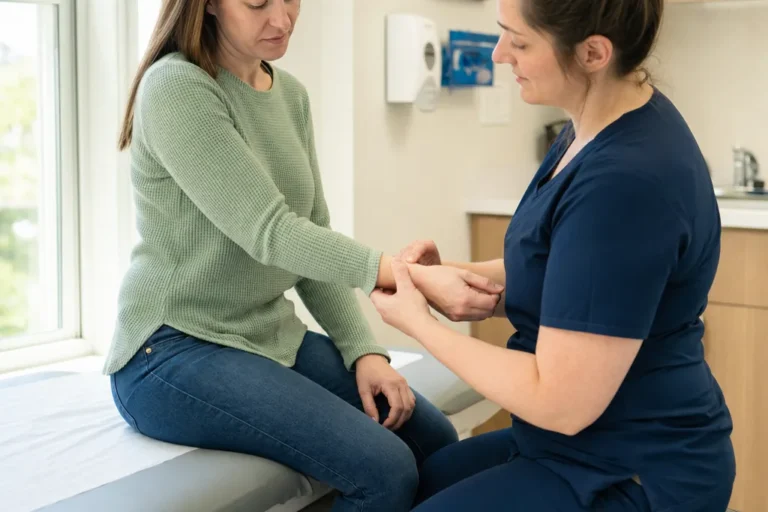
A twisted ankle or a sore wrist can be checked for a break in one visit, since X-ray is available every day we are open and splints and crutches are kept on hand.
MedlinePlus puts sprains and minor broken bones in the urgent care group. It says to go to the ER or call 911 when a bone is pushing through the skin, when a body part near the injury is numb, cold or pale, or when there is a deep wound or heavy bleeding.
- Sprains and strains: sprain or fracture, whether you need an X-ray, and home care.
- Cuts and lacerations: cleaning a minor cut, signs it may need stitches, and when bleeding means 911. If you think a cut needs stitches, call (630) 914-5373 to ask before you come in.

Bringing in a sick baby, child or teen
We see children from infancy through the teen years, and the on-site X-ray and rapid tests listed below are available for them too. The exception is a baby younger than 3 months with a temperature of 100.4°F or higher, who should go to an emergency room after a call to the pediatrician, not to urgent care. The CDC counts any fever in a baby younger than 12 weeks among its emergency warning signs of flu.
For older children, the American Academy of Pediatrics says to call your child’s doctor right away if a fever climbs above 104°F again and again, or if a child with a fever looks very ill or has a stiff neck, a severe headache, trouble breathing or repeated vomiting.
Childhood vaccines are not given here, so plan on your child’s regular doctor or the Will County or DuPage County health department for routine shots. See pediatric urgent care for how a children’s visit works.
Tests we can do during your visit
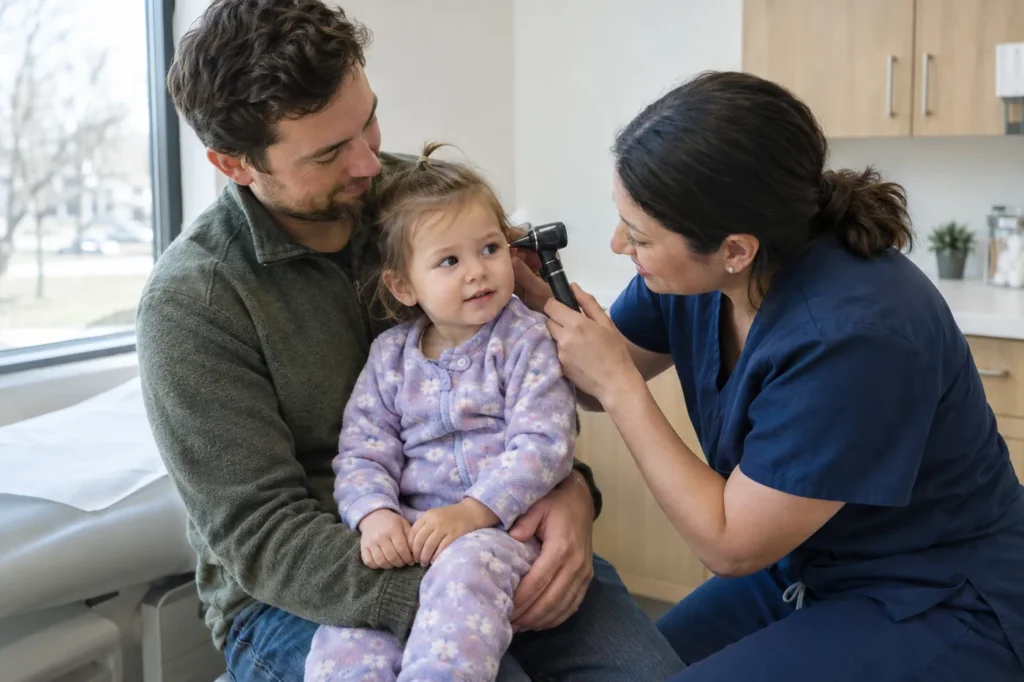
Many symptoms can be sorted out with an exam alone. If a test would change the plan, these are the ones we run or collect on site.
- Rapid strep test, for a sore throat that could be strep
- Rapid flu and COVID tests, for fever, cough and body aches
- Urinalysis, for burning, frequent urination and other urinary symptoms
- X-ray every day we are open, for a possible broken bone or a cough that might be pneumonia
- EKG, which records the heart’s electrical activity
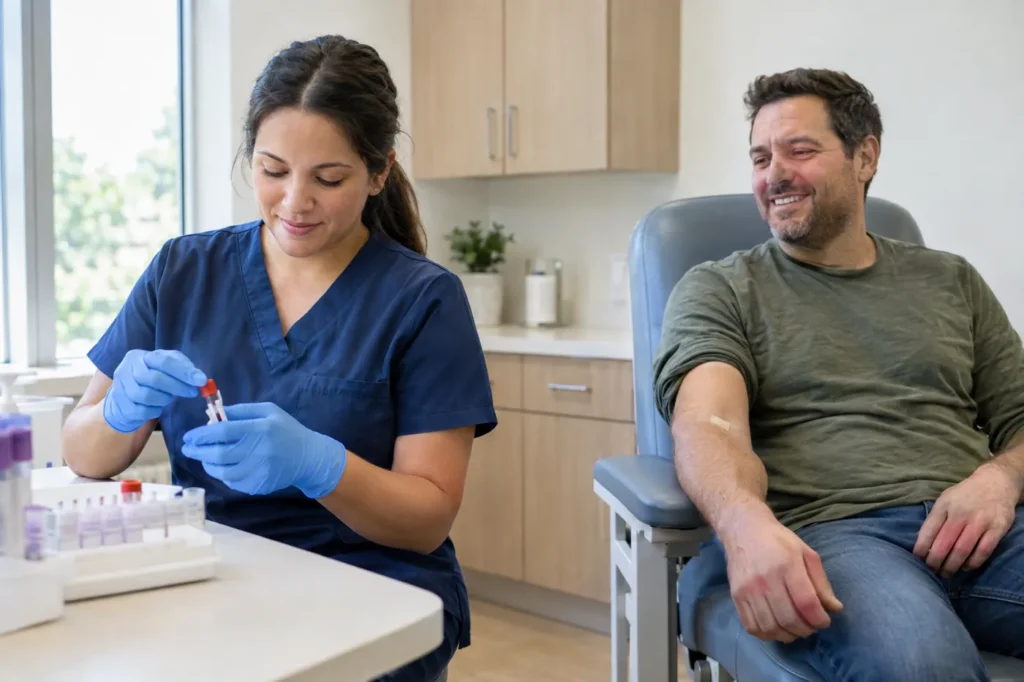
- Blood drawn here and sent to an outside lab, so those results are not ready during your visit
What we do not have on site
CT and MRI are not available here. If you need one of those scans, you would get it at a hospital or an imaging center.
The Pioneer walk-in visit
How a visit works
- Step 1Walk in or save your spot
No appointment needed. You can also save your spot online before you leave home.
- Step 2Check in
Bring a photo ID, your insurance card and a list of the medicines you take.
- Step 3See a provider
Get examined, with X-ray and rapid tests on site when you need them.
- Step 4Leave with a plan
You go home with a care plan and clear next steps.
Why families in Bolingbrook choose Pioneer
Walk-in care that fits real life
Open 7 days a week
8 AM to 8 PM, weekends included, so a Saturday sore throat does not have to wait until Monday.
X-ray and tests on site
X-ray every day we are open, plus rapid strep, flu and COVID tests, urinalysis and EKG.
Care for kids and adults
From infants through the teen years, and adults of every age, in one clinic.
Insurance and self-pay
Aetna, BCBS of Illinois, Cigna, Humana, Medicare, Illinois Medicaid plans and UnitedHealthcare. Call to confirm your plan.
Questions and answers
Questions we hear often
Still not sure? Call (630) 914-5373 and we will help you decide.
Is Pioneer Physicians an after-hours clinic?
We cover evenings and weekends, but not overnight. We’re open 8 AM to 8 PM every day, Saturday and Sunday included, and walk-ins are welcome. After 8 PM, online booking lists next-day visit times. For an emergency at night, call 911.
Do I need an appointment for a sick visit?
No. Walk-ins are welcome any day, or hold your place online first if you’d rather wait at home. Bring your insurance card, a photo ID and a list of the medicines, vitamins and supplements you take, so the provider can choose a treatment that is safe with them.
Do you treat children for these symptoms?
Yes. We see babies, children and teens for illnesses and minor injuries, and our on-site X-ray and rapid tests are available to them as well. If a baby under 3 months has a temperature of 100.4°F or higher, take them to an ER instead. Childhood vaccines are not given here, so routine shots come from your pediatrician or the county health department.
Will I need antibiotics?
Only if the provider finds an infection that antibiotics treat. They work on bacteria, such as the strep bacteria behind strep throat. The CDC notes they do not work against viruses, which cause colds and most sore throats. Taking antibiotics you don’t need can cause side effects, such as a rash, without helping you feel better.
Can I use telehealth instead of coming in?
Sometimes. A telehealth visit lets you talk with a provider from home, which suits problems that don’t need a hands-on exam. A swab, a urine test or an X-ray has to happen in person, so if one is needed, the next step is a visit to the clinic. Call (630) 914-5373 to ask whether telehealth fits your symptoms.
Which insurance do you accept for sick visits?
We accept Aetna, Cigna, Medicare, Blue Cross Blue Shield of Illinois, UnitedHealthcare, Humana and Illinois Medicaid plans (HFS, Meridian, CountyCare, Molina and YouthCare). Call (630) 914-5373 to confirm your specific plan. Self-pay is available too. The cost is the visit plus any tests you need, so call for current self-pay pricing.





Sources for this page
- When to use the emergency room (adult). MedlinePlus, National Library of Medicine.
- When to use the emergency room (child). MedlinePlus, National Library of Medicine.
- Fever: When to Call the Pediatrician. HealthyChildren.org, American Academy of Pediatrics.
- Anaphylaxis. MedlinePlus, National Library of Medicine.
- Signs and Symptoms of Flu. Centers for Disease Control and Prevention.
- Manage Common Cold. Centers for Disease Control and Prevention.
- Sore Throat Basics. Centers for Disease Control and Prevention.
- Urinary Tract Infection Basics. Centers for Disease Control and Prevention.